Pancake Tuesday

This Tuesday is Pancake Tuesday in Ireland and England, the day before Ash Wednesday. It marks the end of the Carnival period of celebration. The practice of celebrating carnival probably began in ancient times when the Sunday a week before the beginning of Lent was called Dominica Carnevala, or “farewell to meat Sunday” – referring to the upcoming Lenten fast from meat and animal products.

When I was young this was one of the great yearly traditions and an evening of great excitement; on just one day of the year pancakes were made and eaten,usually with lemon juice and sugar. We would rush home from school as if about to particpate in the greatest of feasts. It was not really the food which created the excitement. It was the rareness of something celebrated year on year in the family.

Rituals like these, which mark the passing of seasons are very important, especially in this modern age which blends each day and each season into periods of work and shopping. We need to ensure that there are real moments of non-work in our lives where we celebrate other realities and other rhythms, not just evenings where we crash, tired from work, trying to recharge before it starts again the next day. In some real way our work has to be part of a greater meaning. In the traditional Christian sense, this came from seeing work as contributing to the development of creation and as part of a social function. It is hard to see that in our modern office setups and in large corporations. Family rituals celebrated together remind us that there is more to life than what the markets dictate. Family customs bring mindfulness to even mundane activites. They are occasions together which raise the ordinary parts of life into signs of life’s deeper blessings and celebrations, and allow grace to touch our inner selves.
How our work has meaning

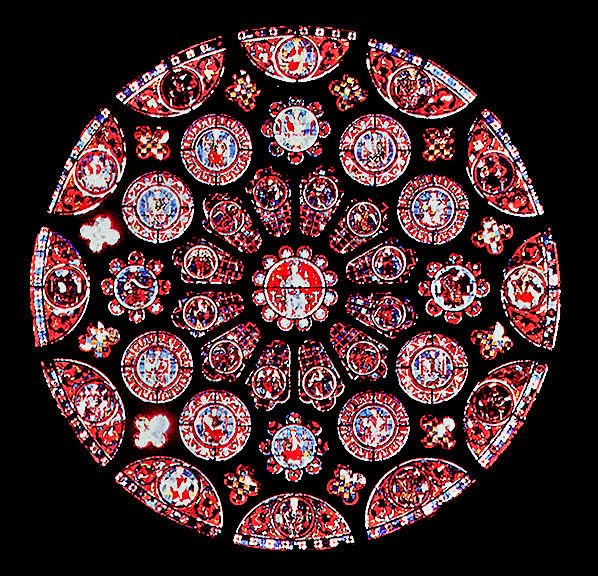
I came across this nice story set in the Middle Ages: A man sees a worker passing by with a wheel barrow and asks what he is doing. “Can’t you see, I’m pushing a wheelbarrow,” the man replies. Another wheelbarrow man comes by doing the same thing and he too is asked: “What are you doing.” He replies, “Can’t you see, I’m building the Cathedral at Chartres.”

The same activity, but with different levels of insight.

The second man has connected his work to something inside himself or beyond himself – has understood the difference between purpose and meaning – and thereby made his life meaningful.

At Mid Way

Nel mezzo del cammin di nostra vita
mi ritrovai per una selva oscura,
ché la diritta via era smarrita.

In the middle of the journey of our life
I found myself astray in a dark wood
where the straight road had been lost sight of.

Dante, The Divine Comedy

The opening words of one of the greatest classics in world literature: Life as a journey, as is portrayed also in Homer’s the Odyssey and Joyce’s Ulysses. In Dante’s version of this journey he descends into the underworld. Jung interpreted this as indicating our need to descend into our unconscious – to integrate all parts of our deepest selves in our journey through life. He believed that the first half of our life is spent learning how our world works and establishing ourselves in it, often in response to the demands of external forces, such as the family, society, religion or our need to establish a role in the world. However, it is in the second half of life when the real work of individuation, of becoming more the whole person we were meant to be, can begin. Often people can feel like Dante, somewhat lost, despite having built up successful careers or working hard all day. There can notice an underlying discontent, even boredom, even with all the hours they work and all that they have “achieved”. Just as Dante turned inward towards the meaning of life and interpreted the various levels of his inner life, we too need to do the same if we wish to develop our full selves as we journey through life. The journey is essentially a journey to the center of oneself, an inner journey to wholeness and real contentment.

The power of the mind

“One of the most intriguing aspects of both hysterical and psychosomatic disorders is that they tend to spread through populations in epidemic fashion, almost as if they were bacteriological in nature, which they are not. Edward Shorter, a medical historian, concluded from his study of the medical literature that the incidence of a psychogenic disorder grows to epidemic proportions when the disorder is in vogue. Strange as it may seem, people with an unconcious psychological need for symptoms tend to develop a disorder that is well known, like back pain, hay fever, or eczema. This is not a concious decision.”

Dr. John Sarno, The Divided Mind

The unconscious must out

The psychological rule says that when an inner situation is not made conscious, it happens outside as fate. That is to say, when the individual remains undivided and does not become conscious of his inner opposite, the world must perforce act out the conflict…

Carl Jung, “Christ, A Symbol of the Self”,

Sometimes we can see repeating patterns in our own lives or in the lives of others. We find ourselves in similar situations to before, or saying the same, self-defeating words, often based on deep-seated, limited, views of our own capacities. For example, some people say “I always end up in rotten relationships”, or even “life has it in for me”. Despite the painful nature of such experiences, these people do not gain the insight that would help them understand, for example, why they always end up in relationships that end badly. They continue to make choices based on patterns laid down in their own early relationships, which can end up running the show despite their best efforts. One way of dealing with this is to blame life or the other person and put the responsibility onto them.

However, the quote from Jung seems to suggest that the person needs to look inside themself for the real solution to this problem. He suggests that this can be due to unconscious parts of the self, the individual remaining unaware of his or her unconscious patterns and attitudes. He suggests that what we do not face inside ourselves will come into our lives from the outside, as “fate”. Unconsciously we will attract the parts of us that we deep down, unconsciously, know that we need. In other words, life will bring us into situations where we are asked to look at our unconscious or shadow side and bring it out into the open, in order to grow to our full potential.

He further seems to suggest that when we come to an important period in our life for growth, this new potential inside us does not always simply go from the unconscious to consciousness. Rather, it comes to full consciousness through outside circumstances or with the help of another person who comes into our life. This can then mean going in new directions in work or relationships, as we move from old patterns and things that once seemed important.

Thus, a person who spent a significant part of their life investing their energies into their work or their family may find that they neglected other aspects of themselves in the process. Jung suggests that they will be brought face to face with these unlived parts and given the possibilitiy of integrating them. He suggests that to be fully happy we need to bring to light those parts of ourselves that have been repressed or neglected.

Talking to God

The grass beneath a tree
is content and silent.

A squirrel holds an acorn
in its praying hands
offering thanks,
it looks like.

The nut tastes sweet;
I bet the prayer added
to its taste somehow.

The broken shells fall on the grass,
the grass looks up
and says
“Hey”

And the squirrel looks down
and says
“Hey”

I have been saying “Hey” lately too,
to God

The formal way was just not working

Rumi