Fragmented

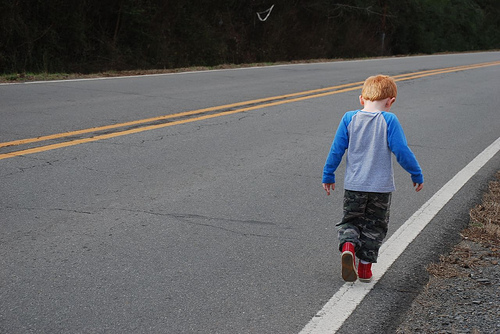
We are fragmented into so many different aspects. We don’t know who we really are, or what aspects of ourselves we should identify with or believe in. So many contradictory voices, dictates, and feelings fight for control over our inner lives that we find ourselves scattered everywhere, in all directions, leaving nobody at home.

Sogyal Rinpoche

Our dis-ease

The nature of our dis-ease is this: we continually judge, reject and turn away from certain areas of our experience that cause us discomfort, pain or anxiety. This inner struggle keeps us inwardly divided,  creating pressure and stress and cutting us off from the totality of our experience.

We first learnt to reject our experience when we were growing up. As children our feelings were often too overwhelming for our fledgling nervous system to handle, much less understand. So when an experience was too much, and the adults in our environment could not help us relate to it, we learnt to contract our mind and body, shutting ourselves down, like a circuit breaker. This was our way of preserving and protecting oursleves…….In time, these contractions  form the nucleus of an overall style of avoidance and denial.

Thus our psychological distress is composed of at least three elements: the basic pain of feelings that seem overwhelming, the contracting of mind and body to avoid feeling this pain; and the stress of continually having to prop up and defend an identity based on this avoidance and denial.

John Welwood, Toward a Psychology of Awakening

Nothing new here: Stress is bad for you….

A new study confirms what most of us already know. High stress is bad for us and is linked to cardiovascular death even if we do not have a  pre-existing cardiovascular problem. The study, published in The Endocrine Society’s Journal of Clinical Endocrinology & Metabolism (JCEM), shows that the stress hormone cortisol is released when we speed up and are under pressure and its purpose is to help the body recover from stress and regain a state of balance. However, when the stress is persistent, ongoing and chronic, an elevated level of cortisol  is maintained and this, paradoxically, is associated with cardiovascular risk factors. In other words, as we learn about in the MBSR Programme, the body’s own stress response system can become a problem when it remains switched on in response to deep ongoing stress.

Nicole Vogelzangs,  from the  VU University Medical Center in The Netherlands,  states: “Previous studies have suggested that cortisol might increase the risk of cardiovascular mortality, but until now, no study had directly tested this hypothesis“. The results of our study clearly show that cortisol levels in a general older population predict cardiovascular death, but not other causes of mortality.”

So creating a gap in the ongoing rush of your day and paying attention to your life is not just a nice option, but is crucial for your ongoing health. Then,  developing adaptive ways to work with the stress in your life, rather than simplistically wishing to escape to a stress-free world, is the next step. These ways could include looking at your diet, doing exercise such as walking or yoga, structuring your week so as to get some time in nature, making time just for yourself, and developing a meditation practice. If you click on the “Stress ” Category in the blog or on the “Effects of Mindfulness” you will find more posts or research on this subject.

Stress and the Summer Holidays

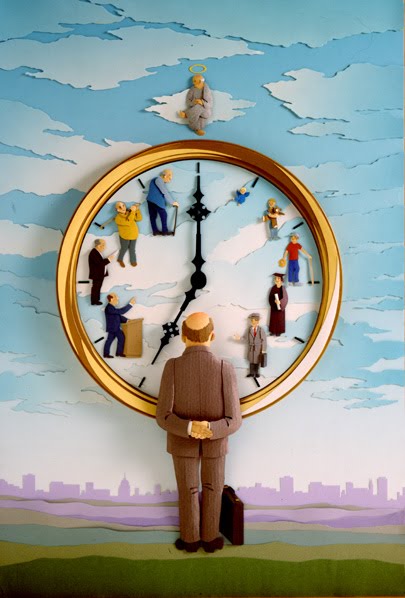
It would be nice to think that everyone would find themselves less stressed as a result of their Summer Holidays. However, a recent study, conducted by the UK’s Institute of Leadership and Management (ILM), found that 40% of managers reported coming back from their holidays as stressed or more stressed than they were beforehand.

Part of this seems to stem from the increased connectivity which marks the modern age. The rise in use of Blackberries and iPhones, and the updating of social network sites such as Facebook, means that many people keep in touch with aspects of their working life, even when on holidays. For example, 80% of respondents in the study stated that they checked and responded to emails, while 66% said that they checked their smartphones at least once a day. Even those who did not check their mails found that they were unable to completely escape: Over 90% of managers reported being worried at some stage during the holidays  about returning to hundreds of e-mails, while 10% said that it took up to a week before they finally managed to unwind.

As Penny de Valk, from the ILM, states: Gone are the days when people cut off contact  for a fortnight over the summer and made a complete break. While technology means that it is easier than ever to work remotely, it also makes it extremely hard to switch off. Uncertain economic times also mean that many UK employees are keeping one eye on their job at all times, when what they really need is time away from the office to rest and re-energise.

Increasing Happiness

A recent study found that happiness significantly increases as people pass their 50th birthday. It seems that stress and worry fade after the landmark birthday and people begin experiencing greater daily joy than younger adults. A 2010 survey of more than 340,000 people published in Proceedings of the National Academy of Sciences found overall feelings of wellbeing improve as we pass middle age.

Dr Arthur Stone, a psychologist of Stony Brook University, New York, said the findings were “striking”.

You would think as chronic illness threatens life would get worse but that is not the case because people don’t focus on the threats. They focus on the good things in life like family and friends.

The researchers found positive and negative emotions varied with age similarly in both sexes – although women reported greater stress, worry and sadness at all ages. Variables such as having children, being unemployed, or being single did not affect age-related patterns of well being.

Stress and anger reduced in the 20s but worry and anxiety remain a significant issue. Peter S. Kanaris, Ph.D., a psychologist and coordinator of public education for the New York State Psychological Association, observes: Prior to midlife, people are building families, paying mortgages, developing in their careers at a time when there is much more uncertainty than usual. This creates a great deal of stress.

By contrast, the 40s and 50s are actually a time of contentment: People in midlife have reached a time where they are a little more settled and established, he says. With levels of stress and worry all dropping significantly in the fifties, the levels of happiness and enjoyment increase.

Dr Carlo Strenger, of Israel’s Tel Aviv University, gives further food for thought: If you make fruitful use of what you have discovered about yourself in the first half of your life, the second half can be the most fulfiling. Most people can anticipate a second life, if not a second career.

On seeing a large office building in Berlin

We prefer our Big Macs and our Whoppers, our food portions supersized, our big cars and sprawling cities, our enormous football players, our big breasts and big houses (up from an average of 1,200 square feet in 1950 to 2,216 square feet today), our big armies with big reach, and, though we complain about it incessantly, big government that spends big money running up big debt (more now than at any other period in our history). That we allow corporations to grow to outrageous size is just another symptom of the disease. Bigness worship permeates every layer of the culture; it is racked into our brains with every turn of the advertising screw; it is a totalizing force.

Christopher Ketcham