 Yesterday was the Celtic feast of Imbolc, celebrated because it is halfway between the winter and the spring solstices. It was marked by the lighting of fires, and this passed into the important Irish feast of Saint Brigid, whose monastery kept alight a sacred eternal flame. In a similar way today’s feast, the Christian feast of Candlemas, traditionally involved a procession of candles and the blessing of candles for use in the home. It would seem that these two celebrations, one older than the other, testify to a need for people to light a fire around this time, to remind themselves of light and warmth around this midway point of winter, to give some encouragement when the cold and darkness may seem to be never-ending.
It we look closely we see that we too can say – at any moment – that we are midway between two points. We cannot truly see how the future will develop and we know we have to leave the past behind. We too need moments of light and warmth to encourage us on the way, moments of rest when we nourish our inner self. In this way we announce warmth and light in the dark time of winter. This helps us see that darkness and not-knowing are natural parts of life’s cycle, just as are periods of cold and lack of growth. Stepping into the dark, into unknown territory, is necessary from time to time on our journey forward.
Life is a good teacher and a good friend. Things are always in transition if we could only realize it. Nothing ever sums itself up in the way that we would like to dream about. The spiritual journey involves going beyond hope and fear, stepping into unknown territory, continually moving forward. The most important aspect of being on the spiritual path may be to just keep moving. Usually, when we reach our limit, we freeze in terror. Our bodies freeze and so do our minds. Rather than indulge or reject our experience, we can somehow let the energy of the emotion, the quality of what we’re feeling pierce us to the heart. This is a noble way to live. It’s the path of compassion – the path of cultivating human bravery and kindheartedness.
Pema Chodron.
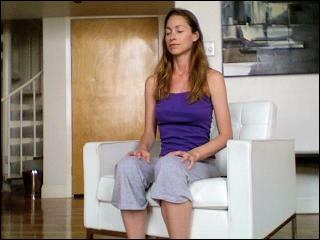 Reflective awareness has to be developed through deliberate encouragement and practice, such as through exercises of meditation, because the default is to let assumptions, beliefs, passions and worries lead the mind — because they speak the loudest. So an important piece of theory is to remember to take the time and create the occasions to bring our wisdom forth. This is how theory, leads on to practice. Wisdom is not just a matter of refined intellect — psychopaths and dictators can be very cunning — but of our ability to evaluate mind states as they are directly felt in the present.
 We are so trained to think of money as our wealth, or ’our capital.‘ But there are so many kinds of ’capital‘ besides money, and some are more available and even more valuable. For example, whenever we gather to make something happen, we need someone who has wisdom capital,
 We live within a continuum of action and result, in which whatever we do while conscious of doing it leaves a result in the mind. These results may be experienced as the reactions and responses of others, or as effects on our physical well-being, but the deepest result is mental. That is, our actions have a psychological and emotional result that shapes our minds. After all, this is the way we learn: we do something and from the results – from the feedback that other people or our bodies or our own minds give us – we notice whether that action gave us well-being or pain. Through contact, that feedback gets lodged as a memory, a perception or felt meaning. It’s a detail on our psychological road map of how to proceed through life. That detail, a memory, or a piece of behaviour becomes one strand in the weave of our identity. That’s how your mind gets shaped, for good or for ill. And one result ….is the sense of self.
 Felt meanings are volatile: they move our hearts and affect how we act. Yet real as it all these feelings seem, they do change; and if I follow them, then who I seem to be changes in accordance with them. When I am being ‘me, the harassed, overworked’ my manner will have a different flavour than when I’m ‘me, welcoming you to my home.’ Actually, I have quite a few selves, or subsidiary personalities, which take centre stage dependent on the situation, pressures and natural conditions like health. My world-view and motivation may change between one of these personae (these selves that we have within us) and the next – sometimes I can hardly believe it when someone reports back to me what I said when I was in a difficult mood. In fact, I might comment that ‘I wasn’t quite myself then.’ These ranging personae, of which any one can be occupying the ‘me’ space at a given time, are based on felt meanings that arise around one’s role, function, and relationship – as well as on physical health and current attitude. The most residual ones, the ones that really feel like me, are the ones carried in the heart: ‘I am the one who has to do all the work (and receives no recognition)’; ‘I am the one who can’t manage and needs others to make decisions for me…’ and so on. They direct us through event after event, and yet we might not even recognize them as such because the mind will imagine that the feeling is being created not from some internal bias, but from the situation that’s occurring around us.
 Mindfulbalance