 Something similar to last weeks post on repeating patterns in our lives, or what Freud termed the Repetition Compulsion, where he noticed people repeating – sometimes in a disguised way – the experiences which were difficult or distressing in their earlier life. He saw that people do not necessarily remember clearly what was happening in childhood, but still act it out in relationships later, without knowing that they are repeating it. Unconscious dynamics which were formed in childhood and which were adaptive then – such as not allowing anyone get too close, or having to “make” others love them – are repeated in adulthood, even if they are self-destructive. So the past is repeated in a new form, but in the hope that this time the original wound may be healed.
On a day-to-day level this tends to manifest as the story of our life which we have allowed to take hold and which we repeat to ourselves. We can see this idea in this piece from the Tibetan Soygal Rinpoche, writing from a meditation perspective:
As we follow the teachings and we practice, we will inevitably discover certain truths about ourselves that stand out prominently: There are places where we always get stuck; there are habitual patterns and strategies which we continuously repeat and reinforce; there are particular ways of seeing things – those tired old explanations of ourselves and the world around us – that are quite mistaken yet which we hold on to as authentic, and so distort our whole view of reality.
When we persevere on the spiritual path, and examine ourselves honestly, it begins to dawn on us more and more that our perceptions are nothing more than a web of illusions. Simply to acknowledge our confusion, even though we cannot accept it completely, can bring some light of understanding and spark off in us a new process, a process of healing.
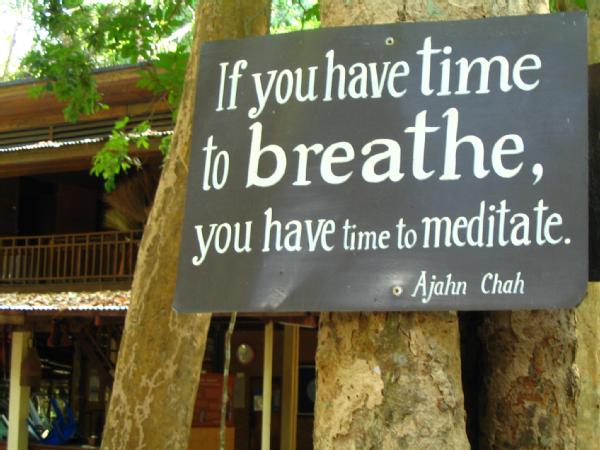
 Meditation is one of the keys



 Mindfulbalance