Experience life

Those who don’t feel this Love pulling them like a river, those who don’t drink dawn like a cup of spring water, or take in sunset like supper, those who don’t want to change, let them sleep.

This Love is beyond the study of theology, that old trickery and hypocrisy. If you want to improve your mind that way, sleep on. I’ve given up on my brain. I’ve torn the cloth to shreds and thrown it away.

If you’re not completely naked, wrap your beautiful robe of words around you, and sleep.

Rumi

Poppies

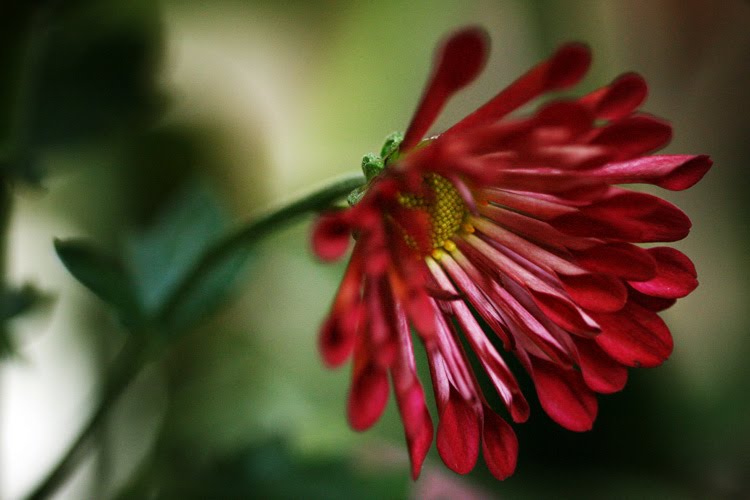
The other day I drove past a beautiful field of poppies. At least it seemed so, but when I stopped to look at it,  it became clear that it was actually a field of wheat, with poppies growing up through it. It reminded me of the parable of the weeds among the wheat, in the gospel of St Matthew. In the story the servants notice that someone has planted weeds in among the wheat, weeds that are almost impossible to distinguish from the real crop. The Master’s instruction is to leave them grow together, until the harvest, when they will be easily divided.

Normally this parable is interpreted in a way that refers to the judgment at the end of time. However, it can also be a wisdom that applies to our life now. There are many areas of our life which we would like to change, which we feel do not contribute to our overall growth. We can be unhappy with aspects of our body,  of our job or our relationship – whichever “weed” we think is ruining our field. Our attention is often drawn to that aspect of our life, and it becomes the focus of our happiness or unhappines.

And we often notice that out desire or our instinct is to fix ourselves, rip up these “weeds”,  remove them immediately from our lives. We find ourselves believing that things would be better if this or that was changed. We notice that it is not easy to accept ourselves, that we almost always want to change ourselves.

However, the parable points us in another direction, and gives two insights. The first says let the weeds and the wheat grow together. This goes against our normal instinct which is to turn away from the things that disturb or scare us, and says let us start by tolerating or accepting them.  The second draws our attention to the fact that we are always imposing conditions: it must be this way or that way, or we can’t be happy. These conditions can lead us to look elsewhere for happiness, and not realize that the all we need is already in our lives right now. Even with the weeds.

When we start meditation, we often think that somehow we are going to improve, which is a subtle aggression against who we really are: its a bit like saying “If I jog, I’ll be a much better person”, “If I had a nicer house, I’d be a better person”. “If I could meditate and calm down, I’d be a better person”. Or we find fault with others. We might say “If it weren’t for my husband, I’d have a perfect marriage”…. But loving kindness towards ourselves doesn’t mean getting rid of anything…Meditation practice isn’t about trying to throw ourselves away and become something better. It’s about befriending who we are already.

Pema Chodron, Comfortable with Uncertaintly

Ants

The other day I threw out into the garden the end of a pear I had eaten. I had hoped that it would be food for the songthrush and blackbird who visit. However, a few minutes later I noticed that it had been discovered by ants, who were working incredibly fast to extract its goodness and bring it back to the nest. In a straight line they worked quickly, back and forth, organized, one following the trail left by the last, with one purpose, focused on a clear goal.

This dull Sunday morning I can reflect on direction and purpose. My Sunday roots are in Catholicism. When I was young we dressed in our best clothes which were all laid out in preparation on the night before. Saturday night was the time to polish shoes, so that there was a heightened sense of ritual and specialness about going to Church on the Sunday morning. It was a place set apart. It anchored the week and was clearly the moment which gave meaning to it. In my young eyes it was a place of certainty and continuity, an outer form that was bigger than me and gave the impression of being a container where all of life’s questions could be answered and complexities resolved.

However, despite such clarity when little and despite having invested all the years since to developing the inner life in different ways, I cannot say that life has become more certain. Ants can move consistently in a straight line. As a young adult I felt that my life plan moved in the same way. However, I see now that such a need for straight lines and a definite script came from anxiety and has been replaced by trust. Life is complex and I have moved, and continue to move, in more meandering ways. What I have come to realize, is that in spite of those seeming changes in direction and complexity of experiences, whatever meaning there is to be found comes to me slowly, sometimes unexpectedly, and I am content with that.

I am dressed more casually this Sunday morning, but it is no less special because of that. Meaning can be found inside and in the ordinary. It is not necessary to always be as busy as the ant to find direction. One does not have to know the end point on the map to be going in the right way.

Perspective

Nothing worth doing is completed in our lifetime,
Therefore, we are saved by hope.

Nothing true or beautiful or good makes complete sense in any immediate context of history; Therefore, we are saved by faith.

Nothing we do, however virtuous, can be accomplished alone. Therefore, we are saved by love.

No virtuous act is quite as virtuous from the standpoint of our friend or foe as from our own; Therefore, we are saved by the final form of love which is forgiveness.

Niebuhr

The real mystery

People travel to wonder at the height of the mountains,
at the huge waves of the sea,
at the long course of rivers,
at the vast compass of the ocean, at the circular motion of the stars;
and they pass by themselves without wondering.

St. Augustine

Forgiveness

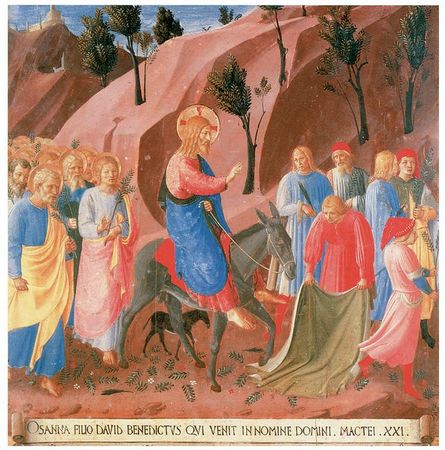
Today Holy Week starts, the most significant week in the Christian understanding of the human condition and the understanding in it of how we can be happy. Central to that, and to this week, is the place of forgiveness and reconciliation. Somehow it seems crucial to becoming fully human as this week’s story reveals:

Forgiveness does not mean forgetting, but forgiveness changes the way we remember.

When we forgive our parents for their divorce, our children for their lack of attention, our friends for their unfaithfulness in crisis, our doctors for their ill advice, we no longer have to experience ourselves as the victims of events over which we had no control. The only people we can really change are ourselves.

Forgiving is first and foremost the healing of our own hearts.

Henri Nouwen, Bread for the Journey