 There are different ways of saying the same thing when we speak about being mindful. We can say, as Jon Kabat Zinn frequently does, that we try to stay just in this moment, because this moment is the only moment we have to work with, as we “are only alive in this moment”. Or we can say that we try to approach each experience with a “beginner’s mind” or the “eyes of a child“- always fresh, not stuck in our preconceived ideas. Or we can pay attention to what is happening in the body and in the mind at any given time. Or simply we stay with this breath, and then the next breath, and the next breath.
All of these say the same thing. We define ourselves in each moment as something new, something fresh. We welcome each moment like a child – experiencing each new event in life as directly as possible without always mediating it through our thinking about it. The more I work with this, the more I realize that life is best seen as a series of experiences, which arise one at a time and then pass away immediately. We can experience great freedom and compassion when we see things this way – a series of moments of consciousness arising in succession. What we present to the world as something solid – our ongoing “identity” – is in actual fact subjective events experienced in the mind and the body. We like to tell our life story as a coherent narrative. What we notice when we sit in meditation is that we frequently go back to the story we are telling about our life, embellishing it, with its villains and victims. To us it constitutes a solid reality, but it is worth reflecting on what elements we have chosen to solidify.
For example, by which elements from our past do we allow ourselves be defined today? Research shows that the brain has a preference for storing and recalling negative experiences, bringing them to the mind in thoughts about ourselves and the reliability of others, and as an emotional tone towards events. Hurts or disappointments from the past can feel so real, and leave a mark in such as way that they can dominate the mind in a solid fashion, and cause us to identify with them. Because of this, the story we tell about ourselves today can be strongly coloured by the negative events and words of the past, even those which happened when we were very young and which now have an influence deep within our cells.
If you look at it more closely, this negative identification is often fixed in nature – almost frozen and solid – and it resists attempts to approach it by signalling anxiety. Thus we can have a tendency to stay the same through time, not to heal past hurts, not to look forward but to be hooked in the past. If the event is recent or can be recalled clearly, then moving on is tough because the hurt, pain and sense of betrayal caused reminds the mind that it is not safe to go back, even in our thoughts.
Now, it is right to have regret about past actions, when we have been in the wrong or hurt others. But it is also good to distinguish between the emotions connected to an event in the past and the way they influence our sense of self in the present – producing self-judgements which are experienced now as lack of self-esteem or worthlessness. We tend to place great importance on some experiences, thus making someone or something from the past responsible for our present life. So it is good to let go of some of the solidity we put into thoughts and emotions from the past, and see them as energies that arise and can pass away. In other words, we can stop getting lost in what happened and simply learn to observe the effects in this present moment. As Charlotte Joko Beck reminds us in Everyday Zen , there is a big difference between saying “He (or she) really let me down” and “Having a thought that he (or she) really let me down“.
If we stay with the first way of seeing things, we allow situations harden and define us. We attach some of our identity to them – and the narrative that accompanies them – and become stuck. If we work with the second way of seeing things, we remain fluid and soft, and let go more easily. We have more energy and space to see each new moment freshly. We are here, now, not trapped in our story. It stops us wasting time in this short life on regrets and opens us up to the fulness of life as it is available to us.
Another factor we cultivate in the transformative process of meditation is attention to this very moment. We make the choice, moment by moment, to be fully here. Attending to our present-moment mind and body is a way of being tender toward self, toward other, and toward the world. This quality of attention is inherent in our ability to love. Coming back to the present moment takes some effort but the effort is very light. The instruction is to “touch and go.” We touch thoughts by acknowledging them as thinking and then we let them go. It’s a way of relaxing our struggle, like touching a bubble with a feather.
Pema Chodron
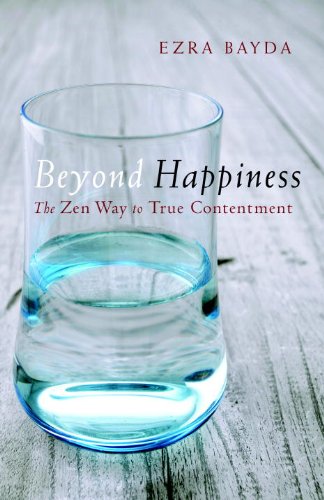 Will do some book reviews over the next few weeks. I always like Ezra Bayda’s writing, especially At Home in the Muddy Water. He is from the Zen tradition, having trained with Charlotte Joko Beck, at the Ordinary Mind Zen School. He is a student of meditation since 1970 and currently teaches at the Zen Center in San Diego. His latest book is entitled Beyond Happiness: The Zen Way to True Contentment. It was nominated as “one of the best books of the year” by the magazine Spirituality and Health.



 Mindfulbalance