What holds us back

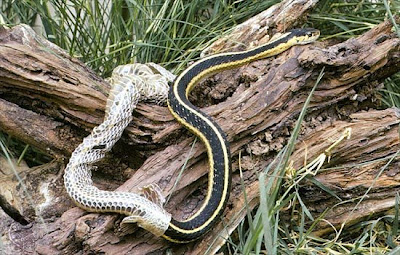
Just as a snake sheds its skin, so we should shed our past, over and over again.  The Buddha
Today is Ash Wednesday, traditionally the start of Lent – the season of preparation for Easter  The word “Lent” comes from the Anglo-Saxon word “lencten”,  referring to the lengthening of days in the Spring, thus placing the period in the context of growth and life. Lent became a time of reflection on freedom, seeing what the priorities in our life are and what needs to be let go of. As in other wisdom traditions,  it offers us a moment to enlarge our sense of things and go against the ways in which an unreflected life actually shrinks our heart. It reminds us to examine what is not essential, including the stories and habits which we have adopted over the years and which we come to see as fundamental to who we are.  It is an intensification of an insight that we see in our daily practice, namely,  that all things arise and pass away,  all things are impermanent.  So today, just as we begin to see Nature changing in the signs of Spring and new life, we try to internalize the understanding that we too are continually changing. This may mean that we need to let go of some elements of the past – which anyway is not happening any more except in the mind – in order for us to engage more fully with life in the present, in this moment.  It could be that we shed some aspects of what we hold as our solid self, and rather see  that we are more like a succession of selves.  Happiness in life comes not from holding onto the past but by living in the present with appreciation.

Detachment resembles the shedding of a number of coats of skin, until our senses are sharpened, or until “our inner vision becomes keen”. When we learn what to let go of, we also learn what is worth holding on to. Think of it in this way: it is simply not possible to share something precious or even to hold a lover’s hand, when we keep our fists clenched, holding tightly onto something. Detachment is not the inability to focus on things, material or other. It is the capacity to focus on all things, material and other, without attachment. It is primarily something spiritual; it is an attitude of life. And in this respect, detachment is ongoing, requiring continual refinement.

John Chryssavgis, In the Heart of the Desert
Holding the parts of our life together

The current understanding of work-life balance is too simplistic. People find it hard to balance work with family, family with self, because it might not be a question of balance. Some other dynamic is at play, something to do with a very human attempt at happiness that does not quantify different parts of life and often set them against one another. We are collectively exhausted because of our inability to hold competing parts of ourselves together in a more integrated way. These hidden human dynamics of integration are more of a conversation, more of a synthesis and more of an almost religious and sometimes delirious quest for meaning than a simple attempt at daily ease and contentment.

David Whyte, The Three Marriages: Reimagining work, self and Relationship

To thine own self be true

To be yourself 

in a world that is constantly trying to make you something else

is the greatest accomplishment.

Ralph Waldo Emerson

Letting go of old patterns

Once you start to awaken, no one can ever claim you again for the old patterns. Now you realise how precious your time here is. You are no longer willing to squander your essence on undertakings that do not nourish your true self; your patience grows thin with tired talk and dead language. You see through the rosters of expectation which promise you safety and the confirmation of your outer identity. Now you are impatient for growth, willing to put yourself in the way of change. You want your work to become an expression of your gift. You want your relationship to voyage beyond the pallid frontiers to where the danger of transformation dwells. You want your God to be wild and to call you to where your destiny awaits.

John O’Donohue

Never having really lived

The Dalai Lama, when asked what surprised him most about humanity, answered

“Man. Because he sacrifices his health in order to make money. Then he sacrifices money to recuperate his health. And then he is so anxious about the future that he does not enjoy the present; the result being that he does not live in the present or the future; he lives as if he is never going to die, and then dies having never really lived.”

Making space for new words

Fare forward, travellers! Not escaping from the past Into indifferent lives, or into any future; You are not the same people who left that station Or who will arrive at any terminus.  T.S. Eliot, The Dry Savages

The Latin word “limen” means “threshold” . Liminality is an inner state ands sometimes an outer situation where people can begin to think and act in genuinely new ways. It is when we are betwixt and between, have left one room but not yet entered the next room, any hiatus between stages of life, stages of faith, jobs, loves or relationships. It is that graced time when we are not certain or in control, when something genuinely new can happen. We are empty, receptive, an erased tablet waiting for new words. Nothing fresh or creative will normally happen when we are inside our  self-constructed comfort zones,  only more of the same. Nothing original emerges from business as usual. It seems we need some anti-structure to give direction, depth and purpose to our regular structure. Otherwise, structure, which is needed in the first half of life, tends to become a prison as we grow older. Much of the work of …human destiny itself is to get people into liminal space and to keep them there long enough to learn something essential and genuinely new. It is the ultimate teaching space. In some sense it is the only teaching space.

Richard Rohr, Adam’s Return