With emotions that cause stress, we have a choice

I read an interview with Dr. Jill Bolte Taylor,  neuroanatomist and spokeswoman for the Harvard Brain Tissue Resource Center. She had a stroke that damaged her left hemisphere and for a while she could not walk, talk, read, write, or remember many of the incidents of her life. She underwent major surgery to remove a clot in her brain. She describes her experiences in the book My Stroke of Insight: A Brain Scientist’s Personal Journey.

In the book she draws attention to brain patterns – or “circuity” –  and states that we actually have much greater choice in the circuits we run than we think we have. For example,  when we get sad, angry or afraid she says we have a choice – to run with that circuity or to not identify with it, to step back and observe it. There is not doubt that it can be easier to engage the circuitry. When this happens we identify with the emotion – I am my anger, I am my sadness, I am my fear.

However, there is another approach which is coincidentally developed in mindfulness practice. In it we work at being aware of what is going on in our mind at any moment. We learn to say – I am in this moment running this circuitry; is this the circuitry I really want to run? And how long am I going to run it? Dr Taylor  states that we can have a real choice on which way we want to go. For example, when something happens which provokes us,  we can be aware of the process of anger and see it as the brain working in a certain way. She puts it this way – “I’m running my anger circuitry, I can feel what this is like in my body”. Then we can develop the gap between ourselves and the strong emotion and decide if we want to stay with it or not.

She goes on todescribe some very practical, everyday ways in which we can develop our  capacity to observe our brain circuity. We just need to pay greater attention to what we are doing in this present moment:

I think the most important thing is to consciously choose to bring your mind to the present moment. How do you do that? You decide that you’re going to see what your eyes are looking at; you bring your consciousness to the present moment. When you are going up the stairs, you look at the steps, you look at the handrail. Most of us unconsciously climb the steps, never think about the steps, can’t even say what the color of the carpet is, if there is a carpet, because we’re somewhere else.

Pay attention to the present moment. Bring your mind, bring your ears to the present moment, start savoring the awareness of the information you perceive in the present moment, and let that grow. And it’s like with any circuitry: the more you concentrate on it and experience it, the more it will develop itself.

For more about Dr Taylor you can visit her website:  www.drjilltaylor.com

Quotations taken from interview “Balancing the Brain towards Joy” :

www.spiritualityhealth.com/spirit/archives/balancing-brain-toward-joy

Jon Kabat Zinn on what mindfulness is

Jon Kabat Zinn, who developed the Mindfulness Based Stress Reduction Programme (MBSR ), outlines what is meditation and how it brings us into the present moment. MBSR is a specific, highly structured psycho-educational and skill-based Programme  that combines mindfulness meditation with yoga and education about stress, delivered as an 8 week Course.

Further benefits of the programme can be found by clicking on the “Benefits of  Mindfulness and MBSR” Tag at the top of the page and  ongoing research is reported in the “Effects of Mindfulbness” Category on the right hand side of the blog

Starting mindfulness: Walking helps

In my room, the world is beyond my understanding;

when I walk I see
that it consists of
three or four hills and a cloud.

Wallace Stephens, Of the Surface of Things

Nothing new here: Stress is bad for you….

A new study confirms what most of us already know. High stress is bad for us and is linked to cardiovascular death even if we do not have a  pre-existing cardiovascular problem. The study, published in The Endocrine Society’s Journal of Clinical Endocrinology & Metabolism (JCEM), shows that the stress hormone cortisol is released when we speed up and are under pressure and its purpose is to help the body recover from stress and regain a state of balance. However, when the stress is persistent, ongoing and chronic, an elevated level of cortisol  is maintained and this, paradoxically, is associated with cardiovascular risk factors. In other words, as we learn about in the MBSR Programme, the body’s own stress response system can become a problem when it remains switched on in response to deep ongoing stress.

Nicole Vogelzangs,  from the  VU University Medical Center in The Netherlands,  states: “Previous studies have suggested that cortisol might increase the risk of cardiovascular mortality, but until now, no study had directly tested this hypothesis“. The results of our study clearly show that cortisol levels in a general older population predict cardiovascular death, but not other causes of mortality.”

So creating a gap in the ongoing rush of your day and paying attention to your life is not just a nice option, but is crucial for your ongoing health. Then,  developing adaptive ways to work with the stress in your life, rather than simplistically wishing to escape to a stress-free world, is the next step. These ways could include looking at your diet, doing exercise such as walking or yoga, structuring your week so as to get some time in nature, making time just for yourself, and developing a meditation practice. If you click on the “Stress ” Category in the blog or on the “Effects of Mindfulness” you will find more posts or research on this subject.

Meditation is pointless

A friend of mine – who ironically is starting a meditation retreat this week in the US – expressed the opinion not so long ago that sitting meditation was just pointless. I knew what she meant at the time, but knew also that she had to discover its real value for herself.  In one sense she was right – sitting practice is waste of time because it is a dedicated period of non-doing. On an outward level it appears to achieve nothing. Another aspect which she drew attention to was the fact that nothing really changes day to day: you sit, you get distracted, you return to the breath, you get distracted, day after day.

One difficulty in meditation is the the results are not immediately tangible while the actual practice can be difficult. The point to meditation, however, is precisely by doing “nothing” and slowing down, gaps are created between activities and we work on our capacity to be aware of what is going on. And it seems that when one is aware, things tend to fall as they should.

However, we can probably find scientific backing for stating that this “pointless” activity is, in fact, achieving something simply while we are sitting. It has been shown that people who meditate activate a different part of their brain that is associated with less anxiety and a better outlook on life. By not activating the anxious parts of the for dedicated periods of each day, our bodies are less likely to be tense, less likely to trigger well-conditioned patterns when faced with difficulties.

Daniel Goleman & Tara Bennett-Goleman*, suggest that meditation works because of the relationship between the amygdala and the prefrontal cortex. Simply put, the amygdala is the part of the brain that decides, among other things, if we should get angry or anxious, and the pre-frontal cortex is the part that makes us stop and think about things. However, the amygdala is prone to error, such as seeing danger or exaggerating anxiety where there is none. Because there is roughly a quarter of a second gap between the time an event occurs and the time it takes the amygdala to react, the slowing down practicing in meditation may allow us be able to intervene before an automatic response takes over, and perhaps even redirect it into more constructive or positive feelings. In other words, meditation seems to develop emotional brain fitness and therefore this pointless activity may not be pointless after all.

Bennett-Goleman, Tara, 2001. Emotional Alchemy: How the Mind can Heal the Heart, Harmony, (2001).

Yoga fights off depression, better than some other exercises

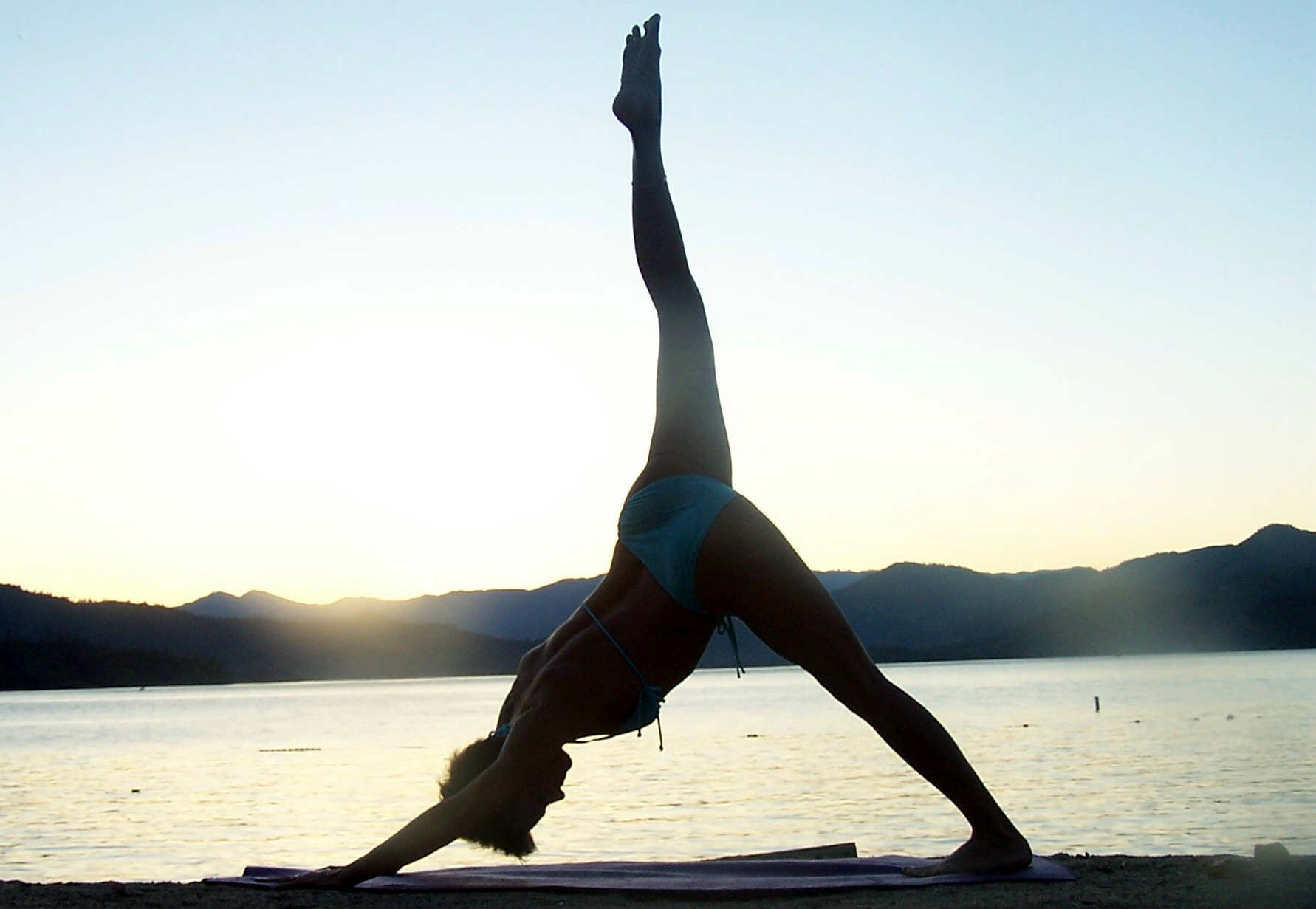
Researchers at Boston University School of Medicine (BUSM) and McLean Hospital have found that practicing yoga may increase the levels of  gamma-aminobutyric (GABA) in the brain, a   neurotransmitter associated with calming anxiety. It was found that three sessions of yoga a week can help fight off depression because by boosting GABA, it stimulates the function of brain and central nervous system and helps promote a state of calm within the body.

The research was published in the Journal of Alternative and Complementary Medicine, and found that the levels of  GABA are much higher in those that do yoga than those do the equivalent of a similarly strenuous exercise such as walking. Using magnetic resonance spectroscopic (MRS) imaging, the researchers compared the GABA levels of eight subjects prior to and after one hour of yoga.  The study also involved questions about their psychological wellbeing throughout the study. The finding were that those who did yoga reported lower levels of anxiety and higher increases in their mood than the walkers.

Our findings clearly demonstrate that in experienced yoga practitioners, brain GABA levels increase after a session of yoga,” said lead author Chris Streeter, MD,  assistant professor of psychiatry and neurology at BUSM and a research associate at McLean Hospital. These finding support the use of yoga-based exercises in the 8 week MBSR Programme.