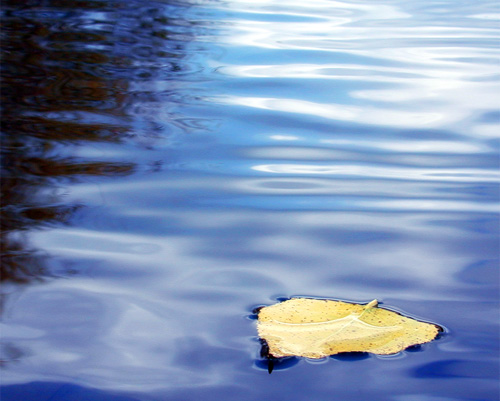
If I let go will I float?

Everything is meant to be let go of.

Meister Eckhard

Got some reminders today that changes of direction and endings are an inevitable part of our lives, touching our plans, our enthusiasms,  our things, our friendships. In fact, one of the core things we realize in meditation is that nothing is permanently satisfying or reliable. This challenges our need to be in control at all times, a need which is often driven by fear. The opposite of this need for control – of the future, our our plans, of others – is to trust, to let go. Deep down there is nothing to hang on to. Our mistake is that we look for certainty, for solid ground, when in actual fact, the deep reality which we come to accept is that nothing is really lasting or solid. Ironically, realizing that brings us the greatest freedom.

And to die, which is the letting go
of the ground we stand on and cling to every day,
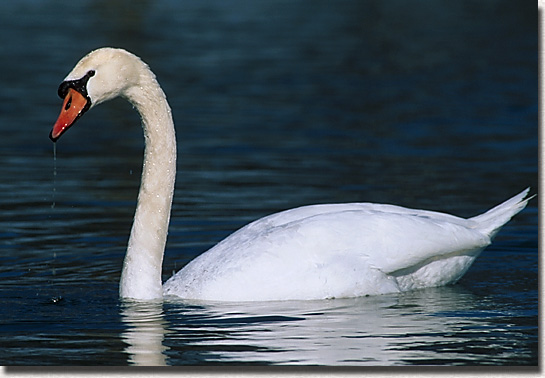
is like the swan, when he nervously lets himself down
into the water, which receives him gaily
and which flows joyfully under
and after him, wave after wave,
while the swan, unmoving and marvelously calm,
is pleased to be carried,
each moment more fully grown,
more like a king, further and further on.

Rilke
Not everything goes to plan 2: Don’t get alarmed

We have two kinds of fears. One is a fear that whatever is going on is going to go on forever. It’s just not true – nothing goes on forever. The other is the fear that, even if it doesn’t go on forever, the pain of whatever is happening will be so terrible we won’t be able to stand it. There is a gut level of truth about this fear. It would be ridiculous to pretend that in our lives, in these physical bodies, which can hurt very much, and in relationships that can hurt very much, there aren’t some very, very painful times. Even so, I think we underestimate ourselves.  Terrible as times may be, I believe we can stand them.

Because we become frightened as soon as a difficult mind state blows into the mind, we start to fight with it. We try to change it, or we try to get rid of it. The frenzy of the struggle makes the mind state even more unpleasant.

The familiar image is a children’s cartoon character, like Daffy Duck, walking along freely and suddenly stepping into toffee. In a hasty, awkward attempt to extricate himself, he might fall forward and backward and eventually be totally stuck in the toffee. The best solution would be the nonalarmed recognition, ‘This is toffee. I didn’t see it as I stepped into it, but I felt it after I got stuck. It’s just toffee. The whole world is not made out of toffee. What would be a wise thing for me to do now?’

Sylvia Boorstein, It’s Easier Than You Think

Being happy today 3: Let go of conditions

Each of us has a notion of how we can be happy. We could make a list of what we think we need to be happy: “I can only be happy if…” Write down the things you want and the things you do not want. Where did these ideas come from? Are they only your notions? If you are committed to a particular notion of happiness, you do not have much chance to be happy.

Happiness arrives from many directions. If you have a notion that it comes only from one direction, you will miss all of these other opportunities because you want happiness to come only from the direction you want. You say, “I would rather die than marry anyone but her. I would rather die than lose my job, my reputation. I cannot be happy if I don’t get that degree or that promotion or that house.” You have put many conditions on your happiness. And then, even if you do have all your conditions met, you still won’t be happy. You will just keep creating new conditions for your happiness. You will still want the new relationship, the higher degree, the better job and the more beautiful house.

Please remember that your notions of happiness may be very dangerous. Happiness can only be possible in the here and now. Go back and examine deeply your notions and ideas of happiness. So let go of what you believed yesterday. Let go of what you thought last week you needed to be happy. The conditions of happiness that are in your life now are enough.

Thich Nhat Hahn

Not everything goes to plan 3: Change is a part of life

Loss is a fact of life. Impermanence is everywhere we look. We lose loved ones. We lose our health. We lose our glasses. We lose our memory. We lose our money. We lose our keys. We lose our socks. We have to come to terms with this reality. How we deal with them is what makes all the difference. For it is not what happens to us that determines our character, but how we relate to what happens.

Lama Surya Das, Working with Loss

Staying fluid 1: The weather changes, so does life

Life’s energy is never static. It is as shifting, fluid, changing as the weather. How we relate to this dynamic flow of energy is important. We can learn to relax with it, recognizing it as our basic ground, as a natural part of life; Or the feeling of uncertainty, of nothing to hold on to, can cause us to panic, and instantly a chain reaction begins.

We panic, we get hooked, and then our habits take over and we think and act in a very predictable way. The source of our fear is the unfilfillable longing for a lasting certainty and security, for something solid to hold on to. Unconsciously we expect that if we could just get a better job, a better partner, a better something, then our lives would run smoothly. We get caught up in a fearful, narrow holding pattern of avoiding any difficulty and continually seeking comfort.

Pema Chodron, Taking the Leap

Facing up to Loss

Traditionally, in the Christian yearly calendar, November is the month for remembering those who have died.The roots of this tradition are probably found in the basic human awareness of the approach of winter and the shortening of the days. As well as reminding us of the impermanence of all things, including our health and life, it helps us reflect on the other losses which we face at times in our lives, such as when faced with change, or sickness or having to move. The most basic practice in these moments is to be aware of the feelings these losses provoke and not to run from them.

On some basic yet very deep level all of us feel fundamentally alone, and until we face this directly, we will fear it. Most of us will do almost anything to avoid this fear. Many, when faced with the fear of aloneness, get extra busy, or try to find some other escape. Ultimately, however, the willingness to truly feel the fear of aloneness and loss is the only way to transcend it. It’s also the only way to develop intimacy with others, because genuine intimacy can’t be based on neediness or on the fear of being alone.”

Ezra Bayda