
Twenty years from now you will be more disappointed at the things that you didn’t do than by the ones you did do.
So sail away from the safe harbor. Catch the trade winds in your sails.
Explore, Dream. Discover.
Mark Twain
Twenty years from now you will be more disappointed at the things that you didn’t do than by the ones you did do.
So sail away from the safe harbor. Catch the trade winds in your sails.
Explore, Dream. Discover.
Mark Twain
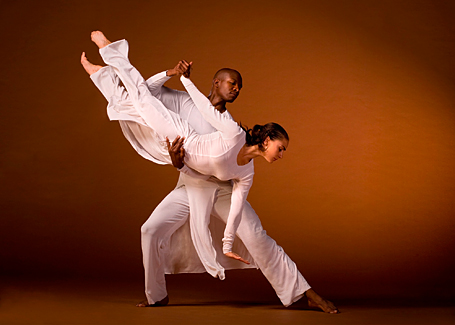
We are invited to forget
ourselves on purpose,
cast our awful solemnity to the winds and join in the general dance.
Thomas Merton

One reason why people meditate is to remain calm and focused in the face of the storms and pressures which face they encounter each day. Here Ajahn Sumedho breaks down how to do that, in practical terms. The simple ability to be aware – which we all have – is the key. Awareness is the calm place from which we can observe and notice those things that change – moods, good and bad, thoughts, positive and negative – without trying to hold on to them, or becoming identified with them. This is how we can remain at the eye of the storm and not get blown by the winds. We are aware of what we are feeling emotionally, but do not get caught up in it by analyzing it, judging it, or becoming it.
The stillpoint, the centredness, that’s awareness. When I cannot notice it and go out into the turning world, I become a person and get caught in my habits, my loves and hates, my likes and dislikes. But if I am centered at this point, it’s like the island you cannot go beyond, or the stillpoint of the turning world, the eye of the storm. And then the world revolves around it. The mood you are in is not the stillness. The mood comes and goes. It changes, revolves; it’s happy, sad, elated, depressed, inspired, bored, loving, hateful, and on and on like this….It’s so easy to say “I’m in a bad mood” or “I’m in a good mood” Our langauge is like that, so we become the mood – “I feel happy today, everything’s fine” or “Today is one of my bad days”. That’s why I encourage this investigation of thought, so that you are not creating yourself, endlessly reinforcing the sense of self through your proliferating thoughts.
Ajahn Sumedho, The Sound of Silence
 Sometimes when our thoughts are like little fleas that jump off our noses, we just see the little flickers of thought, like ripples, which might have a very liberating quality. For the first time you might feel ” My goodness! There’s so much space, and it’s always been here.” Another time it might feel like that elephant is sitting on you. It’s important to realize that meditation doesn’t prefer the flea to the elephant, or vice versa. It is simply a process of seeing what is, noticing that, accepting that, and then going on with life, which, in terms of the technique, is coming back to the simplicity of nowness, the simplicity of the out-breath. Whether you are completely caught up in discursive thought for the entire sitting period, or whether you feel that enormous sense of space, you can regard either one with gentleness and a sense of being awake and alive to who you are. Either way, you can respect that. So taming teaches that meditation is developing a nonaggressive attitude to whatever occurs in your mind. It teaches that meditation is not considering yourself an obstacle to yourself; in fact, it’s quite the opposite.
Pema Chodron
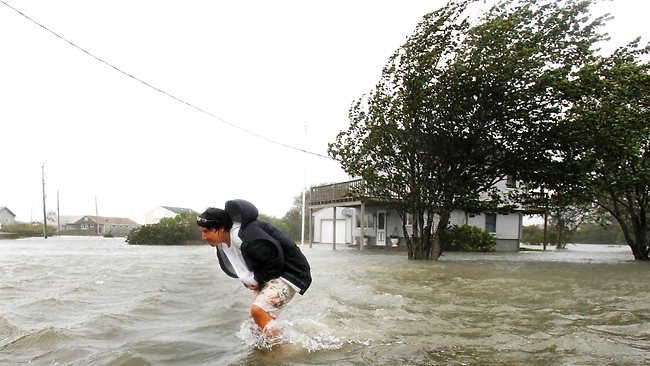
Similar thoughts to the ones posted on Monday, this time from a Christian perspective, written by probably the most influential Catholic Theologian of the 20th Century. He uses the word “pessimism” to describe the underlying sense of groundlessness which we frequently feel. His ideas are remarkably similar to ones found in other traditions, such as posts I have already written based on the work of Pema Chodron.
This perplexity in human existence is not merely a transitory stage that, with patience and creative imagination, might eventually be removed from human existence. It is a permanent existential of humanity in history and, although it keeps assuming new forms, it can never be wholly overcome in history……. Of course, we cannot say that human finitude and historicity alone explain the fact that history cannot follow its course without friction and without blind alleys. Nor can this Christian pessimism be justified merely by the fact that it is impossible fully to harmonize all human knowledge with its many disparate sources, or to build a fully harmonious praxis on the basis of such disparate knowledge. We might also mention that we can never fully understand the meaning of suffering and death. Yet in spite of all this, the Christian interpretation of human existence says that within history, it is never possible wholly and definitively to overcome the riddles of human existence and history, which we experience so clearly and so painfully…..
People are afraid of this pessimism. They do not accept it. They repress it. That is why it is the first task of Christian preaching to speak up for it.
Karl Rahner, “Christian Pessimism”, in Theological Investigations XXII
 There is a lot of material for reflection in this passage. Meditation allows us rest with our deep, inner, basic goodness, creating some relief from incessant critical thoughts. This allows us look forward with confidence and courage.
The reason we maintain a regular meditation practice is to open our eyes and have forward vision. Once we have confidence in the basic nature of things, we are more immediate in our life….Being hesitant – standing still or looking backward instead of forward – creates an immediate ripple effect. Life buckles behinds us and builds up pressure, blasting us forward. We are then coerced into dealing with issues at an accelerated rate, beyond what is comfortable or convenient. Such hesitation, which is a form of cowardice, stems from doubt in relation to our basic goodness.
Sakyong Mipham Rinpoche, Sunny Side Up

