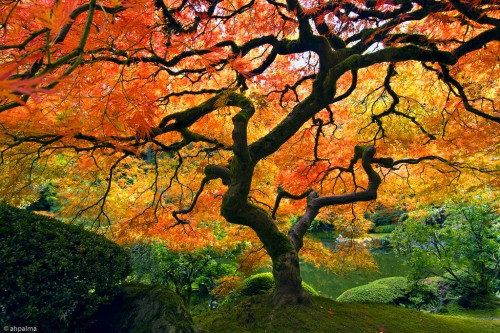
 The garden of
Love is green without limit, and yields many fruits other than sorrow
and joy.
Love is beyond either condition:
without spring,
without autumn,
it is always fresh.
Rumi
The garden of
Love is green without limit, and yields many fruits other than sorrow
and joy.
Love is beyond either condition:
without spring,
without autumn,
it is always fresh.
Rumi
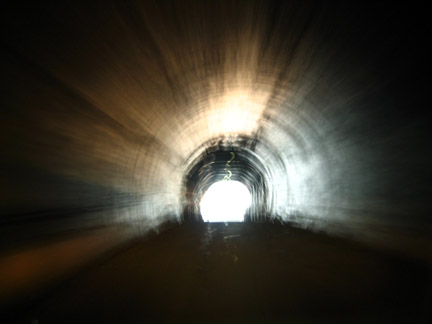 I watched the first of the Chilean miners being brought out alive from the depths of the earth where they had been trapped for nearly 70 days. It brought to mind the biblical tale of Jonah who was trapped in the whale for three days and all those stories and myths about people descending to the underworld to remerge later. These rich themes seem to speak deeply to aspects of our experience. Today I am just interested in the aspect of waiting, which some call of being in a state of limbo.
We can sometimes be in a phase of our life when we feel like we are waiting or we are stuck, and that can make us uneasy. It seems like we are going nowhere. There may be an acompanying sense of unease or low mood. However, what we may not know is that these periods can be ones of important growth. We may go through a dark period, but that doesn’t mean that we are depressed. We sometimes have to have the courage to wait until a new direction becomes clear. Our culture today prizes achievement and fast forward movement. To stand still is seen as the same as going backwards. Staying quiet and waiting is not valued as a process.
In this understanding, we can see that these periods, when we may feel stuck, even buried or in darkness. can be periods of rebirth. We are leaving behind some elements of the past only to emerge into a new light. As in the story of Jonah, we can be moving in a direction even if we seem to be trapped. The darkness is taking us where we need to go. Sometimes this becomes apparent only afterwards. Not all growth takes place in bright sunshine; as Thomas Moore reminds us, darkness is also part of life’s processes.
You may be so influenced by the modern demand to make progress at all costs that you may not appreciate the value in backsliding. Yet, to regress in a certain way is to return to origins, to step back from the battle line of existence, to remember the gods and spirits and elements of nature, including your own pristine nature, the person you were at the beginning. You return to the womb of imagination so that your pregnancy can recycle. You are always being born, always dying to the day to find the restorative waters of night.
The whale’s belly is, of course, a kind of womb. In your withdrawal from life and your uncertainty you are like an infant not yet born. The darkness is natural, one of the life processes. There may be some promise, the mere suggestion that life is going forward, even though you have no sense of where you are headed. It’s a time of waiting and trusting. My attitude as a therapist in these situations is not to be anxious for a conclusion or even understanding. You have to sit with these things and in due time let them be revealed for what they are.
In your dark night you may have a sensation you could call “oceanic” – being in the sea, at sea, or immersed in the waters of the womb. The sea is the vast potential of life, but it is also your dark night, which may force you to surrender some knowledge you have achieved. It helps to regularly undo the hard-won ego development, to unravel the self and culture you have woven over the years. The night sea journey takes you back to your primordial self, not the heroic self that burns out and falls to judgment, but to your original self, yourself as a sea of possibility, your greater and deeper being.
Thomas Moore, Dark Night of the Soul
 The disciple was always complaining to his master,
“You are hiding the final secret of Zen from me.”
And he would not accept the master’s denials.
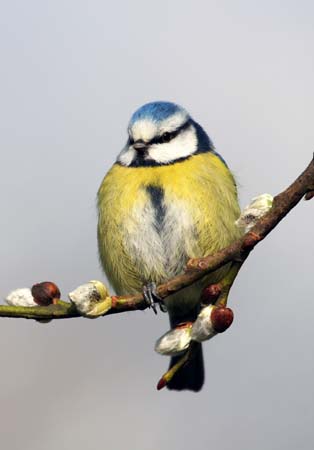
One day they were walking in the hills when they heard bird a bird sing.
“Did you hear the bird sing?” asked the Master?
“Yes,” said the disciple.
“Well, now you know that I have hidden nothing from you.”
“Yes.”
Anthony de Mello
 A person I have known for some years now just recently got engaged. It is a time of celebration and joy. Moments like these bring a smile to all and has made me realize how much I like the word happiness However I am slow to use it and it nearly always provokes a strange look on the faces of those who hear. It seems almost presumptious to speak as if we have any right to expect full happiness. And yet happiness has been the concern of humans since earliest times, as we can see in the Greek Philosophers reflections on happiness. And we are told that among Jesus’ first words in his early Sermon on the Mount was “Happy are those who…. ” In more recent times, Daniel Gilbert has made the focus of his study happiness and what makes us happy, as seen in his excellent book Stumbling on Happiness.
We are told that happiness is deep within us, even if we do not feel it. However, it seems to me that we have to work at it every day. It can occur even when times are tough, if we cultivate a spirit of noticing and wonder. We can practice the brain’s capacity for happiness by explicitly noting to ourselves the moments which are pleasant in each day, even the simplest. As in response to my friend’s engagement we can mentally toast these moments. And we can go further: we can create occasions of celebration in even the smallest events in our lives. This reminds us that life is not there just to be endured but to be celebrated. As Brother Roger of Taize used to say, we should ensure that the spring of jubilation will never dry up in our hearts.
The eye is meant to see things. The soul is here for its own joy.
Rumi
 Our practice aims to free our hearts from the fears that provoke us to exclude and reject others. It is based on an understanding that everyone, fundamentally, wishes to be happy, and at the same time everyone’s heart is wounded. So we all hope for peace and connection, but are at the same time frightened of love:
We human beings are all fundamentally the same. We all belong to a common broken humanity. We all have wounded, broken hearts. Each one of us needs to feel appreciated and understood; we all need help. Every child, every person needs to know that they are a source of joy; every child, every person, needs to be celebrated. Only when all of our weaknesses are accepted as part of our humanity can our negative, broken self-images be transformed. Fear closes us down; Love opens us up.
Jean Vanier, Becoming Human
The fear of showing our vulnerability leads us to hide because we do not want others to see our interior poverty: To have our ‘poverty’ seen by others and ‘our profound vulnerability’ touched by them, makes us fear that we will be abandoned….We must be honest with ourselves and acknowledge an important truth: I am not superior to you, I am not better than you, I am like you. I have frailty, my limitations which, perhaps, I have often hidden; you have limitations, perhaps more visible, but behind your limitations you are a person, your heart is.
Jean Vanier, Speech, Rome 2006
 Autumn is a “Season of mists and mellow fruitfulness” according to Keats. The last few days have certainly been misty, with low cloud obscuring the changing colours on the trees. Traditionally, mist has signified a difficulty in seeing and distortion in our understanding of the reality of things. Over the weekend I have being aware of some people who are coping with the descent of mist, fog and darkness in their lives. And like driving in real fog, working with the fog of confusion and loss can be dangerous in our mental life, because I find it hard to keep an awareness of both aspects which Keats writes about, the presence of mist and the reality of fruitfulness. Often when the fog of my emotions are strong, I tense around them, and lose the sense of my direction and goodness underneath them. I cannot see my way, believing the truth of the story connected with the emotion and not the fact of my own inner goodness. I find it hard to connect with my heart and see the fruits produced by its simple acts of kindness. I always demand brighter, bigger truths in times of darkness. I try to strengthen and protect my sense of self.
However, some times we have to accept the passing of low clouds. They obscure but do not take away the reality underneath. Just as the trees and the vines give up their fruit under the mist, we too may be at our most fruitful. We see these thoughts for what they are, self-judging thoughts which keep us obsessed with ourselves. Have you ever noticed that we prefer to give our experience labels like “I am falling apart“, “I am a mess” rather than just staying with the experience? It seems to comfort us somewhat. Our practice is to stay with the experience as felt in the body, without adding to it. The fog is just fog. It comes and goes. Then there will be sun. Neither of them are the essence of the tree. We work with seeing the fog as a mind state which can be held in our awareness. When we do this we can see depression and suspicion, paranoia and fear as nothing more than changing weather systems in the mind. They do not belong to me and affect who I truly am in any way.
Can we realize that thoughts about myself—I’m good or bad, I’m liked or disliked—are nothing but thoughts, and that thoughts do not tell us the truth about what we really are? A thought is a thought, and it triggers instant physical reactions, pleasures and pains throughout the bodymind. Physical reactions generate further thoughts and feelings about myself—”I’m suffering,” “I’m happy,” “I’m not as bright, as good-looking as the others.” That feedback implies that all this is me, that I have gotten hurt, or feel good about myself, or that I need to defend myself or get more approval and love from others.
In using our common language the implication is constantly created that there is someone real who is protecting and someone real who needs protection. Is there someone real to be protected from words and gestures, or are we merely living in ideas and stories about me and you, all of it happening in the ongoing audio/video drama of ourselves? Can there be some awareness of defenses arising, fear and anger forming, or withdrawal taking place, all accompanied by some kind of story-line? Can the whole drama become increasingly transparent? And in becoming increasingly transparent, can it be thoroughly questioned? What is it that is being protected? What is it that gets hurt or flattered? Me? What is me? Is it images, ideas, memories?
Toni Packer, What is this me? Shambala Sun
 Mindfulbalance