 When we are no longer able to change a situation,
we are challenged to change ourselves.
Victor Frankl
When we are no longer able to change a situation,
we are challenged to change ourselves.
Victor Frankl
An old soothing lullaby, in Irish, to calm the baby before sleep, sung here by Altan. The deepest rest comes when we know we are safe and we can let go. The progressive internalization of this safety from consistent parenting in our childhood is crucial for our capacity as adults to be alone.
Dún do shúil, a rún mo chroí
A chuid den tsaol, ‘s a ghrá liom
Dún do shúil, a rún mo chroí
Agus gheobhair feirín amárach
Close your eyes, love of my heart
My worldly joy, my treasure
Close your eyes, o love of my heart
And you will get a present tomorrow
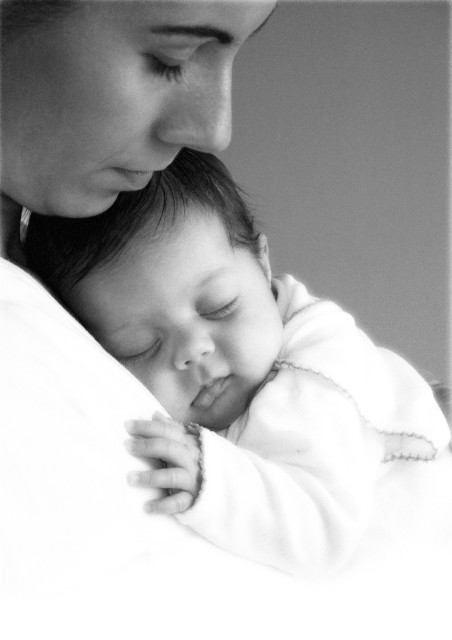 All around the world the popular Christmas song, Stille Nacht/Silent Night is sung on this day. The German word stille has some deeper connotations than what is conveyed by the English word “silent”. It has its roots in the verb “stillen”, meaning to suckle, to quieten a child and put to rest. The mother feeds and comforts the hungry child so that it becomes calm and content, able to close its eyes and sleep. For us too, the calm which we all desire inside our hearts is related to our awareness of being safe, which allows us to become still inside.
As an adult, can we ever get back to this early awareness of calm? Maybe never fully, but there are some things we can do. It seems that this interior stillness is related to exterior quiet. It has been found that noise raises cortisol levels, the hormone related to stress and anxiety and that taking some quiet time lowers these levels. It has even been measured. Apparently 12 minutes of quiet will bring down cortisol levels in the brain and lay the foundation for calm. However, these days, this is not se easy to do. We are continually bombarded by noise: the TV, radio, iPods, mobile phones, and computers hardly stop for a second. We also live in an age of visual stimulation that leaves us craving louder and brighter, kinds of entertainment. These means that a lot of us are extremely uncomfortable with silence and have become so unfamiliar with it that even momentary periods of quiet are quickly filled with sound or anxiety.
And yet, we all long to silence the noisy chatter of our thoughts, the crying of our needs and emotions, and develop a place of quiet and calm within us. A place which is safe, away from the judgments, expectations and demands placed on us by our own critical mind or by others. At some times in our lives we find it relationships with others, or in the embrace of our family. However, what this day and all the wisdom traditions remind us, is that real, lasting peace is to be found within our hearts, a quiet space where nothing can harm us, untouched by all the stuff that others may wish to impose upon us. If we do not find that stillness within, it is hard to find it in the outside circumstances of our lives. Only when we have found this inner place of peace can we have contact with others without anxiety. We can rest, and be still, without fear of being hurt.
 It is striking that the first words spoken by the angels in the Christmas story are “Do not be afraid”. It is as if one of the most important messages needed to be communicated to us is for us not to be limited by our fears. Everyday we see that the mind likes to dwell in fear. In fact, it is striking to notice how much of our day-to-day life is governed by an undercurrent of fear, which lurks behind a lot of our behaviours. This is why it is so hard to just sit still or stand still and just be ourselves — not doing anything to prove ourselves — without feeling anxious or fidgety. For these reason, we frequently develop a False Self when young, a mask which we think will be more acceptable to others. This False self is in response to failures encountered when we were growing, which led us to believe that we were not acceptable just as we are. We feel we are not “good enough” and thus have to create a persona that we believe is better, maybe a “compulsive harder working self,” or an “always trying to please self”, or an always” taking care of others while neglecting our own needs” self.
However, the different wisdom traditions teach that our True Self is worthwhile in and of itself. Real freedom and joy is possible, without hiding, and our exterior self can reflect our ture interior being, provided we know where to start. We need to begin with developing a kindness and warmth towards ourselves, by cultivating the eyes of these angels towards our inner self. Maybe these divine visitors see more clearly into our true nature, and remind us to look to that, and not to the fearful thoughts that discourage us. At times we find it easier to see ourselves in a limited and impoverished way, with our repeated patterns of thinking reminding us that we are weak or struggling. These texts remind us that there is a natural courage deep inside us. They encourage us to believe, to dare, to open up to possibilities. Fully becoming who we are begins with where we are, actually, at this point in our lives. If they can see goodness and courage in us, why can’t we?
 As yesterday’s post said, one way we cope with anxiety is that we live somewhat in the future, imagining a better time which is going to happen soon. The capacity of the brain for imagining and predicting the future is an important survival tool, which evolved over billions of years to enable us remember and avoid dangerous situations. The same capacity functions in our early years when it is vital that the child receives consistent and responsive caregiving from the parents. When this is lacking in some key ways, the child forms an picture of how unreliable and unsafe the world is and how much people can be trusted. This knowledge then becomes “encoded” in the brain as a paradigm of how to feel secure. In other words, the child makes a prediction of how relationships will have to be managed from its experience of how it is in its relationships with its parents.
This prediction becomes a working model which stays with us as we navigate our way through relationships in adult life. Thus, we tend to behave in relationships based on how we predict or imagine people will treat us, in line with our early experiences. The problem with this is that, while our early model may have worked in keeping us safe as a child, it can make us be overly distrustful and hyper-vigilant as adults. Something which was adaptive when young frequently becomes maladaptive in adulthood where it is not necessary to the same degree. In this way, the predictive capacity of the brain can become a liability. The stored fears and anxieties of childhood – which are unfortunately quite resistant to change – can exert a huge influence in adulthood, leading to an avoidance of intimacy and resulting in the person feeling as emotionally isolated as they did in childhood. The brain can continually predict danger, and takes the model it has learnt to be the only way to behave. When it meets new situations, or new people, it makes predictions which give preference to fear-based scenarios, rooted in the past. It then conspires to bring about the scenario it is most familiar with. Sadly, as psychoanalyst Regina Pally reminds us, we learn from the past what to predict for the future and then live the future we expect. In this way – in a phenomenon which Freud termed the “repetition compulsion” – we frequently end up in the situation which our defenses were set up to avoid, recreating the same dynamics and destructive scenarios that we experienced as children, despite the brain believing that we are doing differently.
 When a major event is celebrated, such as Christmas, we often get into a state of anticipation, of waiting. It is as if we think something is going to be suddenly different in the future. Often we use the busyness of everyday work to mask what we really feel underneath. Then we look forward to the special day or to the vacation, thinking that it will somehow fix whatever out of balance in our lives. However, there is a danger in this, as we can fall into the trap of linking our happiness to some future moment, which only leads us to feel more discontent when we see that nothing has changed. This type of fantisizing about the future is normally a way of avoiding some difficulty about our life in the present. True contentment comes from working with our life as it as – from surrendering to what is – and not trying to escape from it.
Peace can only exist in the present moment. It is ridiculous to say “Wait until I finish this, then I’ll be free to live in peace”. What is “this”? A diploma, a job, a house, the payment of debt? If you think that way peace will never come. There is always another “this” that will follow the present one. If you are not living in peace at this moment, you’ll never be able to. If you truly want to be at peace, you must be at peace right now. Otherwise there is only hope for peace “some day.”
Thich Nhat Hahn, The Sun my Heart
 Mindfulbalance