 Celebrated a birthday today, and the passing of another year. When I lived in Rome I quickly lost any shyness around these occasions as they were considered moments of joy to be shared with all and an excuse for a cake and a celebration! So that is how I marked it, with gratitude for life and all the moments that it contains. And receiving messages and kindnesses from people, some of whom I was amazed even knew the day that it was, also reminded me of the goodness of people and the joy there is in receiving.
I have learnt a lot this past year. In my work, and in my own life, I have seen colleagues move far away, I have been with people struggling with illness and death, walked with individuals as they tried to reconcile the demands of personal growth with their commitments and I have personally realized a lot about the nature of true friendship and support. At times, these experiences have made me really wonder whether there is any point in continuing to give, in remaining open; the temptation has been to shut down, to insulate the heart. I have asked whether it is worth the risk to continue to reach out to others. And yet, all these ups and downs have made me recognize more and more that life is an extended practice of becoming the best I can be. I see that it is a bit like meditation practice – I do not have to be perfect- all I have to do is just turn up. I just need to be there even if I think I do not have the right words and be close to what others and what life offers.
Even as an adult, with the years passing, I have had many moments when I felt lost. Life is such a long journey, and I have seen often this past year that we all have difficulty knowing who we really are or where we really need to go, or even where we come from. There is no GPS for this life, no pre-determined maps, no magical tarot cards which give us the final, clear answers to its mysteries. We can only do our best. Sometimes, and for some people, that is not enough. But what we are working on is not perfection, but a slow and steady path which leads us to a greater acceptance of where our life is. It is about increasingly befriending who we are, moment by moment, year by year.
What does it take to use the life we already have in order to make us wiser rather than more stuck? What is the source of wisdom at a personal, individual level? The answer to these questions seems to have to do with bringing everything that we encounter to the path. Everything naturally had a ground, path, and fruition. This is like saying that everything has a beginning, middle, and end. But it is also said that the path itself is both the ground and the fruition. The path is the goal.
This path has one very distinct characteristic: it is not prefabricated. It doesn’t already exist. The path that we’re talking about is the moment-by-moment evolution of our experience, the moment-by-moment evolution of the world of phenomena, the moment-by-moment evolution of our thoughts and emotions. The path is uncharted. It comes into existence moment-by-moment and at the same time drops away behind us.
When we realize that the path is the goal, there’s a sense of workability. Everything that occurs in our confused mind we can regard as the path. Everything is workable.
Pema Chodron
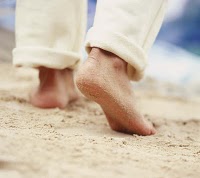 In our daily life, our steps are burdened with anxieties and fears. Life itself seems to be a continuous chain of insecure feelings, and so our steps lose their natural easiness. [However] Our earth is truly beautiful. There is so much graceful, natural scenery along paths and roads around the earth! Do you know how many forest paths there are, paved with colorful leaves, offering cool and shade? They are all available to us, yet we cannot enjoy them because our hearts are not trouble-free, and our steps are not at ease.

 Mindfulbalance