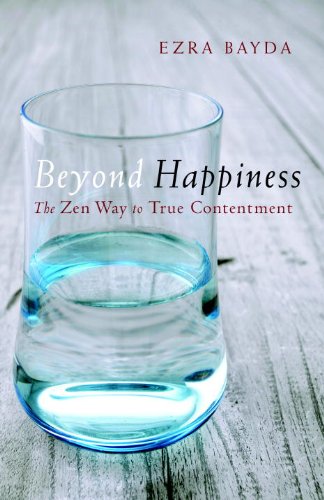
 Will do some book reviews over the next few weeks. I always like Ezra Bayda’s writing, especially At Home in the Muddy Water. He is from the Zen tradition, having trained with Charlotte Joko Beck, at the Ordinary Mind Zen School. He is a student of meditation since 1970 and currently teaches at the Zen Center in San Diego. His latest book is entitled Beyond Happiness: The Zen Way to True Contentment. It was nominated as “one of the best books of the year” by the magazine Spirituality and Health.
This book bases itself on the most recent research on happiness, such as that found in The How of Happiness by Sonja Lyubomirsky, where we learn that external circumstances, such as our career, relationships and prosperity are not as important in our overall happiness as we may think. Rather, we are born with a certain predisposition to happiness and then can work on our happiness by the way we deal with our everyday circumstances. In other words, our “intentional activities”are largely responsible for how happy we are – mindful actions that we do every day to achieve a happier life. Eric Bayda develops this concept by asking three key questions: Am I truly happy right now? If not, what blocks it? And, can I surrender to what is? At the end of the day he comes up with two key ways that we can work at developing our sense of contentment and removing the things that block and poison our heart, namely, cultivating gratitude and actively forgiving.
This is a nice book in the current trend of applying Buddhist principles to the psychological areas of growth in our lives and practical ways of developing contentment.
Perhaps one of the commonest places we get stuck and consequently one of the places that most prevents happiness is holding onto resentments. If there is even one person we cannot forgive, it closes our hearts in bitterness and will prevent us from experiencing the equanimity of genuine happiness….It may be easy for us to be kind, and also forgiving, when life is going well. But it is only when life gets difficult that the depth of our spiritual practice is revealed. For our kindness to be real it cannot depend on how others treat us, or how we feel at any given moment.
 You are what you want to become.



 Mindfulbalance