A key way of working with fears: Stay with the emotion in the body

As the previous post noted, we try to bring awareness to the patterns which repeat in our lives. However, they can often have very deep roots in the emotional wounds which we carry with us from the past  of which we are unaware. This quote points to  a way of working with them as they actually manifest in the day-to-day of our experience. Most of our deep wounds are connected to relationships in the past and therefore we  can imagine a situation where a current relationship causes our anxiety and fears to rise.  These then give rise to a cascade of thoughts about ourselves or others, painting worse-case scenarios or stories about deficiencies in ourselves. What is the best way to work with this?  In this moment we do not know the roots in the past which the experience has touched into. However, we do have a very real feeling – of fear, or of  flight – in the body. So we stay with that. We acknowledge, if possible,   the story line that the mind is running, but leave it to one side. We try to stay with fear or anxiety as an embodied feeling and work with the energies associated with the feeling.  Stay with the emotion with kindness and non-judgment as much as you can as a feeling in the body, breathing into the feelings and widening the space around them. In this way we hold ourselves  and our fears in awareness and acceptance, just as a mother would hold a frightened child.

You may not yet be able to bring your unconscious mind activity into awareness as thoughts, but it will always be reflected in the body as an emotion, and of this you can become aware.

Eckhart Tolle

Repeating

Two Jungians writing about the fact that we often see people repeating the same story in their lives, over and over again.  Sometimes these repetitions are of a neurotic nature: returning again and again to what Jung called  “the practice and repetition of the original experience” which was laid down in childhood, even though that experience is not necessarily healthy. We see people drawn back to repeat relationships which echo the one they had with wounded parents who could not meet their needs for consistency and care. They create self-sabotaging patterns and repeat these as they are familiar, sometimes,  ironically, believing that they are the opposite of what was happening when they were little.

However, gradually, if awareness is brought to these repetitions,  a second process can take place. A deeper natural energy within us begins to challenge these choices and allows for a healing to take place. God enters through the wound, Jung said, and so if we start to make conscious these patterns, we start to grow. If left outside of awareness they will continue to haunt our lives. Thus often we are learning the same story in our life, being brought back again and again to the place where we most need to grow, where we need to find our deepest meaning. As Jung further said, a neurosis is the suffering of a soul which has not discovered its meaning, and thus repetitions  are an expression of our desire for healing, and the process by which our real Self comes into being.

The individuation process – the way of development and maturation of the psyche – does not follow a straight line, nor does it always lead onwards and upwards. The course it follows is rather stadial, consisting of progress and regress, flux and stagnation in alternating sequence. Only when we glance back over a long stretch of the way can we notice the development. If we wish to mark out the way somehow or other, it can equally well be considered a “spiral”, the same problems and motifs occurring again and again on different levels.

Jolande Jacobi

The coming of consciousness is not a discovery of some new thing; it is return to that which has always been

Helen Luke

Not creating anything new


Peaceful abiding describes the mind as it naturally is…

The human mind is by nature joyous, calm, and very clear. In  meditation we aren’t creating a peaceful state—we’re letting our mind be as it is to begin with…

Sakyong Mipham Rinpoche

Don’t believe everything you think!


You don’t have to believe your thoughts.We sometimes find ourselves in pretty dark corners, with lots of thoughts whirling around: sad thoughts, depressed thoughts.

We have a lot of sweeping to do everyday, not just house cleaning, but also have to pay attention to the mind and sweep these thoughts, seeing in them what they actually are: a simple and natural activity of the mind.

Taigu

Be struck by life today

Another lovely poem by Mary Oliver on how we can look at the world – and everything we see today – as a doorway to deeper mysteries and as a place where our heart can grow. Her words reconnect us with all that is around us and with a deep sense of acceptance of our journey here.

As for life, I’m humbled,
I’m without words sufficient to say

how it has been hard as flint,
and soft as a spring pond,
both of these and over and over,

and long pale afternoons besides,
and so many mysteries, beautiful as eggs in a nest,
still unhatched

though warm and watched over
by something I have never seen—
a tree angel, perhaps, or a ghost of holiness.

Every day I walk out into the world
to be dazzled, then to be reflective.
It suffices, it is all comfort—
along with human love,

dog love, water love, little-serpent love,
sunburst love, or love for that smallest of birds
flying among the scarlet flowers.
There is hardly time to think about

stopping, and lying down at last
to the long afterlife, to the tenderness
yet to come, when
time will brim over the singular pond, and become forever,

and we will pretend to melt away into the leaves.

Mary Oliver, Long Afternoon at the Edge of Little Sister Pond

(Photograph courtesy of Jasmine Trotter  http://killdollphotographies.tumblr.com/)

No ground beneath our feet

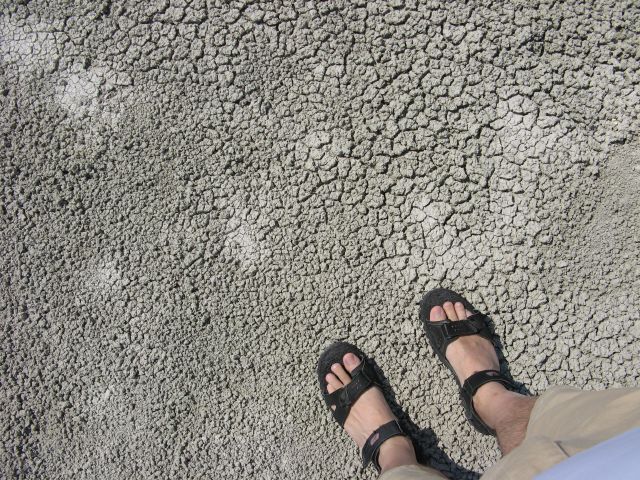
In Tibetan there is an interesting word:  ye tang che.  The ye part means “totally, completely,” and the rest of it means “exhausted.”  Altogether, ye tang che means totally tired out.   It describes an experience of complete hopelessness, of completely giving up hope.  This is an important point.  This is the beginning of the beginning.  Without giving up hope that there is somewhere better to be, that there is someone better to be,  we will never relax with where are or who we are.

To think that we can finally get it all together is unrealistic.  To seek for some lasting security is futile.  To undo our very ancient and very stuck habitual patterns of mind requires that we begin to turn around some of our most basic assumptions.  Believing in a solid, separate self, continuing to seek pleasure and avoid pain, thinking that someone “out there” is to blame for our pain : one has to get totally fed up with these ways of thinking.  One has to give up hope that this way of thinking will bring us satisfaction.  Suffering begins to dissolve when we can question the belief or the hope that there is anywhere to hide.

Hopelessness means that we no longer have the spirit for holding our trip together.  We may still want to hold our trip together.  We long to have some reliable, comfortable ground under our feet, but we’ve tried a thousand ways to hide and a thousand ways to tie up all the loose ends, and ground just keeps moving under us.  Trying to get lasting security teaches us a lot, because if we never try to do it, we never notice that it can’t be done.   At every turn we realize once again that it’s completely hopeless – we can’t get any ground under our feet.

Pema Chodron