
The most fundamental aggression to ourselves, the most fundamental harm we can do to ourselves, is to remain ignorant by not having the courage and the respect to look at ourselves honestly and gently
Pema Chodron
The most fundamental aggression to ourselves, the most fundamental harm we can do to ourselves, is to remain ignorant by not having the courage and the respect to look at ourselves honestly and gently
Pema Chodron

Sometimes we find that we like our thoughts so much
that we don’t want to let them go
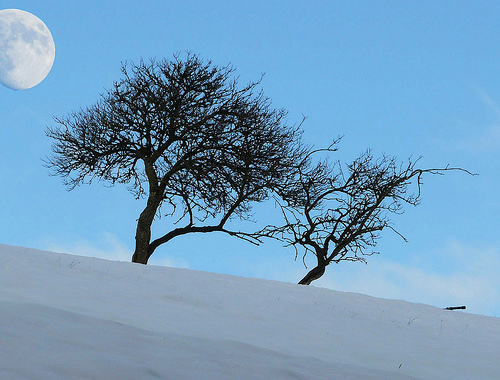 A samurai, a very proud warrior, came to see a Zen Master one day. The samurai was very famous, but looking at the beauty of the Master and the grace of the moment, he suddenly felt inferior.
He said to the Master, “Why am I feeling inferior? Just a moment ago everything was okay. As I entered your court suddenly I felt inferior. I have never felt like that before. I have faced death many times, and I have never felt any fear — why am I now feeling frightened?”
The Master said, “Come outside.”
It was a full moon night, the moon was just rising on the horizon. And he said, “Look at these trees. This tree is high in the sky and this small one beside it. They both have existed beside my window for years, and there has never been any problem. The smaller tree has never said to the big tree, ‘Why do I feel inferior before you?’ This tree is small, and that tree is big — why have I never heard a whisper of it?”
The samurai said, “Because they can’t compare.”
The Master replied, “Then you need not ask me. You know the answer.”
Zen Parable
 The goal of attention, or shamatha, practice is to become aware of awareness. Awareness is the basis, or what you might call the “support,” of the mind. It is steady and unchanging, like the pole to which the flag of ordinary consciousness is attached. When we recognize and become grounded in awareness, the “wind” of emotion may still blow. But instead of being carried away by the wind, we turn our attention inward, watching the shifts and changes with the intention of becoming familiar with that aspect of consciousness that recognizes Oh, this is what I’m feeling, this is what I’m thinking. As we do so, a bit of space opens up within us. With practice, that space—which is the mind’s natural clarity—begins to expand and settle.
Yongey Mingpur Rinpoche

We are what we think. All that we are arises with our thoughts.
With our thoughts we make the world.
Jack Kornfield
 In mindfulness meditation we learn to be present for things as they are. In doing so, it can be useful to assume the attitude of a naturalist. A naturalist simply observes nature without interfering or imposing his or her views. If a wolf eats a deer, a naturalist watches without judgment. If a plant produces a stunningly beautiful blossom, a naturalist leaves it alone, not succumbing to the desire to take it home.
In meditation, we observe ourselves much as a naturalist observes nature: without repressing, denying, grasping, or defending anything. This means that we observe our life with a non-interfering presence. We can see anger, depression, fear, happiness, joy, pain, and pleasure directly, as they are, without complications. The naturalist’s perspective is one of respect for what is observed. The word “re-spect” is a nice synonym for mindfulness practice because it literally means to look again.
By cultivating a naturalist’s perspective during meditation, it is possible to develop a capacity to be non-reactive. For this non-reactive perspective, we can more easily explore how to respond wisely to whatever circumstances we find ourselves in.
Gil Fronsdal
 Mindfulbalance