Our ongoing relationship with fear

Fear is our first, and if we are not careful, our last love. It is our most enduring relationship. It never leaves our side. It tells us where to go, what to wear, what to say and what not to say. We surrender all other options to it. Before,  after and during most of our relationships we are concerned above all not with the other party but with what we fear he or she will do…. We are unavailable for any truly loving and fulfilling relationship so long as we are in a committed relationship with the most controlling part of our own mind – our fear. Our fear of what will happen and our fear of what will not.

Nearly everything we are afraid will happen is going to happen anyway, so what’s to fear? There is no secure or underlying ground, so we make ourselves safe only when we see and accept the way life is. Utterly spontaneous and impermanent. When it is time to laugh, we laugh. When it is time to weep, we weep. We are cheated of nothing in life except that from which we withhold ourselves by ego’s narrow bounds. These bounds were meant to break; indeed they must, if we ever hope to be whole again

Karen Maezen Miller, Hand Wash Cold: Care instructions for an ordinary life.

Learning to be

Meanwhile, we miss the fact that we are losing the main point and that what we are doing has turned into a self-based program. We get caught in the illusion, trying to make the self become something other. We can relax without switching off, and consequently we can enjoy the fruits of our work. This is what we mean by letting go of becoming and learning to be. If we’re too tense and eager to get to the other end, we’re bound to fall off the tight rope.

Ajahn Amaro

Endings give rise to new beginnings

I know that when I struggle with the pain of any loss, the struggle preoccupies my mind and leaves no room for hope. However, when I recognize the pain I feel as the legitimate result of loss, I am respectful of its presence and kind to myself. My mind always relaxes when it is kind, and around the edges of the truth of whatever has ended, I see displays of what might be beginning.

Sylvia Boorstein

Simple daily practices: Bring awareness to your anxiety

To begin with, I’ve found it helps me to appreciate how scared that little lizard inside each one us is. Lizards – and early mammals, emerging about 200 million years ago – that were not continually uneasy and vigilant would fail the first test of life in the wild: eat lunch – don’t be lunch – today.  So be aware of the ongoing background trickle of anxiety in your mind, the subtle guarding and bracing with people and events as you move through your day. Then, again and again, try to relax some, remind yourself that you are actually alright right now, and send soothing and calming down into the most ancient layers of your mind.

 Also soothe your own body. Most of the signals coming into the brain originate inside the body, not from out there in the world. Therefore, as your body settles down, that sends feedback up into your brain that all is well – or at least not too bad. Take a deep breath and feel each part of it, noticing that you are basically OK, and letting go of tension and anxiety as you exhale; repeat as you like. Shift your posture – even right now as you read this – to a more comfortable position. As you do activities such as eating, walking, using the bathroom, or going to bed, keep bringing awareness to the fact that you are safe, that necessary things are getting done just fine, that you are alive and well. Register the experience in your body of a softening, calming, and opening; savor it; stay with it for 10-20-30 seconds in a row so that it can transfer to implicit memory.

Rick Hanson, Pet the Lizard

The link between letting go and happiness

We believe that it is difficult to let go, but in truth, it is much more difficult and painful to hold and protect.  Reflect upon anything in your life that you grasp hold of – an opinion, a historical resentment, an ambition, or an unfulfilled fantasy.  Sense the tightness, fear, and defensiveness that surrounds the grasping.  It is a painful, anxious experience of unhappiness.  We do not let go in order to make ourselves impoverished or bereft. We let go in order to discover happiness and peace.

Christine Feldman


Training with perseverence

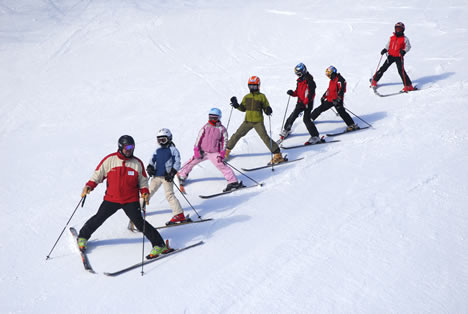
We all well know, as the contemporary Tibetan master Jogme Khyentse Rinpoche reminds us, that ” we don’t need to train our minds to improve our ability to get upset or jealous. We don’t need an anger accelerator or a pride amplifier”. By contrast, training the mind is crucial if we want to refine and sharpen our attention, develop emotional balance, inner peace and wisdom, and cultivate dedication to the welfare of others. We have within ourselves the potential to develop these qualities, bit they will not develop by themselves or just because we want them to. They require training. And all training requires perseverance and enthusiasm. We won’t learn to ski by practising one or two moments a month.

Matthieu Ricard, The Art of Meditation