Estranged from our true selves

Thus the state of our whole life is estrangement from others and ourselves, because we are estranged from the Ground of our being, because we are estranged from the origin and aim of our life. And we do not know where we have come from, or where we are going. We are separated from the mystery, the depth, and the greatness of our existence. We hear the voice of that depth; but our ears are closed. We feel that something radical, total, and unconditioned is demanded of us; but we rebel against it, try to escape its urgency, and will not accept its promise.

Paul Tillich

Recommended Summer Reading 3

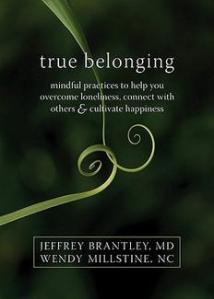
Jeffrey Brantley is the director of the Mindfulness-based Stress Reduction program at the Duke Center for Integrative Medicine. I find that he is one of the clearest and best writers about  mindfulness meditation practice, giving straightforward and unfussy instructions. His latest book, written in conjunction with Wendy Millstine, is a lovely small-sized work entitled, True Belonging: Mindful Practices to Help You Overcome Loneliness, Connect with Others, and Cultivate Happiness.

The book essentially looks at how mindfulness practice can help us nurture connections and relationships, thus reducing the sense of separateness and loneliness which is increasingly common in today’s world.  It is divided into four sections. The first section, called “Foundation” introduces mindfulness and leads in a core mindfulness of breath practice. The Next three sections are entitled “Connecting with yourself”, “Connecting with others” and Taking mindful and compassionate action in the world”, and consist of reflections followed by guided exercises to help the reader enter into the theme covered in each chapter.

There is a lot of lovely material contained in these short pages, which would reward any reader who takes each chapter and allows the insights and practices sink gently into the heart. For example, sections such as “The Gift of Forgiveness”. “Nourishing your hunger for Connection”  or “Dissolve the Boundary” introduces readers into reflections on what separates them from others or what historical baggage may be holding them back. The subsequent exercises then, in a simple, direct way, leads the reader into mediations focused on these areas.

This book, although it does have a section introducing mindfulness, is a perfect one for deepening meditation practice and allowing it soak into the deeper aspects of our being and our lives. Its format makes it seem like a guidebook and it seems to me to be something to be taken up at different times during the summer months. It touches into,  and potentially can heal, the disconnectedness arising from the mistaken beliefs we have built up about ourselves and others.

Our deep hope and intention in writing this book is that as you read the narratives here, and most importantly, you try and directly experience at least some of the practices, you will gain increased understanding, a deeper sense of connection and greater peace and happiness. And we hope and intend that you will be guided and inspired by that experience in some mysterious way so that, just possibly, our world and others in it may benefit more than ever by the beauty of your life (p. 13).

The changing textures of each moment

As we become aware of the textures of the moment, we’re rarely willing to experience them the way they are. We’re apt to see one aspect or another as a problem to be solved or an obstacle to be overcome. This is because we believe in our judgments and opinions about whatever is going on. For example, if we’re bored or sleepy during sitting,we usually judge it as a bad thing. If we feel agitated or upset, we think we have to calm down.. When we feel confused, we may long for clarity. But our practice is to simply remember that no matter what may be happening, it need not be seen as an obstacle or enemy, nor as something to fix or change or get rid of.  From a practice point of view, whatever it is, it’s our path.

Ezra Bayda, Being Zen

Sunday Quote: Where we focus our energies

It is not up to us to believe in God,

but only to not grant our love to false gods.

Simone Weil

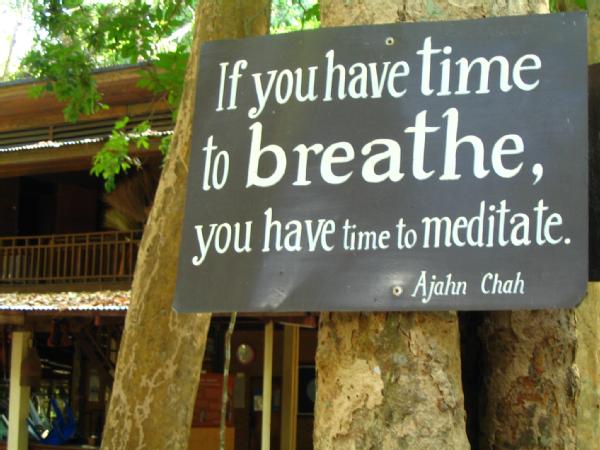
Making time for our better health 6: Not making excuses

When we get rushed, the mind will formulate all kinds of reasons why we cannot do the things which are good for us – take time out, meditate, exercise, visit friends. This is because it realizes we are under pressure, and mistakenly opts for two contrasting strategies to deal with this. Firstly, it convinces us that we need to conserve energy, that we do not have time to take things easy or socialize. Secondly, it focuses all its energy on the problem, normally by deciding that we should  think about it a lot. Both strategies will actually exacerbate the problem in the long run, but the mind prioritizes how we use our  time by being tricked by the very pressure it is trying to relieve.

Therefore until our practice becomes firmly established we have to remind ourselves to choose to meditate when we get stressed. This is why a fixed routine and a conscious intention are useful.  As one meditation teacher said, meditation actually begins the night before when we form the intention in our mind to set aside the time the next morning. A fixed time each day frees us from associating the practice with what sort of day yesterday was and what may  happen today, and allows us take a proactive stance towards our overall wellbeing in the face of constantly changing mind states. It help us embody the constancy we would like to feel in the face of our changing moods.

Steering the mind


For each and every one of us, the most important thing is our state of mind.  That which feels joy or sorrow, pleasure or pain, is just our mind.  But our mind doesn’t have to simply react to things around us.  It can be steered in different directions.  You can direct yourself toward what is good, and by doing so, you get accustomed to positive thoughts.  If you direct yourself toward being negative, that also can become a habit.  If you allow yourself to become apathetic and not care much, you become insensitive and dull.  The word spiritual refers to directing or steering our mind toward something good, something noble.  Simply that.  One of the most important factors in accomplishing that goal is to know how to let ourselves be completely at ease.

Chokyi Nyima Rinpoche, Recognizing Our Natural Mind State