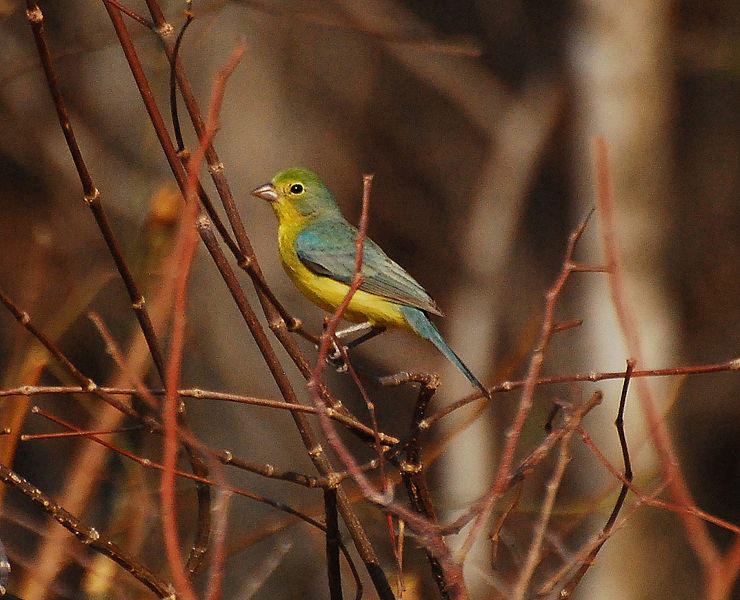
 The first of the basic practices to which I was introduced as a child – which most teachers introduce to beginning students … is known as “shamatha”. “Shama” may be understood in a variety of ways, including “peace”, “rest” or “cooling down” from a state of mental, emotional or sensory excitement. Maybe a modern equivalent would be “chilling out”. In other words, “shamatha” means abiding in a state that is rested or “chilled out”, which allows the little bird to just sit on one branch for a while.
Most of us, when we look at something, hear something, or watch a thought or emotion, have some sort of judgment about the experience. This judgment can be understood in terms of three basic “branches”: the “I like it” branch, the “I don’t like it” branch or the “I don’t know” branch. Each of these branches spread out into smaller branches: “good” branch; “bad” branch; “pleasant” branch; “unpleasant” branch; “I like it because…” branch; “I don’t like it because…” branch; “could be nice or not” branch; “could be good and bad, pleasant and unpleasant” branch; and the “neither good nor bad, pleasant nor unpleasant” branch. The possibilities presented by all these branches tempt the little bird to flutter between them, investigating each one.
The practice of shamatha involves letting go of our judgments and opinions and just looking at, or paying attention to, what we see from whatever branch we’re sitting on…. Rest there on one branch. Attending to our experience in this way allows us to distinguish our judgments and opinions from the simple experience of seeing.
Yongey Mingyour Rinpoche, Joyful Wisdom
 Mindfulbalance