Getting a handle on the mind

To train the mind, first we have to get a handle on it. We are thinking all the time. If we observe that thinking process for a second, we’ll see that it is triggered by the five sense faculties: sight, sound, smell, touch, and taste. We smell something or we see something, and we’re distracted. It’s hard to train the mind by using just the five sense consciousnesses — just smelling or just tasting, for example. We need to get hold of the discursive mind itself, the consciousness of thoughts, memories, and dreams. It’s being pulled in a lot of different directions, so we need a technique to stabilize it.

Training the mind is dependent upon the body. We reduce the body’s activity to focus the mind, so posture is very important. Then we use the breath, which is stable and consistent, as a focus for our intention. Joining our mind with the breath in meditation is often compared to the horse and the rider. The horse is the breath and the rider is the mind. We want those elements to be in continual contact. We have to be pragmatic about our practice. The mind is powerful. After racing around all day, it’s hard to follow through with the intention, “I’m going to stabilize my mind for one whole hour.” Instead, at the beginning of our session, we take the attitude, “Now I am going to focus.” Focus will bring us to moments of stillness and deepening, which profoundly affect the mind.

Sakyong Mipham Rinpoche
Dealing with difficulties as arising and falling away.

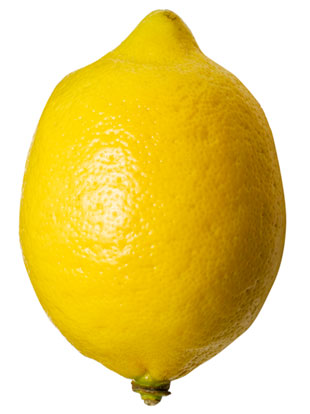
Some people say that suffering is a fixed part of the mind, that it has been there forever. I try to explain that suffering is not intrinsic to the mind. It arises in the present moment. You have a mood of aversion in the mind and you experience suffering now. Think about a lemon. If you leave it alone is it sour? Where is the sourness then? It’s when the lemon contacts the tongue that sourness occurs. If you aren’t experiencing it, it’s as if it isn’t there. When there is contact with the tongue it arises at that moment. And from there arise dislike and afflictions. These afflictions are not intrinsic to the mind, but are momentary arisings.

Ajahn Chah, Being Dharma

Just get there

Try making a commitment to getting into the meditation posture at least once a day. You don’t have to sit for any length of time., just get on the cushion. A lot of times the hardest part is getting there.

Once you’re sitting down you think “I might as well sit for a few minutes” and more often than not, you’re getting full sessions in.

Joseph Goldstein in Commit to Sit

Simple Daily Practices: Transform your moments of waiting.

When we are forced to wait, say in a traffic jam, our instinct is to do something to distract ourselves from the discomfort of waiting. We turn on the radio, call or text someone on the phone, or just sit and fume. Practicing mindfulness while waiting helps people find many small moments in the day when they can bring the thread of awareness up from where is lies hiding in the complex fabric of their lives. Waiting, a common event that usually produces negative emotions, can be transformed into a gift, the gift of free time to practice. The mind benefits doubly: first, by abandoning negative mindstates, and second, by gaining the beneficial effects of even a few extra minutes of practice woven into the day.

Jan Chozen Bays

Creating one’s life

Exister, c’est changer; changer, c’est mûrir; mûrir,c’est se créer sans cesse.

To exist is to change, to change is to mature, to mature is to go on creating yourself without ceasing.

Henri-Louis Bergson, French Philosopher.

More on Pausing

If right now our emotional reaction to seeing a certain person or hearing certain news is to fly into a rage or to get despondent or something equally extreme, it’s because we have been cultivating that particular habit for a very long time. But as my teacher Chögyam Trungpa Rinpoche used to say, we can approach our lives as an experiment. In the next moment, in the next hour, we could choose to stop, to slow down, to be still for a few seconds. We could experiment with interrupting the usual chain reaction, and not spin off in the usual way. We don’t need to blame someone else, and we don’t need to blame ourselves.  Pausing is very helpful in this process. It creates a momentary contrast between being completely self-absorbed and being awake and present. You just stop for a few seconds, breathe deeply, and move on. In the middle of just living, which is usually a pretty caught-up experience characterized by a lot of internal discussion, you just pause.

Pema Chodron, The Power of the Pause, O Magazine