…and not a wanting mind

“Wanting” is a universal phenomenon, and our mental list of what we want is seemingly endless. We wake up in the morning and ask “What do I want today? What do I want to eat, what do I want to buy, how much do I want” Wanting, when it goes beyond our basic, ordinary needs, is an expression of a longing for something either more than or different from what we already have,. There is a sense of being fundamentally unfulfilled. It is well worth looking more deeply into the nature of wanting, recognizing how you know wanting is there, and naming it. When you become familiar with recognizing and naming wanting, then it will become easier to notice when are captured, and therefore you will more likely be able to free yourself. The practice fo mindfulness is a fundamental way of becoming more familiar with your mind, and getting used to observing how mind states arise, are noted, and then dissolve. With practice you can become better at noticing the “I want” state of mind, letting it arise, and letting it go.

Sasha Loring, How to Tame the Wanting Mind

Having a quiet mind…..

Can you be happy where you are, in your life, at this moment?

If this was a problem in Pascal’s time – more than 300 years ago – it is even more so today. IN a world increasingly driven by the need to achieve, and by advertising, media and social networking, we can physically be in one place but miles away from it in our mind and in the thoughts and aspirations which the images produce. I was reminded of this yesterday, standing in line in a boulangerie – in a beautiful place beside the sea and palm trees – when the man in front of me said “Yes, my body may be on holidays, but my mind is still in the office”. This difficulty to switch off – even in a place of great natural beauty – makes it hard for us to be where we are at this moment, physically, but also in the sense of being with what is the realiuty of our life at this actual time in our history. We find ourselves living in our thoughts, dreams and worries, and strangely sometimes seem to prefer to be there.

All man’s miseries derive from not being
able to sit quietly in a room alone.

Blaise Pascal, French Philosopher.


Open to us now

The seed of suffering in you may be strong,

but don’t wait until you have no more suffering before allowing yourself to be happy.

Thich Nhat Hahn

Dealing with reality, step by step

What is actually important is here and now. Now is definitely now. There’s no point in thinking that the past that exists  we could have now. This is now. This very moment. Nothing mystical, just now, very simple and straightforward. From that nowness however, arises a sense of intelligence, always, that you are constantly interacting with the reality, one by one, spot by spot, constantly. We actually experience fantastic precision, always. But we are threatened by the now so we jump to the past or the future. That’s the problem. And that is not trusting the nowness properly. Now possesses a lot of powerful things. It is so powerful that we can’t face it, therefore we have to borrow from the past to invite the future, all the time

Chogyam Trungpa Rinpoche

The difference between activity and meaning

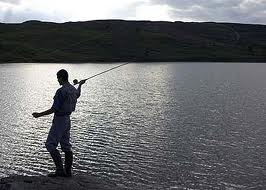
Many men go fishing all their lives

without knowing that it is not fish they are after

Henry David Thoreau

Accepting our nature…

Carl Jung had a few years when he suffered from some type of illness, which meant that he withdrew from teaching at university and found himself unable to read any serious scientific literature. He also was unable to write much during that time. However, this outward inactivity led him to a very important interior realization, which is close  to what we work at in mindfulness practice each day  – to accept the “conditions of existence” as we simply see them. It seems to be a strange psychological truth, affirmed by him and by Carl Rogers, that when we accept something in this gentle way, shifts begin to occur and change happens more easily. Being fully open to whatever is happening means that we can let go of fear and control and of our tendency to place demands on this moment, insisting that it be other than it is:

Something else, too, came to me from my illness. I might formulate that it was an affirmation of things as they are: an unconditional “yes” to that which is, without subjective protests – acceptance of the conditions of existence as I see them and understand them, acceptance of my nature, as I happen to be.

Jung, Memories, Dreams and Reflections