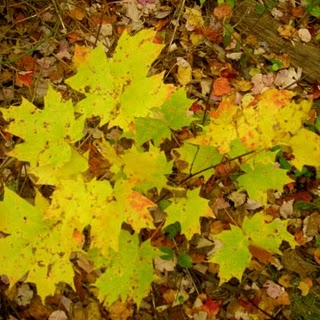
The seasons change…note the craving to be otherwise today.

The changing of the seasons reminds us that we too are always changing, as we move from birth to death. There are also continual mini seasons in our lives, as we have periods of growth and rest, of planting and bearing fruit. And the same dynamic is even seen in each moment, and is at the heart of being aware:

The present moment hovers between past and future, just as life hovers between birth and death. We respond to both in similar ways. Just as we flee from the awesome encounter with birth and death to the safety of a manageable world, so we flee from the pulse of the present to a fantasy world…..Evasion of the unadorned immediacy of life is as deep-seated as it is relentless. Even with the ardent desire to be alert and aware in the present moment, the mind flings us into tawdry and tiresome elaborations of the past and future. The craving to be otherwise, to be elsewhere, permeates the body, feelings, perceptions, will – consciousness itself. It is like the background radiation from the big bang of birth, the aftershock of having erupted into existence.

Stephen Bachelor, Buddhism without Beliefs

The difficulty of just being

It is hard to be fully present to another person, focusing completely on them and their needs, withour our own concerns, desires and needs getting in the way. We practice so that we can be really present, fully aware of the other, losing ourselves in a certain sense, so that the other can feel completely understood and appreciated.

No matter how quiet we are, the muskrats stay hidden.

Maybe they sense the tense hum of consciousness, the buzz from two human beings who in silence cannot help but be aware of each other, and so of themselves.

Annie Dilliard, Pilgrim at Tinker Creek

Developing awareness is the key

The busy mind is who you think you are. It is easier to see, like the face of the person standing right in front of you. For example, the thought you’re thinking right now is more obvious to you than your awareness of that thought. When you get angry, you pay more attention to what you’re angry about than to the actual source of your anger, where your anger is coming from. In other words, you notice what your mind is doing, but you don’t see the mind itself. You identify yourself with the contents of this busy mind –  your thoughts, emotions, ideas – and end up thinking that all of this stuff is “me” and “how I am.” When you do that, it’s like being asleep and dreaming and believing that your dream images are true.

Dzogchen Ponlop, Rebel Buddha

…and be grateful.

As we have said before, one do not have to wait to be completely satisfied with everything before one can be content. Similarly, everything does not have to be just as you would like it in your life for you to be grateful. One just has to give up the automatic tendency to judge oneself and ones life, fixing on imperfections, and the interpretations of our life which follow that tendency. Noticing small positive things each day, and being grateful for them, is a skill that can be practiced, and it develops our capacity to be just in the present moment.  Being happy for the whole of our lives can start with us appreciating the moments of our life, now. And there are a variety of simple things each day which we can stop to notice and be grateful for – the changing colours on the leaves, a cup of coffee in the morning, a small act of kindness by a colleague, the taste of simple food. Each day presents new opportunities to just notice, no matter what our situation is.

Notice your life, today….

No one has to master living in the now. It’s impossible to live anywhere else. Just as you can never leave now, no one will ever take away your past or withhold your future. Effortlessly, your past accumulates. Instantly, your future arrives. What matters is that you notice your life while you can still call it “alive”. That’s now.

Karen Maezen Miller, Hand Wash Cold

Busyness is offered

Busyness pervades every aspect of modern life, often presented as a virtue or even a benchmark which demonstrates that we are succesful.  In this poem,  Mary Oliver reminds us that it comes to us from outside – it is “offered” to us. We can have a lot to do each day. However, busyness or “speeding up” comes from our relationship to what we have to do. We do not have to accept it but can  protect ourselves from it by creating space. It does not have to be as extreme as the Chines poets . It can be quite simply some quiet time each day, or some time in nature.

Wherever I am, the world comes after me.
It offers me its busyness. It does not believe
that I do not want it. Now I understand
why the old poets of China went so far and high
into the mountains, then crept into the pale mist.

Mary Oliver, The Old Poets of China