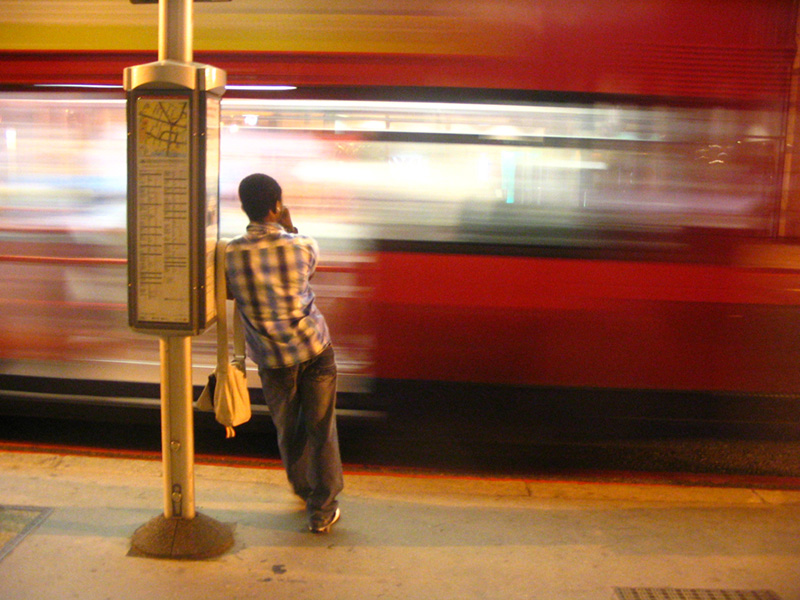
 There are four different kinds of patience: patience in action, in thought, in word, in the manner of feeling. There are two different acts of patience: the first is to stand firm against the activity of another person, the second to stand firm against one’s own activity. Not to resist the activity of another person is an act of patience of the former sort, and to control oneself when one wishes to do or say a certain thing is an act of patience of the latter sort.
The symbol of patience is the cross. The vertical line indicates activity, the horizontal line control. Patience is for the saint and the sage the first lesson and the last. The more one learns to bear the more one has to bear, such is the nature of life. Yet in reality patience is never wasted, patience always wins something great, even when to all appearance it loses….Every faculty has a tendency to act more and more quickly. Every activity starts from a rhythm that is productive, and when the activity is increased the rhythm becomes progressive, and if it is increased still more the rhythm becomes destructive. These three rhythms are called in Sanskrit satva, rajas, and tamas. It is only by control that one can keep the productive and progressive nature; lack of control allows destruction to set in. When a person walks he wishes to walk faster, when he speaks to speak more quickly. It is the nature of activity to tend to increase its speed, and if this increase is permitted, very soon the destructive element comes about. The stronger this faculty of control becomes in a person the stronger the person becomes, and the more one loses the power of control the weaker one becomes.
Hazrat Inayat Khan, The Wisdom of Sufism: Sacred Readings from the Gathas
 Mindfulbalance