Sunday Quote: Waiting

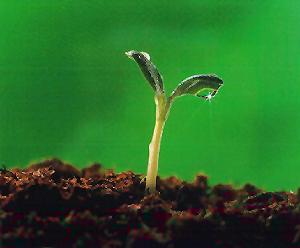
The word patience comes from the Latin verb patior, which means “to suffer.” Waiting patiently is suffering through the present moment, tasting it to the full, and letting the seeds that are sown in the ground on which we stand grow into strong plants.

Henri Nouwen, Bread for the Journey

Not meditating to get something

The true contemplative is not one who prepares his mind for a particular message that he wants or expects to hear, but is one who remains empty because he knows that he can never expect to anticipate the words that will transform his darkness into light. He does not even anticipate a special kind of transformation. He does not demand light instead of darkness. He waits …in silence, and, when he is answered it is not so much by a word that bursts into his silence. It is by his silence itself, suddenly, inexplicably revealing itself to him as a word of great power, full of the voice of God.

Thomas Merton, quoted in Stephen Cope, The Wisdom of Yoga, A Seekers Guide to Extraordinary Living

Dealing with each thing directly

When things come up, deal with them according to the occasion. Be like the stillness of water, like the clarity of a mirror. Whether good or bad, beautiful or ugly approach, you don’t make the slightest move to avoid them. Then you will truly know that the mindless world of spontaneity is inconceivable.

Ta Hui (1088-1163)

Not dwelling in thoughts

When we learn to move beyond mistaken concepts and see clearly, we no longer solidify reality. We see waves coming and going, arising and passing. We see that life, composed of this mind and body, is in a state of continual, constant transformation and flux. There is always the possibility of radical change. Every moment – not just poetically or figuratively, but literally – every moment we are dying and being reborn, we and all of life.

Sharon Salzberg, Loving-Kindness – The Revolutionary Art of Happiness

Friendships that support

When we honestly ask ourselves which person in our lives means the most to us, we often find that it is those who, instead of giving much advice, solutions, or cures, have chosen rather to share our pain and touch our wounds with a gentle and tender hand. The friend who can be silent with us in a moment of despair or confusion, who can stay with us in an hour of grief and bereavement, who can tolerate not knowing, not curing, not healing and face with us the reality of our powerlessness, that is a friend who cares.

Henri Nouwen

Do not not freeze possibilities into fixed expectations

The last month of this year begins. Sometimes we can be more conscious of the passing of time, as when we visit home after being away, or go back to a place where we used to live and find that things have changed. We can sometimes find that the event or the return did not live up to what we had looked forward to. Often what happens is that we form fixed ideas or expectations about some things in the future or we look forward so much to seeing someone or doing something that we play out in our minds how it will be. When the actual event turns out differently, we can find that our mood changes. Such expectations are part of a normal mechanism of the mind which thinks that happiness depends on conditions turning out exactly as we imagine or want them to be. We attach our happiness to a fixed expectation, and close out other possibilities. We do it unconsciously many times each day, fixing the manner in which things should turn out. But, as Philip Moffit reminds us here, we are continually changing, and by the time we arrive at any future moment a whole set of conditions have altered. Let us practice today being open to whatever way things happen, not fixing possibilities into determined expectations.

Always the rationalization is the same -“Once this situation is remedied, then I will be happy.” But it never works that way in reality: The goal is achieved, but the person who reaches it is not the same person who dreamed it. The goal was static, but the person’s identity was dynamic.

Philip Moffitt