
Working with all parts of our life

If God is right there in the midst of our struggle, then our aim is to stay there.  We are to remain in the cell, to stay on the road, not to forego the journey or forget the darkness. It is all too easy for us to overlook the importance of struggle, preferring instead to secure peace and rest, or presuming to reach the stage of love prematurely. It is always easier to let things pass by, to go on without examination or effort. Yet, struggling means living. It is a way of fully living life and not merely observing it. It takes much time and a great  effort to unite the disparate, disjointed and divided parts of the self into an integrated whole. 

John Chryssavgis, In the Heart of the Desert
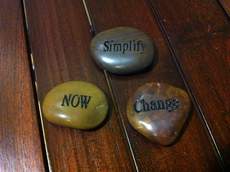
This moment!

Most of life only lasts a moment. Then our life becomes a memory,  a dream. We are only alive a millisecond at a time. This moment! Or as one teacher puts it, holding his thumb and forefinger about a quarter-inch apart  “All of life is only just this much – about a moment at a time”. When we open to the very instant in which awareness produces consciousness, we are fully alive. Completely present. Big-minded. To the degree that we are present for “just this much”, this living moment, we are alive. Otherwise we numb to the vibrancy,  and beg upon our deathbed for just one more chance.

Stephen and Ondrea Levine, Embracing the Beloved.

Where we grow

We never grow by dreaming about a future wonderful state or by remembering past feats. We grow by being where we are and experiencing what our life is right now. We must experience our anger, our sorrow, our failure, our apprehension; they can all be our teachers., when we do not separate ourselves from them. When we escape from what is given, we cannot learn, we cannot grow. That’s not hard to understand, just hard to do. Those who persist, however, will be those who grow in compassion and understanding. How long is such practice required? Forever.

Charlotte Joko Beck, Everyday Zen

Seeing with fresh eyes

As Mary Oliver reminded us yesterday, how we look and  pay attention is crucial in our work in counterbalancing the mind’s tendency to focus on the negative. So our day-to-day practice is to notice with fresh eyes, and not allowing our beliefs about what we “know” get in the way of the richness of moment-to-moment experience. We can try this today with the people we meet and when we are in familiar situations.

No moment is the same as any other. Each is unique and contains unique possibilities. Beginner’s mind reminds us of this simple truth. The next time you see somebody who is familiar to you, ask yourself if you are seeing this person with fresh eyes, as he or she really is, or if you are seeing only the reflection of your own thoughts about this person.

Jon Kabat Zinn, Full Catastrophe Living

Noticing colour in grey days

Some similar thoughts, this time from a poet and not a neuroscientist. She encourages us to notice the little moments of colour that come into every day as a way of going against the heart’s tendency to close in on itself:

Red bird came all winter firing up the landscape as nothing else could.
Of course I love the sparrows, those dun-colored darlings so hungry and so many.
I am a God-fearing feeder of birds.
I know He has many children,
not all of them bold in spirit.
Still, for whatever reason —
perhaps because the winter is so long
and the sky so black-blue,
or perhaps because the heart narrows
as often as it opens —
I am glad
that red bird comes all winter
firing up the landscape
as nothing else could.

Mary Oliver, Red Bird

Taking in the good things that happen

Some writers state that this is the week when people find their mood low, as the excitement of Christmas and New Year fades and they find that not much has actually changed in their lives. It does not seem that there is much scientific findings for their claim – indeed the term ” Blue Monday”, coined for the first day of the week, seems to have come from a Travel Agency’s campaign to get us to book our summer holidays around this time. That being said, there does seem to be good scientific support for the brain’s tendency to focus on the difficult things in our lives and remember or amplify them. Because of that, this week and every week,  we have to consciously work against that leaning, both by becoming familiar with  our negative stories and by practicing the way we pay attention.

Here is one good way of doing that, outlined by Rick Hanson, the author of the excellent Buddha’s Brain. Sincere thanks to regular reader Kathy at http://pocketperspectives.wordpress.com/ for bringing this series of videos to my attention.