Bare attention is difficult

As this morning’s quote reminds us, in meditation we practice giving bare attention to the breath, just noticing,  without adding anything. We try to extend this to life, slowing down the continual pre-judgments or commentary in our heads. However, it is not easy just to let things be, without the immediate adding of a word or evaluation. The mind quickly adds words, positive ones like, “This is good, I like it here”, or more likely spontaneous negative ones, such as ” This is not for me, This is boring” or “She always says the same things”. Fixed ideas mean that we lose curiosity about what is unfolding each day. So our practice includes getting the balance between knowing and not-knowing, trying to know fully what is actually happening and losing some of our stories about people or about how our life is going. 

[In the beginning,] … the photographer was thought to be an acute but non-interfering observer — a scribe, not a poet. But as people quickly discovered that nobody takes the same picture of the same things, the supposition that cameras furnish an impersonal, objective image yielded to the fact that photographs are evidence not only of what’s there but of what an individual sees, not just a record but an evaluation of the world.

Susan Sontag, On Photography
Not always putting labels on our experience

The disciples were absorbed in a discussion of Lao-tzu’s dictum:
“Those who know, do not say;
Those who say, do not know.”

When the master entered,
they asked him what the words meant.
Said the master, “Which of you knows the fragrance of a rose?”
All of them indicated that they knew.
Then he said, “Put it into words.”
All of them were silent.

 Anthony DeMello, One Minute Wisdom

How to be in control of our lives

Basic goodness, the shimmering brilliance of our being, is as clear as a mountain lake. But we’re not certain about our own goodness. We begin to stray from it as soon as we wake up in the morning, because our mind is unstable and bewildered. Our thoughts drag us around by a ring in our nose, as if we were cows in the Indian market. This is how we lose control of our lives. We don’t understand that the origin of happiness is right here in our mind. We might experience happiness at times, but we’re not sure how we got it, how to get it again, or how long it’s going to last when it comes. We live life in an anxious, haphazard state, always looking for happiness to arrive.

 When we are confused about the source of happiness, we start to blame the world for our dissatisfaction, expecting it to make us happy. Then we act in ways that bring more confusion and chaos into our life. When our mind is busy and discursive, thinking uncontrollably, we are engaging in a bad habit. We are stirring up the mud of jealousy, anger, and pride. Then the mind has no choice but to become familiar with the language of negativity and develop it further.

Sakyong Mipham Rinpoche

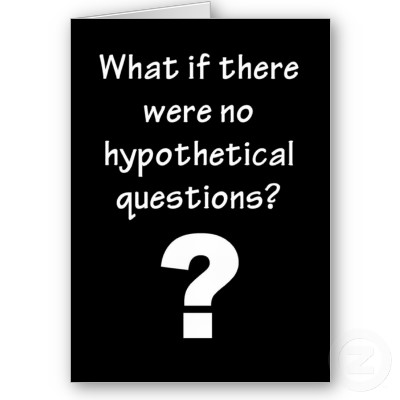
Don’t dwell on hypotheticals

The only place ever to work is right now. We work with the present situation rather than a hypothetical possibility of what could be. I like any teaching that encourages us to be with ourselves and our situation as it is without looking for alternatives. The source of all wakefulness, the source of all kindness and compassion, the source of all wisdom, is in each second of time. Anything that has us looking ahead is missing the point.

Pema Chodron,

Little moments of gratitude

I pick an orange from a wicker basket

and place it on the table to represent the sun.

Then down at the other end

a blue and white marble becomes the earth

and nearby I lay the little moon of an aspirin.

 I get a glass from a cabinet, open a bottle of wine,

then I sit back in a ladder-backed chair,

a benevolent god presiding over a miniature creation myth,

and I began to sing a homemade canticle of thanks

for this perfect little arrangement,

for not making the earth to hot or cold

not making it spin too fast or slow

so that the grove of orange trees and the owl become possible,

not to mention the rolling wave, the play of clouds, geese in flight,

and the Z of lightening on a dark lake.

Then I fill my glass again and give thanks for the trout,

the oak, and the yellow feather, singing the room full of shadows,

as sun and earth and moon circle one another in their impeccable orbits

and I get more and more cockeyed with gratitude.

Billy Collins,  As if to Demonstrate an Eclipse

Sunday Quote: Seeing each moment as new and unique

The art of living….consists in being sensitive to each moment, in regarding it as utterly new and unique, in having the mind open and wholly receptive.

Alan Watts

Cherry Blossom buds with snow on the Jura, March 31st, 2012