…..and feel trapped in our lives

Treat each guest honorably. He may be clearing you out for some new delight. Rumi, The Guest House

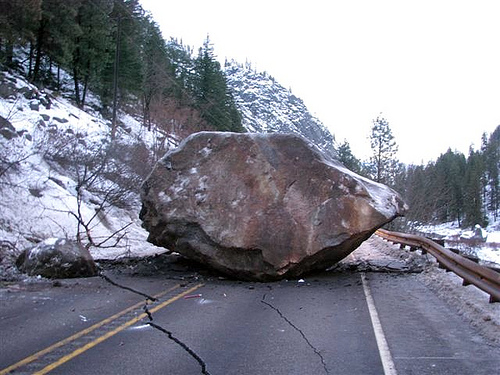
Sometimes the things that are weighing us down in our lives can feel pretty big. We feel pinned down by them, constantly burdened. It could be confusion over  where our career is going; we could have financial worries; often it is family or relationship issues that cause restless nights; we can feel lonely and afraid. All that used to give us some joy has slipped away. At moments like these life seems to be sucked out of us, and we feel physically tired, unable to find real rest. We give up, not wanting to put ourselves in the position to be hurt again, or to grieve again, or   to be frustrated and angered, humiliated, disappointed. One image used in the Christian liturgy today – that of the boulder blocking the tomb – captures well this sense of  helplessness and despair.  Sometimes we can feel like we are being slowly buried alive, spent and weary,  trapped in our own “tombs” . We long for freedom, for a hint of new sense of life or hope  to come to us through the seeming loss and rubble of  our life. Sometimes we can find that when we make space and gain a new perspective outside the scene. At other times however, we need support – a word of encouragement, a friendly face, some “angel” to visit us, to reach down into our darkness and help us bear or overcome the load. We all have occasions to be that angel, in that we can all hold space for  another, kinder, reality for another person. We simply have to be willing to add our fresh shoulder to someone else’s bruised one,  and stand with them in their time of need.

Sometimes the boulder is rolled away, but I cannot move it when

I want to. An angel must. Shall

I ever see the angels face

or will there only be

that molten glow outlining every

separate hair and feather quill,

the sudden wind and odour, sunlight,

music, the pain of my bruised shoulders.

Ruth Fainlight, The Angel
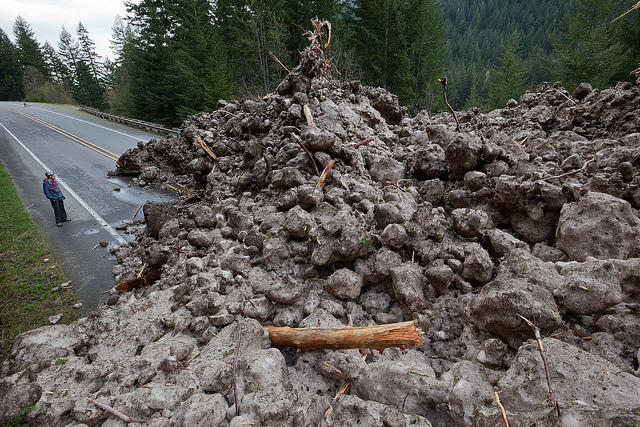

What happens when we get blocked….

No matter how much we practice, when the going gets rough or we’re in a tight spot, when you’re in that [tight] place, as far as I’m concerned, that is the main place that all the … teachings are pointing to. You could say they’re pointing to full, complete awakening — and that would be true— but the moment of truth is when we’re caught in an habitual way and we just do the habitual thing. The main thing is how we talk to ourselves at that point. I know that one of the main story lines is: “I’m not good enough,” in some kind of form. And we get hooked by something along those lines. 

If at that point, you could just say to yourself, “This is a familiar moment, this is just a common, ordinary occurrence in everyday life, and the choice is mine, again and again and again. And I’ll get plenty of opportunities to work with this. I don’t have to get it right this time. Do I want to proceed with a blocked, frozen life force or do I want to experience it [as] free-flowing?” Do we want to block the possibility of our human life, the creative, life force, the basic energy of our being, which has the potential, when fully recognized and fully experienced, is the experience of full awakening — complete open heart, complete open mind to everything.  Do we want to have access to that in this very brief human life that we have? It’s so short, and the whole thing, from the moment we’re born until we die, is like a chance that we’re given to either unblock ourselves or block ourselves further.

Pema Chodron

Balance in life

In the Christian Calendar, the three most important days of the year begin, ones which give meaning to sustain  the rest of the year. They are days for reflection, punctuated by old familiar rituals of water and fire. We all need rhythms in our lives, moments of celebration  – religious or otherwise –  allowing us time to pause and take a break from the rush of our working lives. Ritual days like these, which mark the passing of time are very important, especially in this modern age which blends each day and each season into periods of work and possibilities for more shopping. We need to ensure that there are real moments of non-work in our lives where we celebrate other realities and other rhythms, not just evenings where we crash, tired from work, trying to recharge before it starts again the next day. These rhythms are indispensable for balance and for nourishing our deepest self. We take time off, we slow down, we rest and reflect.  In doing so we find that each element  in the familiar patterns becomes, even though they are known through repetition,  fresh and meaningful again. The messages that come around again in the great cycle of things are always new.

Wherever the arts are nourished through the festive contemplation of universal realities and their sustaining reasons, there in truth something like a liberation occurs: the stepping-out into the open under an endless sky, not only for the creative artist himself but for the beholder as well, even the most humble. Such liberation, such fore-shadowing of the ultimate and perfect fulfillment, is necessary for man, almost more necessary than his daily bread, which is indeed indispensable and yet insufficient. In this precisely do I see the meaning of that statement in Aristotle’s Nichomachean Ethics, ‘We work so we can have leisure.’

Josef Pieper Only the Lover Sings: Art and Contemplation

Our inner drama department

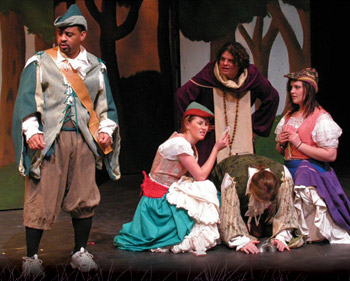
When we examine our thought stream with mindfulness, we encounter an inner sound track. As it plays, we can become the hero, the victim, the princess or the leper. There is a whole drama department in outr head, and the casting director is indiscriminately handing out the roles of inner dictators and judges, adventurers and prodigal sons, inner entitlement and inner impoverishment. Sitting in meditation we are forced to acknowledge them all. As Anne Lamott writes “My mind is like a bad neighbourhood: I try not to go there alone” . When we see how compulsively these thoughts repeat themselves, we begin to understand the psychological truth of “samsara”, the Sanskrit word for circular, repetitive existence. Samsara describes the unhealthy repetitions in our daily life.

Jack Kornfield, The Wise Heart

Opening our eyes

Life is no passing memory of what has been nor the remaining pages in a great book waiting to be read.

It is the opening of eyes long closed.
It is the vision of far off things
seen for the silence they hold.
It is the heart after years
of secret conversing speaking out loud in the clear air.

It is Moses in the desert
fallen to his knees before the lit bush.
It is the man throwing away his shoes
as if to enter heaven
and finding himself astonished,
opened at last, fallen in love with solid ground.

David Whyte

Trying not to hide

Anyone who understands impermanence ceases to be contentious. The Dhammapada.

I sometimes remind students, “Try not to duck. Try to see the truth of your experience right now, Try to be there” When we are in contention with the moment, we push it away and then we don’t see it clearly. When we see things clearly we can usually figure them out. And when we see things cordially, or at least when we allow ourselves to see them this way, then they are not distorted by our liking or not liking. Another way of putting this is, “Let us see the truth of every moment and lets see it without contention”

Sylvia Boorstein, Greet this Moment as a Friend