Walking in a distracted poverty

Strolling in a large park one day I was startled by how many people were walking without looking up, or walking in a myopic daze while talking on their “cells,” as we say in shorthand, as if spoken words were paddling through the body from one saltwater lagoon to another.

As a species, we’ve somehow survived large and small ice ages, genetic bottlenecks, plagues, world wars and all manner of natural disasters, but I sometimes wonder if we’ll survive our own ingenuity. At first glance, it seems as if we may be living in sensory overload. The new technology, for all its boons, also bedevils us with alluring distractors, cyberbullies, thought-nabbers, calm-frayers, and a spiky wad of miscellaneous news. Some days it feels like we’re drowning in a twittering bog of information.

But, at exactly the same time, we’re living in sensory poverty, learning about the world without experiencing it up close, right here, right now, in all its messy, majestic, riotous detail. The further we distance ourselves from the spell of the present, explored by our senses, the harder it will be to understand and protect nature’s precarious balance, let alone the balance of our own human nature…As an antidote I wish schools would teach the value of cultivating presence. As people complain more and more these days, attention spans are growing shorter, and we’ve begun living in attention blinks. More social than ever before, we’re spending less time alone with our thoughts, and even less relating to other animals and nature. Too often we’re missing in action, brain busy, working or playing indoors, while completely unaware of the world around us.

On the periodic table of the heart, somewhere between wonderon and unattainium, lies presence, which one doesn’t so much take as engage in, like a romance, and without which one can live just fine, but not thrive.

Diane Ackerman, Are We Living in Sensory Overload or Sensory Poverty?, New York Times, June 10, 2012

Finding a refuge to come home to

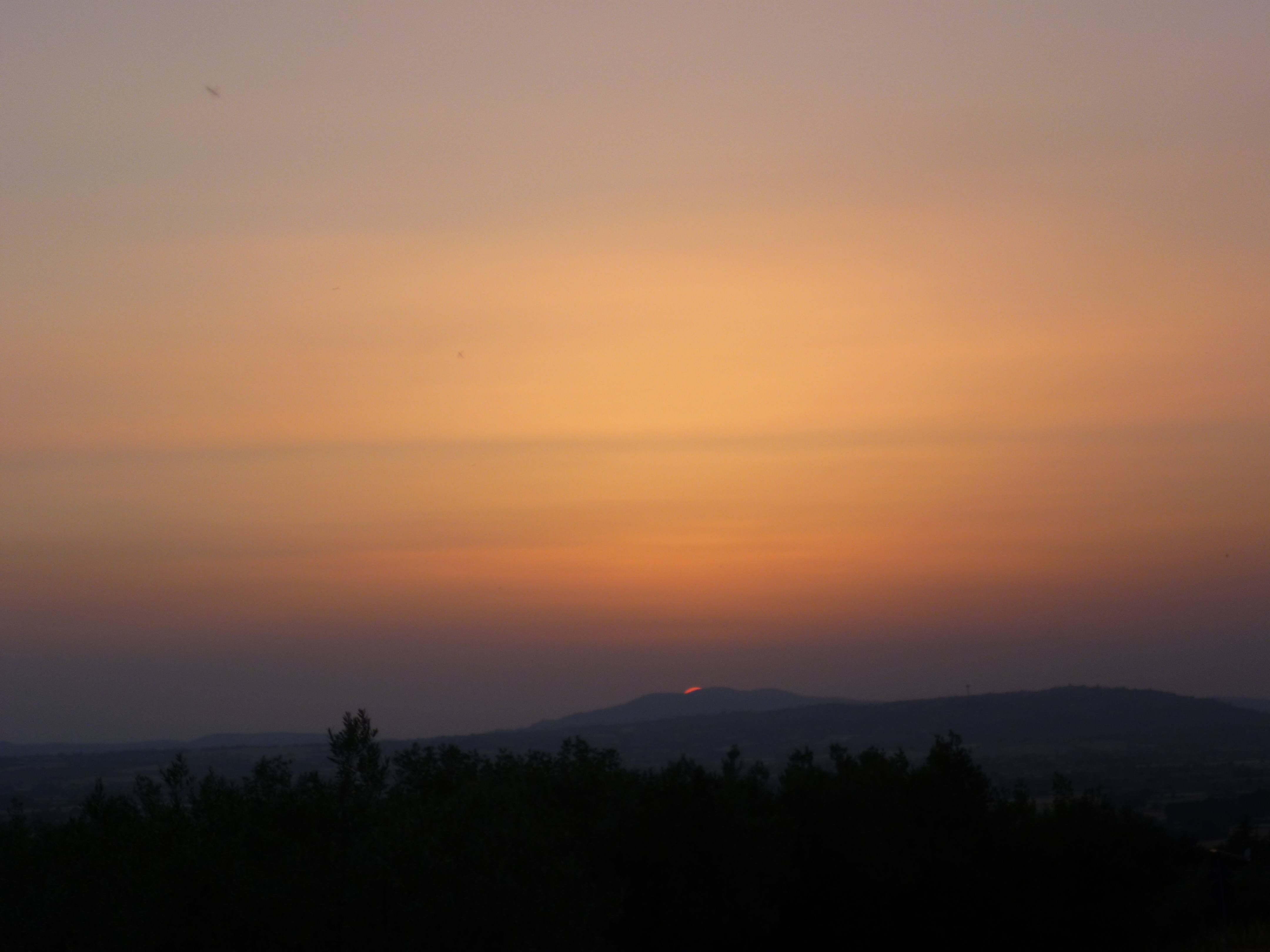
When I ask, ‘Have you found your true home?’ you might respond, ‘Not yet, Thay.’ But with this teaching and practice, we can find our true home. The teaching  is … [one] …of residing in joy, taking refuge in the joy and happiness of the present moment. If we know how to return to the present moment and generate the energy of mindfulness, concentration, and insight, then we will be able to get in touch with the wonders of life. We will have happiness and joy immediately. Because we have insight, we no longer discriminate and divide, we are no longer narrow-minded.

Thich Nhat Hahn, Together, We are One

Looking for the good

This poem from Hafiz,  on drawing warmth from the sun,  makes even more sense in the light of the unseasonal weather in this part of the world and the very wet June which was seen in Ireland and England. Often in our lives we have to deliberately pay attention to the good things that happen, because our brain has a negativity bias and more easily stores the bad events of each day. As psychologist Robert Emmons and his colleagues at the University of California have shown, cultivating an “attitude of gratitude” has been linked to better health, less anxiety and is beneficial to subjective emotional well-being.  They found that people who consciously noted the good things in each day were more optimistic and felt happier than a control group. Consciously being aware helps us to notice what is good in our lives rather than always noticing and complaining about what is wrong and allows us to wake up to the gifts around us each day. Hafiz knew this and encourages us to squeezing the drops of light and warmth from even the brief appearances of the sun in our lives:

I know the voice of depression still calls to you.
I know those habits that can ruin your life still send their invitations .
But you are with the Friend now and look so much stronger.
You can stay that way and even bloom!
Keep squeezing drops of the Sun
From your prayers and work and music
And from your companions’ beautiful laughter.
Keep squeezing drops of the Sun
From the sacred hands and glance of your Beloved
And, my dear, from the most insignificant movements
Of your own holy body.
Learn to recognize the counterfeit coins
That may buy you just a moment of pleasure,
But then drag you for days like a broken man Behind a camel.
You are with the Friend now.
Learn what actions of yours delight Him,
What actions of yours bring freedom and Love.


O keep squeezing drops of the Sun

From your prayers and work and music
And from your companions’ beautiful laughter
And from the most insignificant movements
Of your own holy body.


Now, sweet one, Be wise.
Cast all your votes for Dancing!

Hafiz, Cast All Your Votes for Dancing

Everything you need is already here

This is what we mean by the practice of mindfulness. It is the how of coming to our senses moment by moment. There really is no place to go in this moment. We are already here. Can we be here fully? There really is nothing to do. Can we go into non-doing, into pure being?  There really is nothing to attain, no special “state” or “feeling”, because whatever you are experiencing now is already special, already extraordinary, by virtue of the fact that it is being experienced. The paradox of this invitation is that everything you might wish for is already here. And the only important thing is to be the knowing that awareness already is.

Jon Kabat Zinn, Mindfulness for Beginners.

What gives us hope

I think that each of us has something or someone that gives us hope. This “reason for hoping” may be a person or a special place, a religious belief or a vision of life that is strong enough to weather the internal storms and strife.
There is an Ethiopian legend about a shepherd  boy Alemayu that speaks to me of the power of hope. Alemayu had to spend the night on a bitterly cold mountain. He had only a very thin cloth to wear. To the amazement of all the villagers, he returned alive and well. When they asked him how he survived, he replied: ” ‘The night was bitter. When all the sky was dark, I thought I would die. Then far, far off I saw a shepherd’s fire on another mountain. I kept my eyes on the red glow in the distance, and I dreamed of being warm. And that is how I had the strength to survive.

Each one of us has a  “shepherd’s fire on another mountain” that has kept our hope alive.  This fire has given us the courage to recover our lost self and believe in the dreams that stir in our soul.

Joyce Rupp, Dear Heart, Come Home

Trusting, even if you feel lost today

Your soul knows the geography of your destiny. Your soul alone has the map of your future, therefore you can trust this indirect, oblique side of yourself. If you do, it will take you where you need to go, but more important it will teach you a kindness of rhythm in your journey.

John O’Donoghue, Anam Chara