You are all possibilities

South West Coast Path above Pudcombe Cove

Life can only be understood backwards; but it must be lived forwards. Søren Kierkegaard

Look back down the path as if seeing your past and then south over the hazy blue coast as if present to a wide future,
recall the way you are all possibilities you can see and how you live best as an appreciator of horizons
whether you reach them or not,
admit that once you have got up from your chair and opened the door,
once you have walked out into the clean air
toward that edge and taken the path up high beyond the ordinary you have become
the privileged and the pilgrim
the one who will tell the story
and the one, coming back
from the mountain,
who helped to make it.

David Whyte, Mameen
Real strength

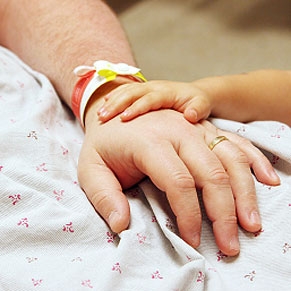
If you are truly strong, there is little need to emphasize it to yourself or to others. Best to take another track entirely and direct your attention where you fear most to look. You can do this by simply allowing yourself to feel, even to cry, to not have opinions about everything, to not appear invincible or unfeeling to others, but instead to be in touch with and appropriately open about your feelings. What looks like weakness is actually where strength lies. And what looks like strength is often weakness, and attempt to cover up fear; this is an act or a facade, however convincing it might appear to others or even to yourself.

 Jon Kabat-Zinn

Not working it out, but being with

We have been battered by modern times into obsessive problem solvers, but as life pares us down into only what is essential, it becomes clear that the deepest sufferings of heart and spirit cannot be solved, only witnessed and held. I have struggled with this constantly. Just recently, after being away for two weeks, I returned to a tender partner who loving uttered, “I really missed you.” Instantly, I reacted by scanning for ways to solve the feeling – to limit my travel or call more often. I instantly tried to change my patterns of being away from the relationship, rather than just feel the poignancy of being loved enough to be missed.

Frequently, this reflex to solve, rescue, and fix removes us from the tenderness at hand. For often, intimacy arises not from any attempt to take the pain away, but from a living through together; not from a working out, but from a being with. Trust and closeness deepen from holding and being held. I am learning, pain by pain and tension by tension, that after all my strategies fail, the strength of love waits in receiving and negotiating; in accepting each other and not problem solving each other; in listening and affirming each other, not trying to fix those we love.

Mark Nepo

Allowing and letting go

We’ve never really accepted boredom as a conscious state. As soon as it comes into the mind we start looking for something interesting, something pleasant. But in meditation we’re allowing boredom to be. We’re allowing ourselves to be fully consciously bored, fully depressed, fed up, jealous, angry, disgusted. All the nasty unpleasant experiences of life that we have repressed out of consciousness and never really looked at, never really accepted, we begin to accept into conscious-ness not as personality problems any more, but just out of compassion. Out of kindness and wisdom we allow things to take their natural course to cessation, rather that just keep them going round in the same old cycles of habit. When we get used to looking through a dirty window everything seems grey, grimy and ugly. Meditation is a way of cleaning the window, purifying the mind, allowing things to come up into consciousness and letting them go.

Ajahn Sumedho,

Touching the pain of life

To live in the present demands an ongoing and unwavering commitment.  Over and over we feel the familiar tug of thoughts and reactions that take us away from the present moment. When we stop and listen, we can feel how each thing that we fear or crave (really two sides of the same dissatisfaction) propels us out of our hearts into a false idea of how we would like life to be. If we listen even more closely, we can feel how we have learned to sense ourselves as limited by that fear and identified with that craving. From this small sense of ourselves, we often believe that our own happiness can come only from possessing something or can be only at someone else’s expense. […]

To stop the war and come into the present is to discover a greatness of our own heart that can include the happiness of all beings as inseparable from our own. When we let ourselves feel the fear, the discontent, the difficulties we have always avoided, our heart softens. Just as it is a courageous act to face all the difficulties from which we have always run, it is also an act of compassion. According to (various) scriptures, compassion is the “quivering of the pure heart” when we have allowed ourselves to be touched by the pain of life. The knowledge that we can do this and survive helps us to awaken the greatness of our heart. With greatness of heart, we can sustain a presence in the midst of life’s suffering, in the midst of life’s fleeting impermanence. We can open to the world – its ten thousand joys and ten thousand sorrows.

Jack Kornfield, A Path With Heart

More on being a witness today

Gurdjieff, the Russian philosopher-mystic,  noted that if you set an alarm clock at night in order to get up early to get some work done, who you are in the morning when the alarm goes off is quite different from who you were the night before. In the morning you might even say, “Who the **** set that alarm clock?” A moment’s reflection will show you that you play many roles in the course of a day … and that WHO YOU ARE from moment to moment changes. There is the angry you, and the kind you, the lazy you, the lustful you –  hundreds of different you’s. Each of these “you’s” reflects an identification with a desire, or a feeling, or a thought. If, as we have seen, the work is to break these identifications, we can WORK effectively throughout each day by making each of these “you’s” objects, i.e., by breaking the identification with each of them. This is not so easy.

…[But] there is one technique which is known as adopting the role of the witness – and holding onto that role – ultimately, to the exclusion of all roles. The witness is not evaluative. It does not judge your actions. It merely notes them.  This point is important. Most of the time the inner voices of most people are continually evaluative. “I’m good for doing this” or “I’m bad for doing that.” You must make that evaluative role an object of contemplation as well. Keep in mind that the witness does not care whether you become enlightened or not. It merely notes how it all is.

Ram Daas, Be Here Now