 Creatures of a day, what is anyone? What are they not?
We are just a dream of a shadow.
But when there comes, as a gift from heaven, a gleam of sunshine
Then rests on the heart a light of glory,
And blessed are the days.
Pindar (518-438 BCE)
Creatures of a day, what is anyone? What are they not?
We are just a dream of a shadow.
But when there comes, as a gift from heaven, a gleam of sunshine
Then rests on the heart a light of glory,
And blessed are the days.
Pindar (518-438 BCE)
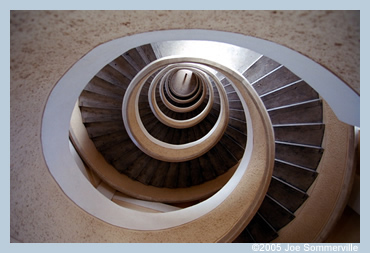 The individuation process, as the way of development and maturation of the psyche, does not follow a straight line, nor does it always lead onwards and upwards. The course it follows is rather “stadial”, consisting of progress and regress, flux and stagnation in alternating sequence. Only when we glance back over a long stretch of the way can we notice the development. If we wish to mark out the way somehow or other, it can equally well be considered a “spiral”, the same problems and motifs occurring again and again on different levels.
It is always a matter of something obsolete that must be left behind to die in order that the new may be born.
Jolande Jacobi, Jungian psychologist

We should always remember that meditation is the cultivation and practice of nonattachment….Mindfulness is nothing but the middle way. It is neither an intense practice, nor can it be done without effort. It must be done with balance. Properly done, it is neither detached pushing away nor egoistic clinging. Be very careful about sitting down with ideas like, “I am sitting, I am watching, I am breathing, I am meditating, I am this, that is mine”.
 Afflictive mental states begin with self-centeredness, with an increase in the gap between self and others. These states are related to excessive self-importance and self-cherishing associated with fear or resentment towards others, and grasping for outer things as part of a hopeless pursuit of selfish happiness. A selfish pursuit of happiness is a lose-lose situation: you make yourself miserable and make others miserable as well. Inner conflicts are often linked with excessive rumination on the past and anticipation of the future. You are not truly paying attention to the present moment, but are engrossed in your thoughts, going on and on in a vicious circle.
This is the opposite of bare attention. To turn your attention inside means to look at pure awareness itself and dwell without distraction, yet effortlessly, in the present moment. If you cultivate this mental skill, after a while you won’t need to apply contrived efforts anymore. You can deal with mental perturbations like the eagles I see from the window of my hermitage in the Himalayas deal with crows. The crows often attack them, diving at the eagles from above. But, instead of doing all kinds of acrobatics, the eagle simply retracts one wing at the last moment, lets the diving crow pass, and then extends its wing again. The whole thing requires minimal effort and causes little disturbance. Being experienced in dealing with the sudden arising of emotions in the mind works in a similar way.
Matthieu Richard
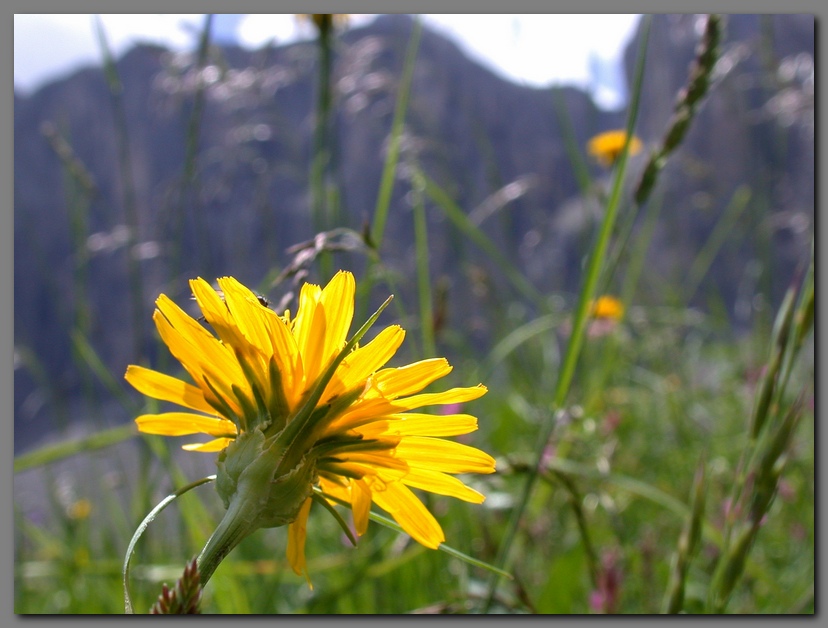
Words stand between silence and silence:between the silence of things and the silence of our own being. When we have really met and known the world in silence, words do not separate us from the world nor from other men, nor from God, nor from ourselves, because we no longer trust entirely in language to contain reality.
Thomas Merton
 To live well, we need to be able to see what’s happening, in us and around us. We also need to know how not to get impulsively drawn into unskillful, reactive patterns of behavior that don’t serve us or those around us well. Mindfulness offers us a way of paying attention to what’s actually going on, to know what’s happening at an experiential level. And that is something that we tend not to train ourselves in these days — instead our education system, our workplaces, our media, our governments, all tend to train us in creating and valuing concepts or products — we get stuck at a head level and a doing level, driven by thinking and activity. There’s nothing wrong with ideas or products, but there’s an imbalance in our culture whereby a more intuitive knowledge is ignored, or just not cultivated, and it is this kind of intuitive awareness that mindfulness practice can help us to unlock. So mindfulness could be a way for us to restore balance — to help us recalibrate in a way that enables us to connect with our deepest, most heartfelt values and to act in accordance with them more often. That in turn, could lead to us living happier, healthier lives in a happier, healthier world.
Ed Haliwell, author of The Mindfulness Manifesteto, Interview in Tricycle Magazine
 Mindfulbalance