 Today is the Feast of St Martin, which was traditionally seen as the start of winter. It was a day for feasting, because from tomorrow a forty day period of preparation for Christmas began. These forty days were a time of reflection and a simplification of activity and intake. Ironically this older way of marking this season is in marked contrast to the modern emphasis for this period, one of speeding up, of acquiring more, or consuming. I wonder which is the wiser way, a way that is closer to the rhythm of nature?
Nature has its periods of growth and its periods of rest. After the colours of autumn with its clear, brisk days, the quiet of winter begins to sneak up on us. All seems still and peaceful, but it is a necessary part of growth and underneath much is going on. In this, nature becomes for us a symbol and a model in its beckoning our inner life to rest, reflect and simplify. The Cistercian monk Thomas Merton reminded us of the value of “winter, when the plant says nothing.” There is a time for us also to slow down, to say little, to wait and watch.
Our task is to find a balance, to find a middle way, to learn not to overextend ourselves with extra activities and preoccupations, but to simplify our lives more and more. The key to finding a happy balance in modern life is simplicity.
Sogyal Rimpoche, Glimpse after Glimpse
 Everyone wants to use happiness as a fix for problems, yet happiness is its own, very big thing, and it is selling happiness short to make it a fix for problems. To be happy is to experience life not as a series of struggles but as a gift, one that has no known limit. When you get the hang of being more interested in life than in agreeing with your thoughts, then you will get the life you get. And you will be able to have as much happiness as you want with almost no effort whatsoever. When you stop believing your thoughts, you look around just for you, just because it is interesting to look around. Some people call that enlightenment. But you won’t call it that. You’ll be too interested in the new view.
 Simplification of outward life is not enough. It is merely the outside. But I am starting with the outside. I am looking at the outside of a shell, the outside of my life — the shell. The complete answer is not to be found on the outside, in an outward mode of living. This is only a technique, a road to grace. The final answer, I know, is always inside. But the outside can give a clue, can help one to find the inside answer.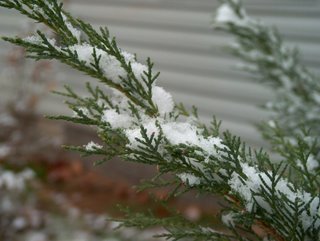
 Mindfulbalance