Just simply being fully present

File:Dishes to wash LGC.jpg

While  washing the dishes one should only be washing the dishes, which means that while washing the dishes one should be completely aware of the fact that one is washing the dishes.  At first glance, that might seem a little silly: why put so much stress on a simple thing? But that’s precisely the point. the fact that I am standing there and washing the dishes is a wondrous reality. I’m being completely myself, following my breath, conscious of my presence, and conscious of my thoughts and actions. There’s no way I can be tossed around mindlessly like a bottle slapped here and there on the waves.

Thich Nhat Hanh

photo: Ataraxes

Seeing the mind as organizing

File:LEGO-02.jpg

The brain freezes the world into discrete mind moments, each capturing a barely adequate morsel of information, then processes these one by one in a rapid linear sequence. The result is a compiled virtual world of experience, more or less patterned on what’s `out there,’ but mostly organized around the needs and limitations of the apparatus constructing it. It is like the brain and its senses are hastily taking a series of snapshots, then stringing them together into a movie we call `the stream of consciousness.’

Andrew Olenszki, Unlimiting Mind: The Radically Experiential Psychology of Buddhism

In front of our eyes

Meditation is misunderstood as something you envision in your head, when in fact it is something to be seen with your own eyes.

What you begin to see is that the place where you thought your life occurred —  rumination and memory,  anxiety and fear — isn’t where your life takes place at all. Those mental recesses are where pain occurs, but life occurs elsewhere, in a place we are usually too preoccupied to notice, too distracted to see: right in front of our eyes.

The point of meditation is to stop making things up and see things as they are.


Karen Maezen Miller

Going with the flow

https://mindfulbalance.org/wp-content/uploads/2013/01/river-e1358798833371.jpg

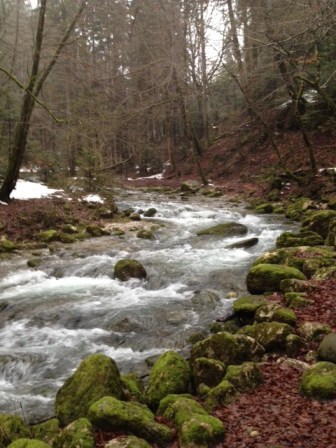
All of us rock back and forth between the tendency to hold on to ideas, experiences and emotions, and the ability to glide through the changes of our life. One reminder that can be helpful for being more fluid is to recognize our own watery-ness. We are also made up of earth (no wonder we get stuck sometimes), air (can’t make a commitment?), fire (sometimes passion helps), and space (ahhh…). But an overwhelming percentage of our physical make-up is water….Relating to waves of movement is what allows us to stay steady and sustain balance. The word “balance” comes from the Latin balare, meaning “to dance.” [And] you know what happens to water if it stays still —  it either turns into ice or becomes brackish and unhealthy. The same thing happens when we try to latch on to a prescribed feeling or experience. If we can only relax a bit we will see that our feelings, both emotional and physical, are flowing all the time.  It’s fun to think of your own body as a tiny part of the whole world of tides, rains, rivers and other people’s ninety-percent-water bodies. Can you let your body be the water bed that your heart and mind rest on?

Cyndi Lee, Go with the Flow

Making friends with ourselves

gentle

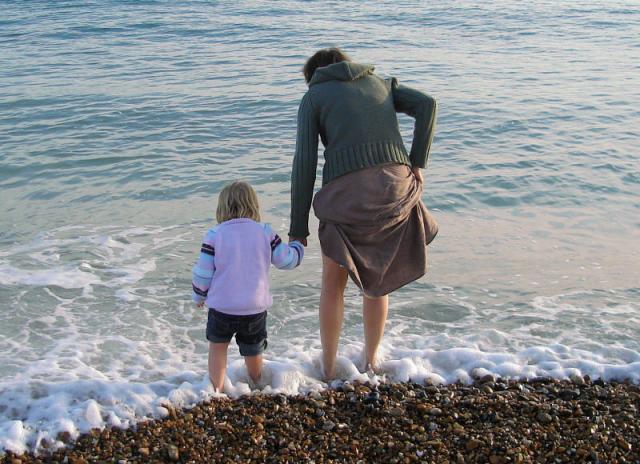
The ninth Karama, a sixteenth-century meditation master, wrote of a “reverse meditation”, in which we recognize thoughts as they occur and regard them as friends. This “reverses” the tendency to regard thoughts as distractions from the main focus; now the thoughts themselves are the main focus. Mindfulness-of-mind practice is a further step on the path of making friends with ourselves. This is the heart of awareness practice: making friends with our entire being as a stepping stone to embracing our world.

Gaylon Ferguson, Natural Wakefulness

Running and missing

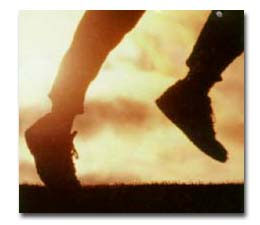
runningFrequently for us time is money. We must save as much time as possible, so that we have free time for more important things. The question is – what is more important to us? Often we cannot do much at all with all the time “saved”. We are habitually in a rush. But where to? We’ve become victims of our own frenzy – we rush at all times including our free time. He too we want to do more ever faster. But this constant rushing takes away our ability to feel and to experience the things we do. Increasingly we only feel alive in the midst of the hustles and bustles. We no longer feel ourselves, our breathing, our body, or the stirring of our heart. As the poet Ingeborg Bachman once said: “Idleness is the beginning of all love”

Anselm Gruen, Angels Calling