Intention

tearmann

Breathing in, breathing out, feeling resentful, feeling happy, being able to drop it, not being able to drop it, eating our food, brushing our teeth, walking, sitting — whatever we’re doing could be done with one intention. That intention is that we want to wake up, we want to ripen our compassion, and we want to ripen our ability to let go, we want to realize our connection with all beings. Everything in our lives has the potential to wake us up or to put us to sleep. Allowing it to awaken us is up to us.

Pema Chodron, Comfortable with Uncertainty

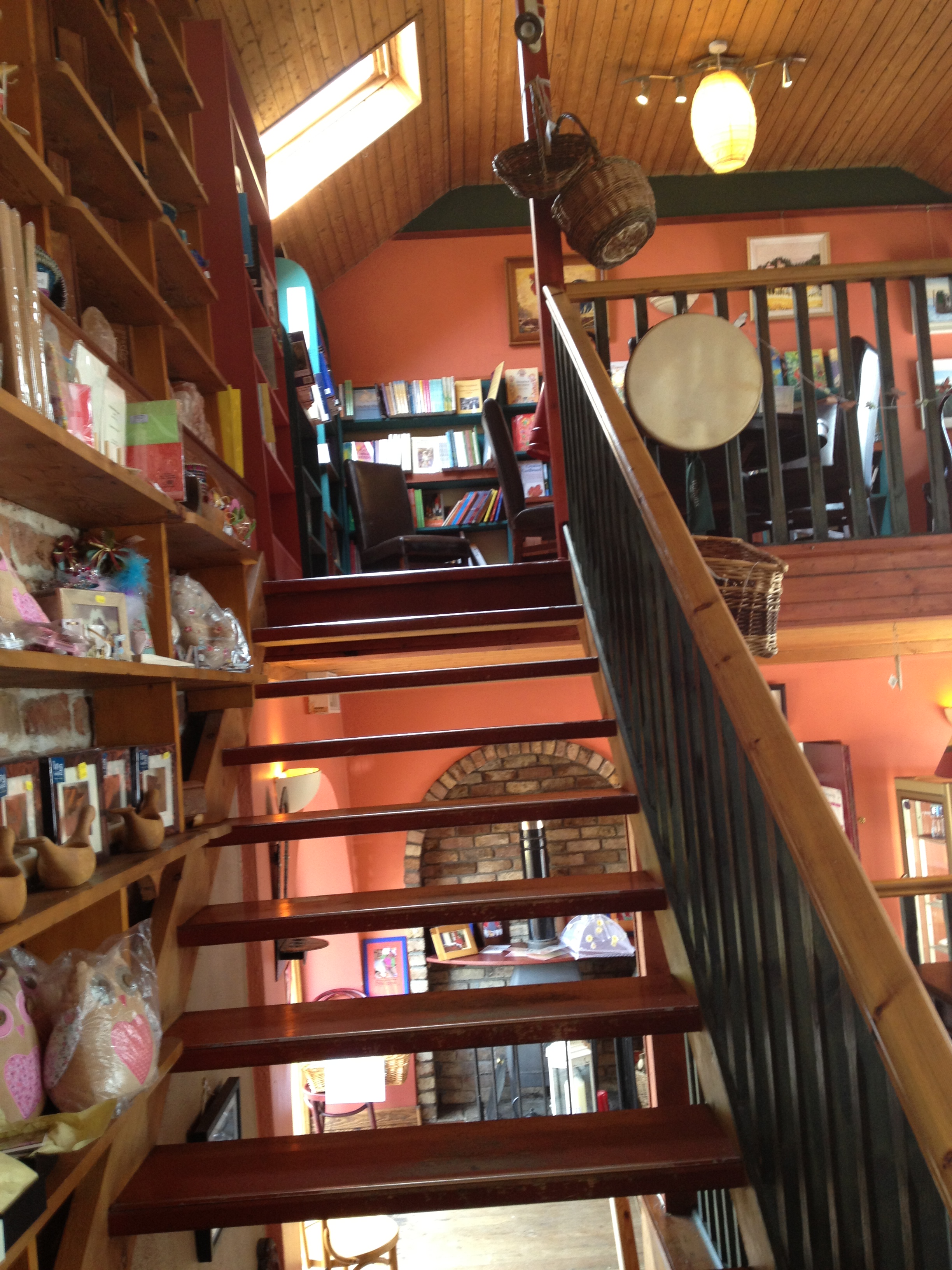
I had lunch yesterday in the coffee shop run by the Camphill Community  in the lovely village of Kilcullen, County Kildare, about 25 miles south of Dublin.  It was about 10 years since I was last  there  but I found it as inspiring and nourishing –  in every sense – as before.  The Camphill communities focus on creating meaningful and inclusive lives for people with intellectual disabilities and special needs, where everyone contributes at the level of their ability, and where the contribution of everyone is valued. As the Henri Nouwen quote this morning reminds us, our value resides more in what we are, even though we frequently seek it in what we do.

The apt name of the coffee shop is the Gaelic “An Tearmann” which means “Refuge” or “Sanctuary” and it raises funds that support the community living and working near Kilcullen as they work towards creating an environment for healing and development. I was struck by some words on the front of the menu, where they thanked visitors for their support in the creation of an “intentional community”. It reminded me that every moment, even lunch or a cup of coffee, can be made more intentional or conscious, and that we are challenged to reflect on the overall direction or intention of our lives, and what values our choices support.
Being comes before doing

friendship-thumb-350x262

My own desire to be useful, to do something significant, or to be part of some impressive project is so strong that soon my time is taken up by meetings, conferences, study groups, and workshops that prevent me from walking the streets. It is difficult not to have plans, not to organize people around an urgent cause, and not to feel that you are working directly for social progress. But I wonder more and more if the first thing shouldn’t be to know people by name, to eat and drink with them, to listen to their stories and tell your own, and to let them know with words, handshakes, and hugs that you do not simply like them, but truly love them.

Henri Nouwen

The best laid plans of mice and men….

On Monday I had a good experience of the fact that sometimes  things do not turn out exactly as I imagined or maybe hoped for.   I am in the middle of a house  relocation and one part of the schedule did not slot into place knocking other dependent elements into a waiting pattern.

I noticed that this produced two effects in the mind. The first – a very familiar occurrence – is to create doubt, and an immediate subtle tendency to blame myself arises.  Not good enough. Should have foreseen that.  Should have checked.  Should not have been so naive.  It is noticeable that when some thing goes wrong we quickly move to think that we are wrong. In those moments, if we look closely, we can feel separate and alone. A gut sense of us as deficient can come into play. Stories – about ourselves and about how our lives are going – are always arising in our minds and we can mistake them for reality. Practice helps us to see this as a process rather than holding onto the content and to turn our attention to how do we want to work with it. In other words space enters in.

Another thing I noticed is the habit of turning our plans into some sort of determined goal, and losing our focus on the path which is always fluid and ongoing. In other words, we already have a fixed outcome in our mind and failing to achieve that creates dissatisfaction. Our sense of things being right is attached to the future turning out in a particular way, which may or may not happen. This means that we do not find it as easy to respond to what actually happens, and to stay in the present moment. Our practice is to find happiness in what is actually happening and not attaching it to what we thought should have happened, and then going on to blame ourselves, others or events.

New lands

seas

One doesn’t discover new lands without consenting to lose sight of the shore

for a very long time.

Andre Gide

Strength

mountains

Sitting quietly, just breathing in and out, we develop strength, concentration and clarity.

So sit like a mountain.

No wind can blow the mountain down

Thich Nhat Hanh

Totally still

File:Still Water At Dusk.jpg
Ajahn Chah would ask “Have you ever seen still water?” They would nod, “Yes, of course, we’ve seen still water before.” Then he would ask, “Well then, have you ever seen flowing water?”  They’d respond, “Yes, we’ve seen flowing water.”“So, did you ever see still, flowing water?” “No. That we have never seen.”   He loved to get that bewilderment effect.

Ajahn Chah would then explain that the mind’s nature is still, yet it’s flowing. It’s flowing, yet it is still. He would use the word “citta” for the knowing mind, the mind of awareness. The citta itself is totally still. It has no movement; it is not related to all that arises and ceases. It is silent and spacious. Mind objects — sights, sounds, smell, taste, touch, thoughts, and emotions — flow through it. Problems arise because the clarity of the mind gets entangled with sense impressions. By contemplating our own experience, we can make a clear distinction between the mind that knows (citta) and the sense impressions that flow through it. By refusing to get entangled with any sense impressions, we find refuge in that quality of stillness, silence, and spaciousness.  This policy of  non-interference allows everything and is disturbed by nothing.

Ajahn Amaro,  Small Boat

photo Miguel Virkkunen Carvalho