
When you say “I think,” it is often not you who think, but “they” –
it is the anonymous authority of the collectivity speaking through your mask.
Thomas Merton
When you say “I think,” it is often not you who think, but “they” –
it is the anonymous authority of the collectivity speaking through your mask.
Thomas Merton

Just as a snake sheds its skin,so we should shed our past, over and over again. The Buddha
For many ancient people, the snake was a symbol of life, shedding its skin again and again to be born anew. This was frequently represented in the image of the snake as a circle eating its own tail. Jung believed that this symbol had an archetypal meaning for humans, with snakes having the enviable quality of being able to let go of what was no longer needed for growth and start again, seeing the world from a fresh new perspective. For example, the Dunsun tribe in Northern Borneo have a myth about the origins of humankind, which really reveals their way of grappling with some of the ongoing realities of human existence. In their Creation Myth, humans are contrasted with snakes, who are seen to continually renew themselves by shedding their skin. In this way it was believed that they did not die. Growth for us sometimes means letting go and moving on from the past, shedding dead skin in order to live fully.
…The way to stay closest to the pulse of life, the way to stay in the presence of that divine reality which informs everything is to be willing to change. Still, change what? To change whatever has ceased to function within us. To shed whatever we are carrying that is no longer alive. To cast off our dead skin because dead skin can’t feel. Dead eyes can’t see. Dead ears can’t hear. And without feeling, there is no chance of wholeness, and wholeness remains our best chance to survive the pain of breaking.
Mark Nepo, The Book of Awakening
 It seems to me that almost all our sadnesses are moments of tension, which we feel as paralysis because we no longer hear our astonished emotions living. Because we are alone with the unfamiliar presence that has entered us; because everything we trust and are used to is for a moment taken away from us; because we stand in the midst of a transition where we cannot remain standing. That is why the sadness passes: the new presence inside us, the presence that has been added, has entered our heart, has gone into its innermost chamber and is no longer even there, is already in our bloodstream.
Rilke, Letters to a Young Poet

The objective of science is life, and the objective of wisdom is death.
Science says: ‘We must live,’ and seeks the means of prolonging, increasing, facilitating and amplifying life, of making it tolerable and acceptable; wisdom says: ‘We must die,’ and seeks methods that prepare us to die well.”
Miguel de Unamuno, Spanish Poet, novelist, and playwright, 1864 – 1936
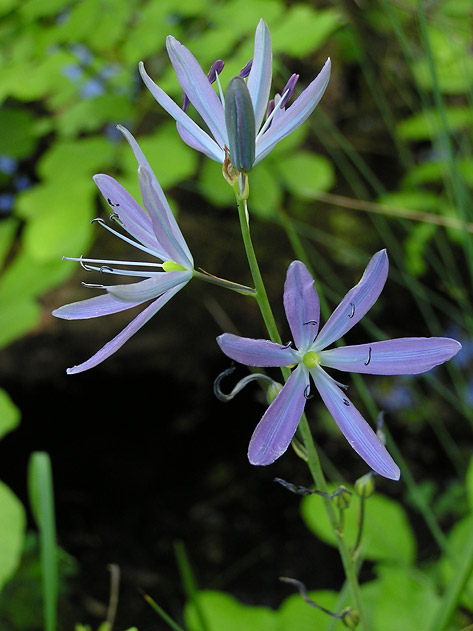
We have reduced our way of speaking about mystery to rational explanations;
but …… mystery enters through the heart.
Pope Francis address to Brazilian bishops, 27 July 2013

 Mindfulbalance