The place from which all other parts are named


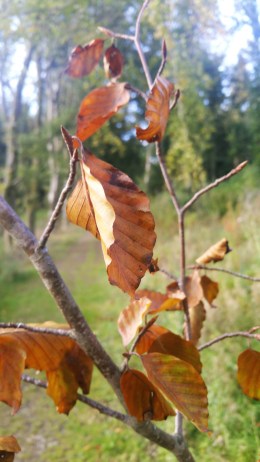
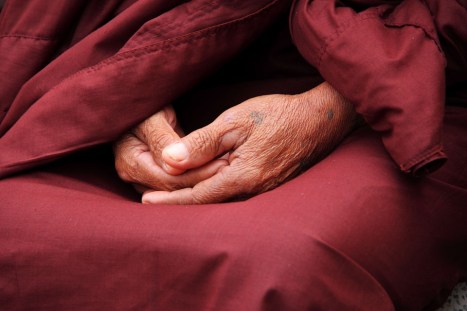
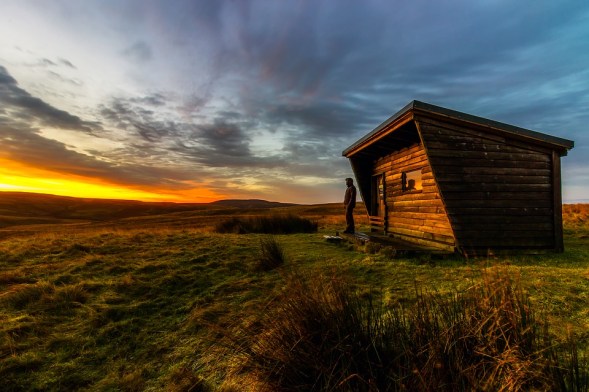
It is always a trauma for the human psyche when those elements it has over-invested itself in at the periphery of life are withdrawn, and the spring-like world of growth and opportunity seems to close down, as if the old currencies have become worthless while we as yet do not know how to value or harvest the following season. But this form of trauma has also been seen by many of our great religious, contemplative and artistic traditions as an invitation back to another kind of valuation, a return to a more internal focus, an opportunity to revive an old friendship with the place from which all the peripheries are recognized, priced and named. This internal, alchemical, almost catalytic core of identity-making and decision-making has long been associated with the soul of an individual; the part of us attempting to belong to the world in the biggest way it can; the part that witnesses our outer actions, stirs our conscience and quite often seems to be at odds with those other parts of us trying to game the system at the periphery.

David Whyte
Like a mirror

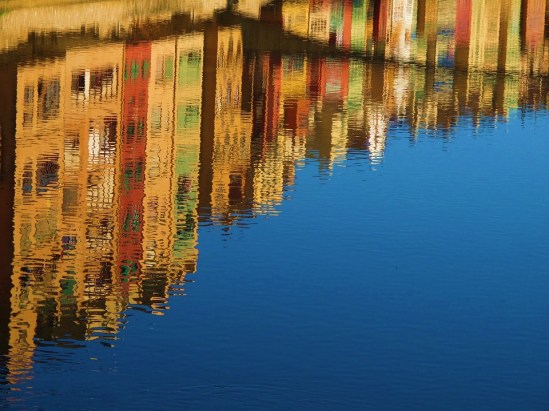
The perfect man employs his mind as a mirror;

it grasps nothing; it refuses nothing;

it receives, but does not keep.

Chuang-tzu, 4th Century BC

One hour at a time


Oh, to love what is lovely, and will not last!
What a task
to ask
of anything, or anyone,
yet it is ours,
and not by the century or the year, but by the hours.

Mary Oliver, Snow Geese

One world at a time

Satisfaction is very close and simple: the strange happiness of completely joining with whatever we are doing in that moment… When the writer Thoreau was on his deathbed, a visitor asked him – “from where you lie, so close to the brink of the dark river, can you say how the opposite shore looks to you?”

It is said that he replied gently, “One world at a time”

Susan Murphy, Upside Down Zen: Finding the Marvelous in the ordinary

Sunday Quote: Recharging batteries

Stress is caused by the mind’s response to events and suffering by the stories we tell ourselves about our lives:

Not being able to govern events,

I govern myself. 

(Ne pouvant régler les événements, je me règle moi-même)

Michel de Montaigne ( 1533 – 1592),  Essais, Book II

Behind the fear and sadness

Another Autumn Saturday, another poem.

A second storm is hitting Ireland today – clouds obscure the sun, but the sun is still there.

This world –
absolutely pure
As is.
Behind the fear,
Vulnerability.
Behind that,
Sadness,
then compassion
And behind that the vast sky.

 Rick Fields, 1942–1999,  American journalist, poet, editor-at-large of Tricycle: A Buddhist Review.

Died at 59 of cancer. He wrote a series of poems on his illness from a Buddhist perspective.