
Whatever is subject to arising,
is also subject to passing away
The Buddha, Collection of Middle-length Discourses, 56
Whatever is subject to arising,
is also subject to passing away
The Buddha, Collection of Middle-length Discourses, 56

Just a beautiful autumn poem…
Again I resume the long
lesson: how small a thing
can be pleasing, how little
in this hard world it takes
to satisfy the mind
and bring it to its rest.
With the ongoing havoc
the woods this morning is
almost unnaturally still.
Through stalled air, unshadowed
light, a few leaves fall
of their own weight.
The sky
is gray. It begins in mist
almost at the ground
and rises forever. The trees
rise in silence almost
natural, but not quite,
almost eternal, but
not quite.
What more did I
think I wanted? Here is
what has always been.
Here is what will always
be. Even in me,
the Maker of all this
returns in rest, even
to the slightest of His works,
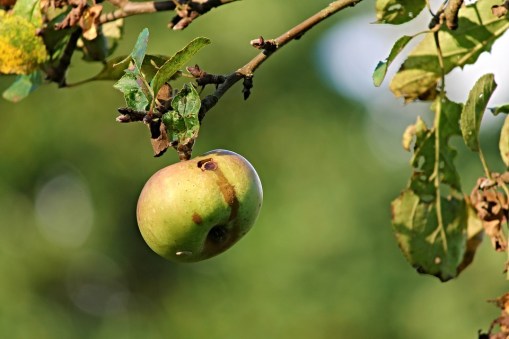
a yellow leaf slowly
falling, and is pleased.
Wendell Berry, Sabbaths 1999, VII for LV

I give thanks for arriving
Safely in a new dawn,
For the gifts of eyes
To see the world,
The gift of mind
To feel at home
In my life.
The waves of possibility
Breaking on the shore of dawn,
The harvest of the past
That awaits my hunger,
And all the furtherings
This new day will bring.
John O Donohue

To love life means to love its vulnerability, asking for care, attention, guidance, and support. Life and death are connected by vulnerability. The newborn child and the dying elder both remind us of the preciousness of our lives. Let’s not forget the preciousness and vulnerability of life.
Henri Nouwen
 Today is the feastday of St Francis of Assisi (1182 – 1226), a town I visited just a month ago, so a story from his life about working with difficult emotions.
We are told that there was a wolf terrorizing the town of Gubbio, attacking and killing several people. The townsfolk locked their doors, afraid to leave their homes. Francis heard about this and went to Gubbio . When he came upon the wolf, it lunged at him, about to bite. Francis stood calmly and greeted the wolf, calling him “Brother Wolf” and told it not to harm him. The wolf stopped and lay down at his feet. Then Francis and the wolf made a deal: the town would provide food for the wolf for the rest of its life, in exchange for the wolf’s ceasing to attack. We are told the wolf placed its right paw into Francis’ hand, and lived in peace with the people of Gubbio for the rest of its life.
These legends speak to the different parts of our lives. We all have many fears that push us to close our doors and withdraw. And we have emotions that arise within us and scare us, like anger, jealousy and the stuff that relationships bring up in our lives. Our normal first response is to be disturbed or frightened by these strong emotions and we move to push them away. However, in themselves, these are not the problem, but it is our mind’s relationship to them that is. So what we learn from Francis is to approach the things that frighten us – the frightening wolves within us – by looking at them directly, as if they are part of the family – “brother wolf”, “brother anger” “brother fear” – and welcome them to the table. This is the practice: to first experience the anxiety as an embodied feeling, with no shoulds or shouldn’ts about it. Our fears do not need to become a moment for showing ourselves further violence.
If there is a single definition of healing it is
to enter with mercy and awareness those pains, mental and physical,
from which we have withdrawn in judgment and dismay
Steven Levine
 Mindfulbalance