
It was in the process of asking that I came upon a truth:
that the unknown is an answer.
That there are answers upon answers,
and sometimes no questions at all.
Mary Oliver, Breakage
It was in the process of asking that I came upon a truth:
that the unknown is an answer.
That there are answers upon answers,
and sometimes no questions at all.
Mary Oliver, Breakage
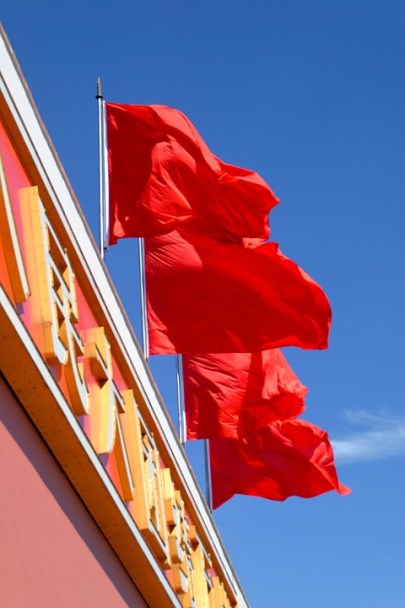
Awareness is the basis, or what you might call the “support,” of the mind. It is steady and unchanging, like the pole to which the flag of ordinary consciousness is attached. When we recognize and become grounded in awareness, the “wind” of emotion may still blow. But instead of being carried away by the wind, we turn our attention inward, watching the shifts and changes with the intention of becoming familiar with that aspect of consciousness that recognizes Oh, “this is what I’m feeling, this is what I’m thinking”. As we do so, a bit of space opens up within us. With practice, that space – which is the mind’s natural clarity – begins to expand and settle.
Yongey Mingpur Rinpoche

La ruta nos aportó otro paso natural.
The path provides the natural next step.
Spanish palindrome – reading the same backwards as forwards. It is on the subject of pilgrimage or life’s journey , which, as we walk, returns us to our origins

Some of these old teachings are very beautiful. The fundamental insight is that we are always whole and alive, even right in the midst of difficulties. We thus loosen our identification with our story as something solid, as a permanent sense of agitation, weakness or illness.
A monk asked, “How can a person escape from birth, old age, sickness and death?”
Lingyun replied, “The green mountain is fundamentally unmoving,
But the floating clouds pass back and forth”
(Little is known of Lingyun Zhiqin, a disciple of Chinese Zen Master Guishan Lingyou (771 – 853). “Birth, old age, sickness and death” are shorthand for all the difficulties of life and its overall unsatisfactory nature).
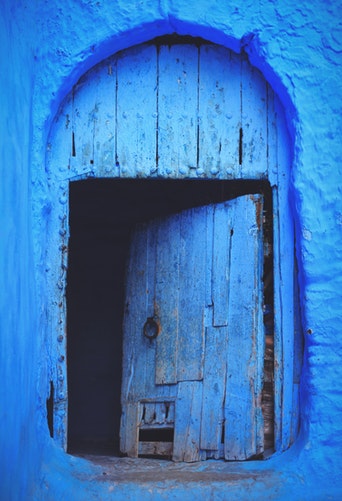
Came across this image in Tim Burkett’s book Nothing Holy about It: The Zen of Being Just Who You Are, one of the best books I read last year. It is one of the most famous ideas of this great teacher… Easy to understand, not so simple to do.
We say “inner world” or “outer world,” but actually there is just one whole world. In this limitless world, our throat is like a swinging door. The air comes in and goes out like someone passing through a swinging door. If you think, “I breathe,” the “I” is extra. There is no you to say”I.” What we call “I” is just a swinging door which moves when we inhale and when we exhale. It just moves; that is all. When your mind is pure and calm enough to follow this movement, there is nothing: no “I,” no world, no mind nor body; just a swinging door.
Suzuki Roshi

A dreary rainy day here in Ireland, after weeks of sunshine. The temptation is to keep ones head down, moving quickly from place to place. However, positive emotions are linked to paying attention and appreciating whatever is around us – grey or bright – noticing the small details in every moment.
God and the sacred, the enchanted and the luminous, are not “over there” somewhere. They are all right here, where we are. May we get back to the ordinary, the breath by breath, and the living in each moment fully. Inhabiting each moment and seeking the wonder therein. The refusal to let life descend down to a cycle of the mundane, the insistence of seeking awe in the ordinary – this is the beginning of spiritual life.
This is the wisdom of Rabbi Abraham Joshua Heschel, among so many others, who said “Indifference to the sublime wonder of living is the root of sin”
Sin, for Heschel, is ultimately not about eating this or not eating that, praying in this temple or that temple, but a losing of that sublime wonder of being truly alive. That is the ultimate sin, the only sin. Yes, there are religious commandments to observe. But the goal of religion remains to cultivate that sense of wonder, awe, and radical amazement.
Omid Safi, The Spirituality of the Ordinary Is Luminous
 Mindfulbalance