Underneath all

Coming empty-handed, going empty-handed – that is human. When you are born, where do you come from? When you die, where do you go? Life is like a floating cloud which appears. Death is like a floating cloud which disappears. The floating cloud itself originally does not exist. Life and death, coming and going, are also like that.

But there is one thing which always remains clear. It is pure and clear, not depending on life and death.

Seungsahn Haengwon, 1927 – 2004, Korean Zen Master

When we identify

The important thing is not to know who “I” is or what “I” is.  You’ll never succeed.  There are no words for it.  The important thing is to drop the labels. As the Japanese Zen masters say, “Don’t seek the truth; just drop your opinions.” If you drop your labels, you would know. What do I mean by labels? Every label you can conceive of except perhaps that of  human being. I am a human being. Fair enough; doesn’t say very much.

But when you say, “I am successful,” that’s crazy. Success is not part of the “I”. Success is something that comes and goes; it could be here today and gone tomorrow. That’s not “I”.  When you said, “I was a success,” you were in error; you were plunged into darkness. You identified yourself with success. The same thing when you said, “I am a failure, a lawyer, a businessman.” You know what’s going to happen to you if you identify yourself with these things. You’re going to cling to them, you’re going to be worried that they may fall apart, and that’s where your suffering comes in.

 Suffering is given to you that you might open your eyes to the truth, that you might understand that there’s falsehood somewhere, just as physical pain is given to you so you will understand that there is disease or illness somewhere.

Anthony de Mello sj, Awareness: The Perils and Opportunities of Reality
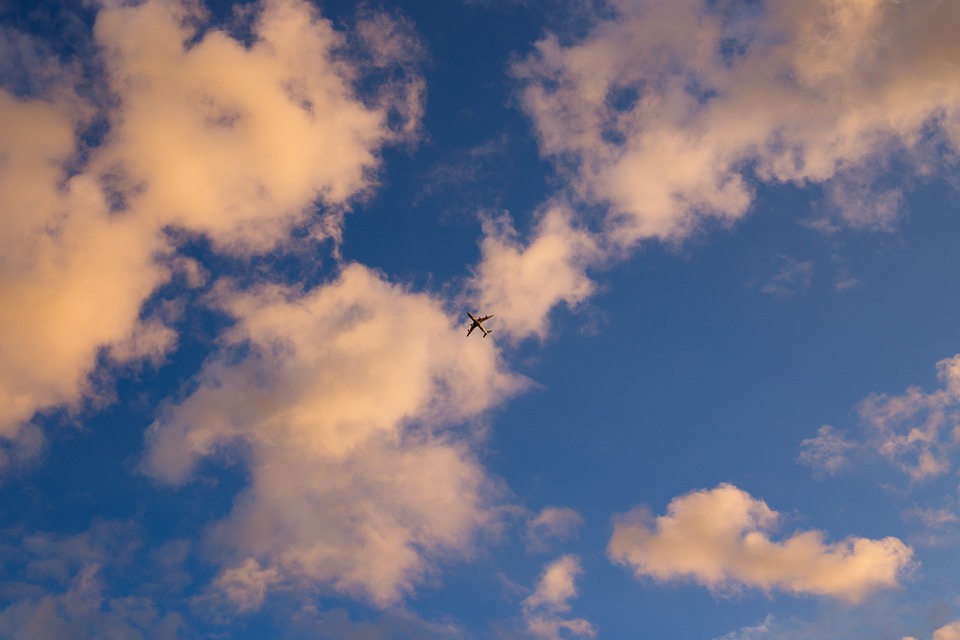
An inner evolution

Travel agents would be wiser to ask us what we hope to change about our lives rather than simply where we wish to go…

The notion of the journey as a harbinger of resolution was once an essential element of the religious pilgrimage, defined as an excursion through the outer world undertaken in an effort to promote and reinforce an inner evolution. 

Alain de Botton, A Week at the Airport 

Now

The Buddha famously avoided all questions about the afterlife, preferring to focus on what helped us deal with the challenges of this life. He said he was interested only in “suffering and the end of suffering” – practical skills for dealing with the mind.

Hakuin Zenji said, “If you want to know about life after death, ask the man who wants to know.” Thus there is no other way than to ask yourself, for this problem does not belong to the category of knowledge. You yourself must solve it by practice. Buddha’s practice after his enlightenment is not different from each individuals practice before enlightenment, if there is no idea of self. When you are engaged in selfless practice, you are free from the idea of past, present and future; from the idea of this world or another; from the idea of coming or going.


Shunryu Suzuki

Remember

Remember that at any given moment there are a thousand things you can love.

David Levithan, 1972 – American author and editor.

Sunday Quote: How

How you stand here is important.

How you
listen for the next things to happen.

How you breathe.

William Stafford, Being A person [extract]