When things no longer have the ability to offend you,
they cease to exist in the old way.
Jianzhi Sengcan, died 606, the Third Zen Patriarch
When things no longer have the ability to offend you,
they cease to exist in the old way.
Jianzhi Sengcan, died 606, the Third Zen Patriarch

The word dukkha is at the heart of the Buddhist understanding of life. It essentially means that life has an element of stress that is independent of, and resistant to, all our efforts to make it perfect or carefree. Translating the word is not so easy….
‘All is suffering’ is a bad modernist translation.
What the Buddha really said is:
It’s all a mixed bag. Shit is complicated.
Everything’s f**ked up, [yet] Everything’s gorgeous.
Robin Coste Lewis, Voyage of the Sable Venus and Other Poems
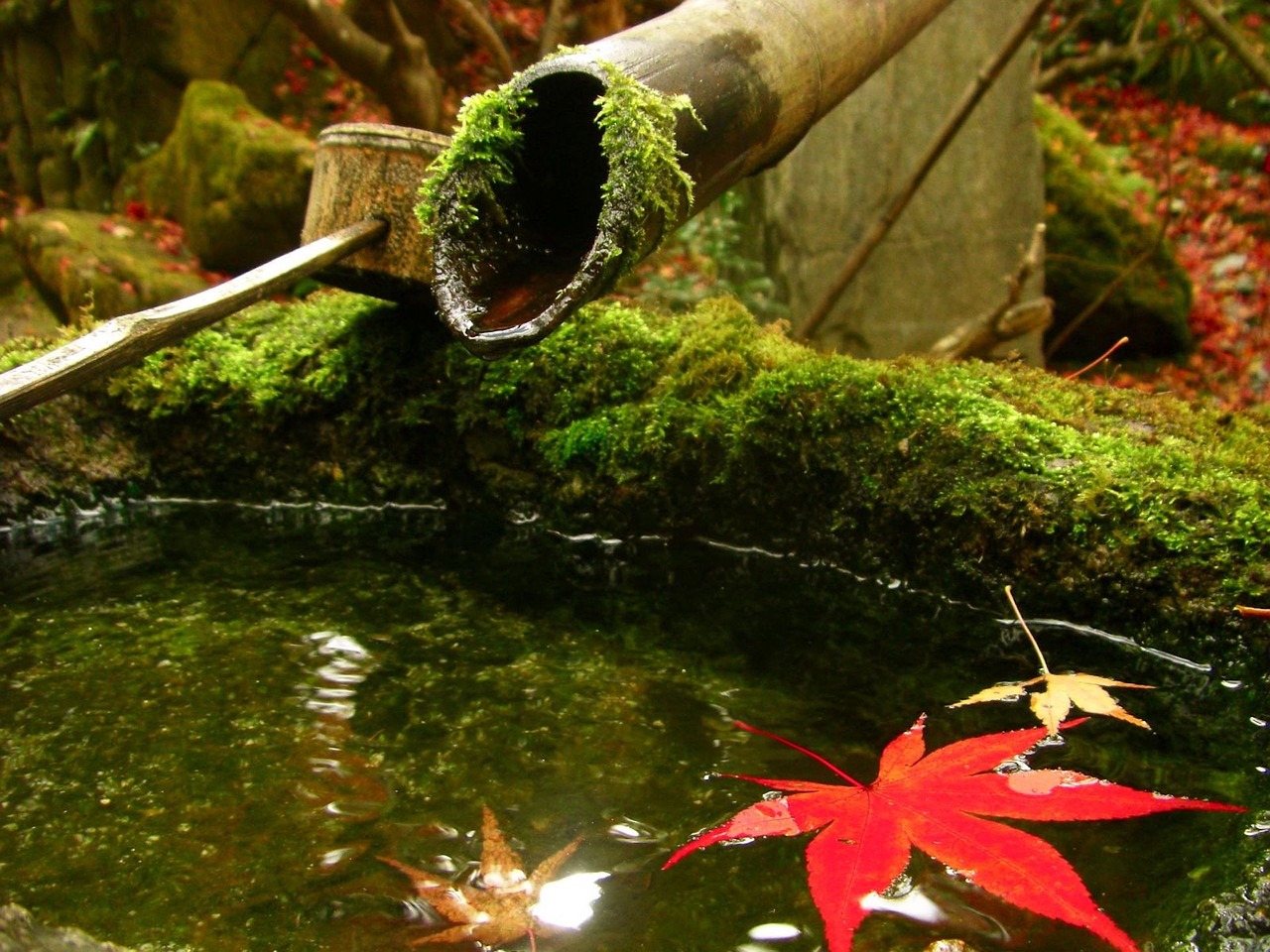
This sublime poem by Ryōkan, written toward the end of his life, sees all of life in the falling maple leaf. Just like the leaf shows both front and back, life is filled with good times and challenging times, moments of happiness and unhappiness, ups and downs. We can learn from Ryōkan who simply observes the naturalness of what’s happening, without adding “it’s sad the leaf is dying. It’s sad it is falling down.” The existence of the leaf is a series of transformations and it will turn into soil, to support new life.
Showing its front
Showing its back
The maple leaf falls
Ryōkan, 1758 – 1831, Buddhist monk and hermit
Sorcerers maintain that talking about ourselves makes us accessible and weak, while learning how to be quiet fills us with power.
A principle of the path of knowledge is to turn your own life into something so unpredictable that not even you yourself knows what’s going to happen.
Carlos Castaneda

The key to our deepest happiness
lies in changing our vision
of where to find it
Sharon Salzberg, Finding your Way
Every speck of dust has a marvelous soul,
but to understand it, one must recover one’s religious and magical sense of things.
Joan Miró, 1993 – 1983, Catalan painter, sculptor and ceramicist
 Mindfulbalance