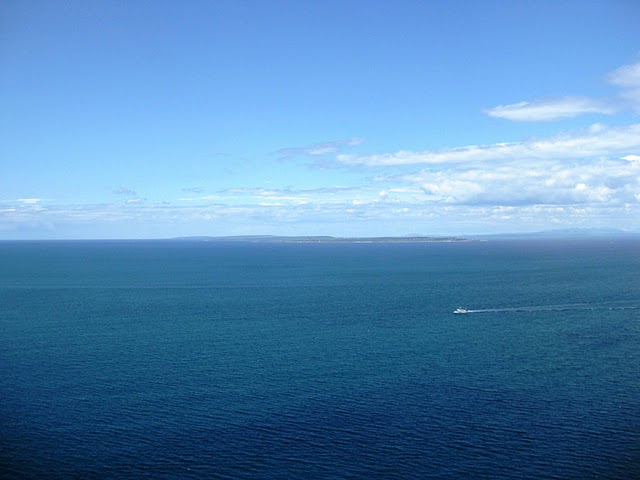
A motto for this month: In the ordinary moment

zen tea.

You didn’t have to be learned, live in a monastery or have extraordinary experiences in order to practice mindfulness:

Bankei was approached by a priest who boasted that his master possessed miraculous powers.

This master could take a brush and write Amida in the air and the word would appear on a sheet of paper in the distance.

Challenged to equal this, Bankei replied, “My miracle is that when I feel hungry I eat, and when I feel thirsty I drink.”

Observing everything

File:Looking Foxy.jpg

The essence of all practice, is to learn to look beyond the sensory world, learn to abide beyond perception. One way that we can do this is to look upon life as something that flows through the mind. Rather than thinking of oneself as a person who is going places, consider these as images going through the mind. Right now we have the image of the meditation hall; this is what we can perceive. The sound of this voice; the feeling of sitting on a cushion; the sense of sight; see that all these things flow through the mind like a current. When Ajahn Sumedho went traveling recently he said he made the determination before he left that he wasn’t going to go around the world, he was just going to let the world go through his mind. Afterwards he said the result was very peaceful: he went everywhere, saw everyone, did everything, but the sense of movement, of a person heading towards somewhere, was absent; there was stillness in its place.

 Ajahn Amaro

photo keven law

Unique

File:Passer domesticus -England -male.jpg

If you don’t look at things through your concepts, you’ll never be bored. 

Every single thing is unique. 

Every sparrow is unlike every other sparrow despite the similarities. 

It’s a great help to have similarities, so we can abstract, so that we can have a concept. 

It’s a great help, from the point of view of communication, education, science. 

But it’s also very misleading and a great hindrance  to seeing this concrete individual. 

If all you experience is your concept,  you’re not experiencing reality,  because reality is concrete. 

The concept is a help, to lead you to reality, but when you get there, 

you’ve got to intuit or experience it directly.

.
Anthony de Mello. sj.

photo david friel


The marvellous everyday

DSCN0537

Last week I visited the remains of the ancient Irish Celtic monastery at Clonmacnoise, founded in 546 by Saint Ciaran and which had a significant impact upon European learning in the following Centuries.  All that visibly remains now are the ruins of some churches and two beautiful High Crosses. While there I remembered a poem by Seamus Heaney which refers to a marvellous story from 748 AD when a ship  floated by in the sky. (The heavenly realms were frequently imagined as an ocean in those times, and were seen to be as real as life on earth).  The monks were at prayers, they looked up, and watched the ship go by in the sky. Then, out of the ship, came an anchor, which fell and hooked itself to the altar.… the ship finds itself stuck, it cannot go forward. A sailor climbs down the rope, to try to un-hook the anchor, but began to “drown” in our air. The monks realized this, and hurried to free the anchor, and they helped the man back up to the ship.

Heaney’s poem sees in this story the mingling between worlds. His beautiful words – “out of the marvellous” – strikes us, as it shows that,  for the sailor from “up there”,  the world “down here” is new and wondrous. In all of Heaney’s later poems we see everyday miracles and otherworldly wisdom in the ordinary of every day. Our mundane world of meetings and conversations is full of depth, if we pay attention. We are reminded: there are enough marvels in this world, if we have the eyes of wonder to see them.

The annals say: when the monks of Clonmacnoise
Were all at prayers inside the oratory
A ship appeared above them in the air.

The anchor dragged along behind so deep
It hooked itself into the altar rails
And then, as the big hull rocked to a standstill,

A crewman shinned and grappled down the rope
And struggled to release it. But in vain.
‘This man can’t bear our life here and will drown,’

The abbot said, ‘unless we help him.’ So
They did, the freed ship sailed, and the man climbed back
Out of the marvellous as he had known it.

– Lightenings viii, 1991

photo from the blog richie abroad
How we look and what we see

horizon4

The real voyage of discovery
consists not in seeing new landscapes
but in having new eyes

(Le véritable voyage de découverte ne consiste pas à chercher de nouveaux paysages, mais à avoir de nouveaux yeux)

Marcel Proust

Go easy

River Barrow Towpath

Went walking  this week below the lovely village of Leighlinbridge, along the towpath of the River Barrow among trees and slow, easy-flowing,  water.  Here nature moves at a different pace and my thoughts turned to speed and purpose and the way,  even from early morning,  our minds – under the effect of a high pressure lifestyle –  move towards compulsive activity. This is frequently linked to getting something done,  an achievement, a future, or other people’s approval. Walking slowly in nature helps us tune into a different awareness,  noting how we are, which often gets lost when we continually focus on who we are and how we are doing.

When I am among the trees,
especially the willows and the honey locust,
equally the beech, the oaks and the pines,
they give off such hints of gladness.
I would almost say that they save me, and daily.

I am so distant from the hope of myself,
in which I have goodness, and discernment,
and never hurry through the world
   but walk slowly, and bow often.

Around me the trees stir in their leaves
and call out, “Stay awhile.”
The light flows from their branches.

And they call again, “It’s simple,” they say,
“and you too have come
into the world to do this, to go easy, to be filled
with light, and to shine.”

Mary Oliver, When I am Among the Trees

photo kevin higgins : licensed for reuse under Creative Commons License