Ordinary and more

Mindfulness helps you fall in love with the ordinary

Thich Nhat Hahn 

The chickens leave the coop

File:Hósvík, Faroe Islands (5).JPG

Feelings arise within the state of calm. The mind is experiencing feelings and calm at the same time, without being disturbed. When there is calm like this, there are no harmful consequences. Problems occur when the chicken gets out of the coop.  For instance you may be watching the breath entering and leaving and then forget yourself, allowing the mind to wander away from the breath, back home, off to the shops or any number of different places. Perhaps even a half hour may pass before you suddenly realize that you’re supposes to be practicing meditation and you reprimand yourself for your lack of mindfulness. This is where you have to be really careful because this is where the chicken gets out of the coop – the mind leaves its base of calm.

Ajahn Chah, What’s What

photo erik christensen

Giving life to life

File:Washing Dishes at the Auberge de Nomad - Bani - Sahel Region - Burkina Faso.jpg

We are paying full attention when there is nothing between us and the task at hand. If you are facing a sink full of dirty dishes and the mind is taken up with aversion to the task, impatience with how long it is taking, thinking about what movie you’re going to see that night, you are separated from what you are doing. The hands are washing but the mind is not. To be divided this way is to be less than fully alive. Giving our whole body and mind over to a task being undivided and intimate in your action is what the Chinese masters called giving life to life

Larry Rosenberg, Breath by Breath

photo adam jones

Saturday winding down

File:西湖平湖秋月.JPG

The first condition [required] is peace and calm; without that, it’s very difficult to see anything. That’s why a lot of our practice is actually to bring the heart to a state of balance and calm. Most people are in a constant state of reactivity. But someone who has seen the suffering of reactivity calmly comes to realize that it’s not the best way to relate to life; it is very limited – always the experience of ‘Self’, ‘Me’ and ‘You’. But as the sense of ‘Self’ decreases, the reactivity decreases also. It’s not so much the sense of Self that is the obstacle, its our identification with it.

Ajahn Sundara, Simplicity

photo jeff chenqinyi


Fixated

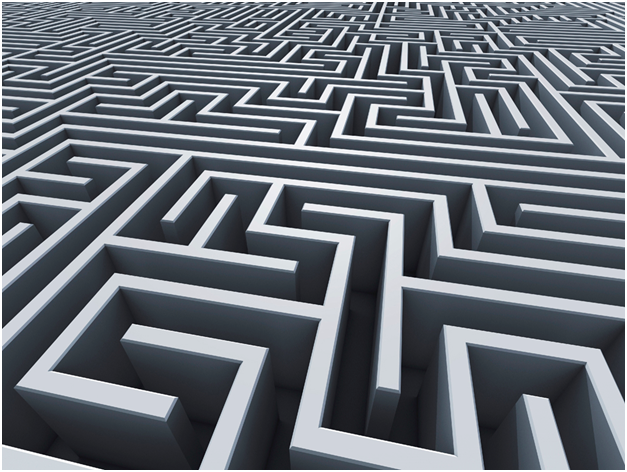
maze

There are actually two reasons why people in general are out of touch with their subjective experiences: They have ‘low definition’ bodies and they are continuously fixated in thought, especially verbal thought. Of course, there’s nothing intrinsically wrong with thinking. Indeed complex thought is evolution’s wonderful gift to humankind, giving our species special powers that the others lack. Thought per se is not the problem. The problem is the driven and fixated way in which we think.

Shinzen Young, Bringing the Monastery Home


Out of touch with ourselves

File:2009 handheld device Chicago 3500372279.jpg

With our cell phones and PDA’s we are now able to be in touch with anyone and everyone at any time.

In the process, we run the risk of never being in touch with ourselves.

Jon Kabat Zinn

Photo theeerin