Continual Partial Attention

Two observations, from different perspectives. One from Linda Stone, who used to work at Apple and who now writes on the effect of the internet and other technologies on our overall wellbeing. The other from Thomas Merton, the Catholic monk, reflecting on the effect of noise. Written over 40 years apart, with different epistemologies, they come to similar conclusions.

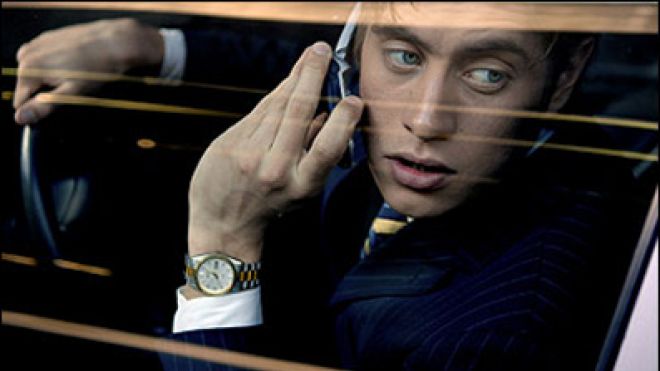
We pay continuous partial attention in an effort NOT TO MISS ANYTHING. It is an always-on, anywhere, anytime, any place behavior that involves an artificial sense of constant crisis. We are always in high alert when we pay continuous partial attention. This artificial sense of constant crisis is more typical of continuous partial attention than it is of multi-tasking. 

Linda Stone, Writer and Consultant, 2009

Now let us frankly face the fact that our culture is one which is geared in many ways to help us evade any need to face this inner, silent self. We live in a state of constant semiattention to the sound of voices, music, traffic, or the generalized noise of what goes on around us all the time. This keeps us immersed in a flood of racket and words, a diffuse medium in which our consciousness is half diluted: we are not quite ‘thinking,’ not entirely responding, but we are more or less there. We are not fully present and not entirely absent; not fully withdrawn, yet not completely available. It cannot be said that we are really participating in anything and we may, in fact, be half conscious of our alienation and resentment. Yet we derive a certain comfort from the vague sense that we are ‘part of’ something – although we are not quite able to define what that something is – and probably wouldn’t want to define it even if we could. We just float along in the general noise. Resigned and indifferent, we share semiconsciously in the mindless mind of Muzak and radio commercials which passes for ‘reality.’

Thomas Merton, Cistercian Monk, 1915 – 1968

Giving full attention to each thing today

Attention means focus, it means simplicity, it means giving your attention to one thing, one person at one time. Not in a fixated compulsive addictive way, but to be able to really give yourself, at that moment, to the person you are with. Learning to meditate is learning to pay attention. It is the art of attention in the simplest purest most immediate way. When you sit to meditate you let go of all the 1001 different things that are going on in the head. But don’t underestimate how distracted you are. It’s not easy, so don’t expect it to be easy. But it is simple. And because it is simple, anyone can do it who really wishes to do it, and is humble enough to keep coming back to it and learn, day by day, little by little, how to pay attention.

Laurence Freeman,  Benedictine monk

Not being fixed in our stories

Life is a constant creation.

It is a moment by moment, instant by instant creation. I don’t mean by this that it is a set of discrete creations, it is not like that. But nevertheless, this spontaneity is constantly arising.

And it is within this that is our freedom.

Albert Low, Zen Teacher, Montreal Zen Centre.

Sunday Quote: When we open our eyes

It was early,which has always been my hour to begin looking at the world

Sometimes I need only to stand
wherever I am  to be blessed.

Mary Oliver, It was early.

Mont Blanc silhouette, early morning, Feb 2012

The freedom of letting some things go

I may not hope from outward forms to win, The passion and the life, whose fountains are within.    Coleridge

For some people, Ash Wednesday is a day of fasting.   These days  we are quite familiar with the latest diets and slimming fads  – and consequently put a lot of pressure on body conscious people – and they harmonize quite well with a culture preoccupied with image.  The idea of fasting, and the related notion of restraint or renunciation, however, seems somewhat alien. Because of this we lose a link to a deeper process than dieting, rooted in the unconscious. Fasting, like the silence and stillness of meditation, allow us let go of some of the normal practices of each day and we can see then what then arises in the mind. Ceasing some activities or changing routines which have become second nature can be a useful way of reminding  us to turn towards our inner life rather than distracting ourselves from it. We are challenged to declutter our busy life and see where our real priorities lie, to travel lighter.  So, “letting go”, in this sense, means not buying into automatic habits and patterns of mind, which limit us into kinds of contraction, and seeing what can be done differently. We become more fluid and can experiment with the space which this gives to act with greater creativity.

Sacrifice is an important concept for anyone interested in leading a religious life, but most people today seems to think that sacrifice means giving something up. This is how shallow our religious sense has become. Sacrifice really involves the art of drawing energy from one level and reinvesting it at another level to produce a higher form of consciousness.

Robert Johnson, Jungian Analyst

Lost in thoughts

Without a development or training of the mind, we find that much of our life is lost in thoughts and that we take these thoughts to be reality. How often do our thoughts condition reactions in the mind, as though the thought itself had substance? Yet the thought of a friend is not the friend; it is a thought. How many life scenarios have we created, directed and starred in and, for those moments, taken to be the experience itself? We also may get carried away by the intense nature of our emotions, swept up in a typhoon of the mind and body. To be lost in emotions is not to be mindful of their energy; and when there is a strong identification with them, there is no space in our mind for seeing clearly what is happening.

Joseph Goldstein and Jack Kornfield, Seeking the Heart of Wisdom