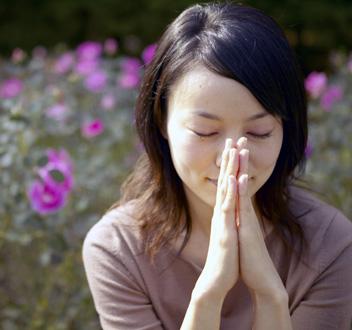
Setting time for deep listening

I trust the mystery.  I trust what comes in silence and what comes in nature where there’s no diversion.  I think the lack of stimulation allows us to hear and experience a deeper river that’s constant, still, vibrant, and real.  And the process of deep listening with attention and intention catalyzes and mobilizes exactly what’s needed at that time.

Angeles Arrien.

Bowing to our experience today

Mindfulness is a kind of attention. It is a non-judging, receptive awareness, a kind of respectful awareness. Unfortunately most of the time we don’t attend in this way. Instead we react, judging whether we like, dislike or can ignore this what is happening. Or we measure our experience against our expectation. we evaluate ourselves and others with a constant stream of commentary or criticism. But …we can put aside these weapons of judgment. When we are mindful it is as if we can bow to our experience, without judgment or expectation. In Suzuki Roshi’s words: “We pay attention with respect and interest, not in order to manipulate, but to understand what is true. And seeing what is true, the heart becomes free”

Jack Kornfield, Bringing home the Dharma

Keep your practice simple

In meditation, the practice of calming, resting, and dwelling  happily in the present moment can be difficult at first, because our minds are always racing. The more you try to stop your racing mind, the more it resists. Mindfulness is not meant to suppress or get rid of the racing mind, but simply recognize its presence. First you need to recognize that thinking nonstop has become a strong habit for you. The easiest way to stop that habit from taking you over is to learn how to breathe in a sitting position for a short time, for just five or ten breaths. If you think you have to practice meditation for too long a period of time, there is no way you will maintain a daily practice. Instead throughout the day, use the ringing of the telephone, or the sound of your watch, or any other cue,  to stop all doing and thinking  for a moment. Just enjoy your breathing. Our son started sitting when he was three or four years old. He sat for ten breaths every morning. And if a little child can do that, I am sure we grown-ups can do it as well.

Nguyen Ann-Huong, Walking Meditation
At home with oneself

Solitude is one of the most precious things in the human spirit. It is different from loneliness. When you are lonely, you become acutely conscious of your own separation. Solitude can be a homecoming to your own deepest belonging. One of the lovely things about us as individuals is the incommensurable in us. In each person, there is a point of absolute non-connection with everything else and with everyone. This is fascinating and frightening. It means that we cannot continue to seek outside ourselves for the things we need from within. The blessings for which we hunger are not to be found in other places or people. These gifts can only be given to you by yourself. They are at home in the hearth of your soul. . . . In everyone’s inner solitude there is that bright and warm hearth.

John O Donohue

Becoming a friendly audience to your experience

Here’s a definition of mindfulness: it’s a strengthening of your concentration so that you can be more precise and clear in recognizing your experience. It’s also a strengthening of your equanimity—your ability to be relaxed and open in the face of your experience. The concentration part of mindfulness is a little like drinking a cup of coffee; it kind of wakes you up. It’s like the straight spine of arousal or awareness. The equanimity part is like the relaxed limbs of the body. The spine is straight, and the limbs are relaxed. This relaxation part is a receptivity and acceptance to things as they are. It’s a kind of “friendly audience” to your own experience; a sort of “Hello. Wow! OK.” attitude—a gentle, matter-of-fact awareness of your experience, rather than a reactive pulling back. All mindfulness practices cultivate both of those, the concentration and the equanimity, so that you can be clearer, more precise and more relaxed in the face of whatever is happening to you—whether it’s loud noises coming in from a jackhammer running in the next building, or a pain in your knee, or your emotions about your spouse.

Polly Young-Eisendrath, Jungian Analyst, Personality Type in Depth

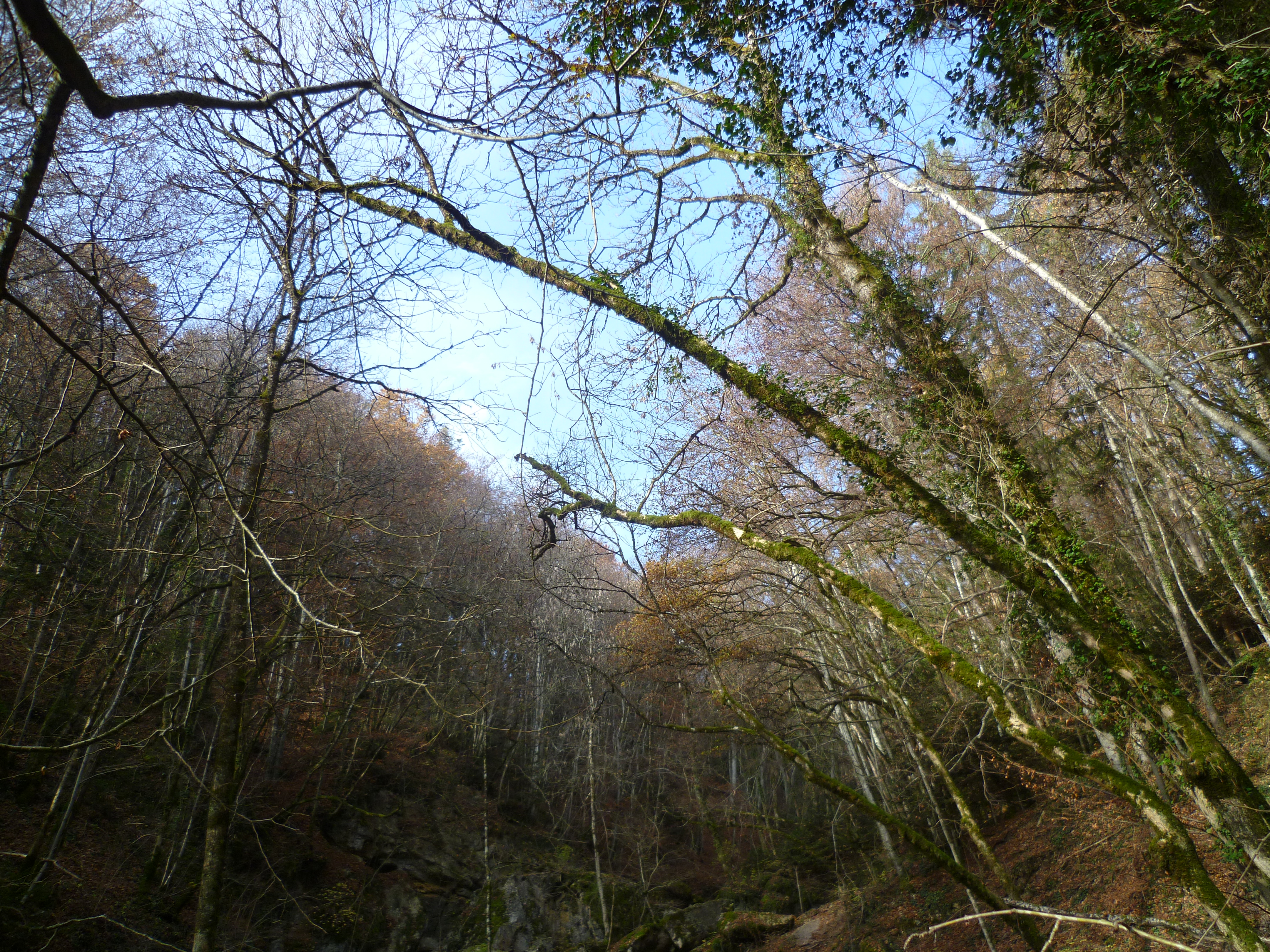
The winds in the trees, the sound of the stream

No writing on the solitary, meditative dimensions of life can say anything that has not already been said better by the wind in the pine trees. These pages seek nothing more than to echo the silence and peace that is “heard” when the rain wanders freely among the hills and forests. But what can the wind say when there is no hearer? There is then a deeper silence: the silence in which the Hearer is No-Hearer. That deeper silence must be heard before one can speak truly of solitude.

Thomas Merton, Preface to Japanese translation of Thoughts in Solitude