Living life more fully

Many people think that meditation is something strange or esoteric, demanding a special kind of person.
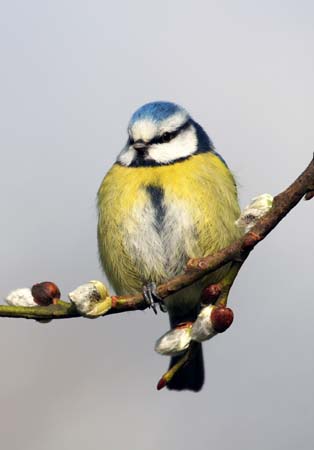
But as Jon Kabat Zinn reminds us in the previous post, it is simply paying attention to all the details of life. This allows us live more deeply our life as it actually is, and enjoy each moment more fully.

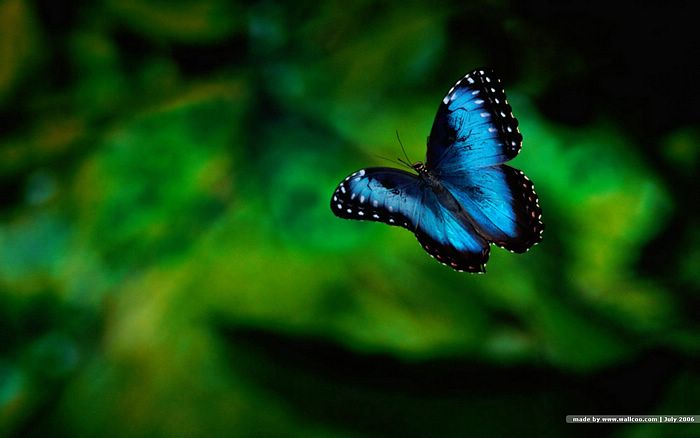
Meditation is not something apart from life. When you are driving a car or sitting in a bus, when you are chatting aimlessly, when you are walking by yourself in a wood or watching a butterfly being carried along by the wind—to be choicelessly aware of all that,  is part of meditation.

J. Krisnamurti

Aware of what I am thinking, what I am feeling

The goal of attention practice is to become aware of awareness. Awareness is the basis, or what you might call the “support,” of the mind. It is steady and unchanging, like the pole to which the flag of ordinary consciousness is attached. When we recognize and become grounded in awareness, the “wind” of emotion may still blow. But instead of being carried away by the wind, we turn our attention inward, watching the shifts and changes with the intention of becoming familiar with that aspect of consciousness that recognizes “Oh, this is what I’m feeling, this is what I’m thinking”.

As we do so, a bit of space opens up within us. With practice, that space—which is the mind’s natural clarity—begins to expand and settle.

Yongey Mingyur Rinpoche

Simple: Hear the birds sing

The disciple was always complaining to his master,
“You are hiding the final secret of Zen from me.”
And he would not accept the master’s denials.
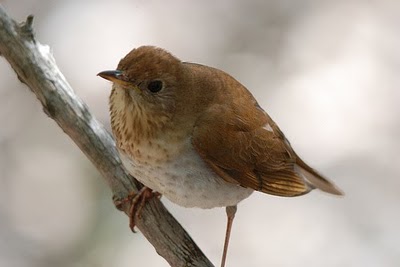
One day they were walking in the hills when they heard bird a bird sing.
“Did you hear the bird sing?” asked the Master?
“Yes,” said the disciple.
“Well, now you know that I have hidden nothing from you.”
“Yes.”

Anthony de Mello

The Eighty Fourth Problem

Stories about ourselves and how we are doing  arise non-stop in our minds and influence our beliefs about reality and about what happens in each day. These mental impressions – thoughts and feelings – often  revolve around some sense that we are not in the right place, that something is wrong with us. This feeling that our life is out of sync or that from time to time we do not know where we are going is not new. The Buddha’s fundamental insight, more than 2500 years ago, was that there is an unsatisfactory quality to our lives and that we are frequently aware of being out of balance. It is just the nature of life. We often have to deal with uncertainty and difficulties.

As told in the story of the farmer meeting the Buddha, we will always have our “eighty-three problems” – anxieties about our career or finances, difficulties in relationships, fears about sickness and health, getting the balance right in living with others, and so on. It is the “eighty-fourth problem” – that we think all of these should not be in our lives from time to time  – that adds to our difficulty and makes our day full of distress. When we fall into this eight fourth problem we go on to make ourselves more miserable over the fact that we have problems.  We judge our situation harshly because we are lacking a feeling of ease. We feel we have to “get rid of” something. We so quickly make the move from “something” is going wrong at the moment, to “I” am wrong, and read events as some sort of sign of an interior or psychological malaise. One thing which meditation does is allow us sit more easily with the gaps in our experience without panicking or needing to fix them.

Suffering becomes a block in our sense of being when any position is taken as an identity – when how you are becomes who you are. When we wake up to how human life on this planet actually is, and stop running away or building walls in our heart, then we develop a wiser motivation in our lives.

Leaves

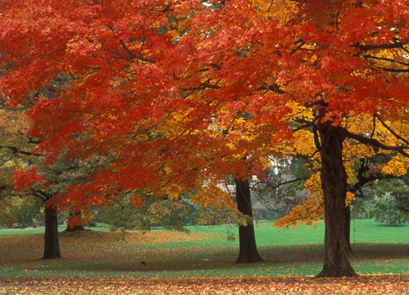
Autumn is a second
season when every
leaf is a flower.

Albert Camus

Comfort for the soul

Like Saint Francis yesterday, Mary Oliver finds comfort in the singing of a bird. For us too, nature is a great place to find comfort in our moments of difficulty. Sometimes we get glimpses of a deeper reality, when our heart opens wide and time seems to stand still:


….. finally I heard him among the first leaves—
then I saw him clutching the limb

in an island of shade, with his red-brown feathers, all trim and neat for the new year.

First, I stood still

and thought of nothing.
Then I began to listen.
Then I was filled with gladness—
and that’s when it happened,

when I seemed to float, to be, myself, a wing or a tree—
and I began to understand what the bird was saying,

and the sands in the glass
stopped
for a pure white moment

while gravity sprinkled upward

like rain, rising, and in fact
it became difficult to tell just what it was that was singing—
it was the thrush for sure, but it seemed

not a single thrush, but himself, and all his brothers,
and also the trees around them,
as well as the gliding, long-tailed clouds
in the perfectly blue sky— all, all of them

were singing.
And, of course, yes, so it seemed,
so was I.
Such soft and solemn and perfect music doesn’t last

for more than a few moments.
It’s one of those magical places wise people
like to talk about.
One of the things they say about it, that is true,

is that, once you’ve been there,
you’re there forever.
Listen, everyone has a chance.
Is it spring, is it morning?

Are there trees near you,
and does your own soul need comforting?
Quick, then— open the door and fly on your heavy feet; the song
may already be drifting away.

Mary Oliver, Such Singing in the Wild Branches (2003)