Sunday Quote: Our basic wealth

We already have everything we need. There is no need for self-improvement. All these trips that we lay on ourselves–the heavy-duty fearing that we’re bad and hoping that we’re good, the identities that we so dearly cling to, – never touch our basic wealth. They are like clouds that temporarily block the sun. But all the time our warmth and brilliance are right here. This is who we really are.

Pema Chodron

No regrets

I am reading  some books by Stephen Levine. He has worked extensively with those who are dying, and writes about grief and loss. What he has found is that many arrive at the end of their life with regrets, wishing that they had done this or that, lived more fully here or there, realized their potential in this way or that. This has led him to emphasize living each moment fully, not limiting ourselves in this moment to our past or waiting for our future,  in order to have no regrets:

Most of life only lasts a moment. Then our life becomes a memory, a dream. We are only alive a millisecond at at time. This moment! Or as one teacher put it, holding his thumb and forefinger about a quarter inch apart, “All of life is only just this much–just a moment in time.” When we open to this very instant in which awareness produces consciousness, we are fully alive. Completely preent. Big-minded.

To the degree we are present for “just this much” this living moment, we are alive. Otherwise we numb to the vibrancy and beg upon our deathbed for one more chance.

Most think that living a “full life” means living into old age. But if you are not alive this moment, what makes you think you’ll be alive then? To live fully is to be filled with this moment. Present for this millisecond, this day, this week, this life.

Stephen and Ondrea Levine, Embracing the Beloved

In this he echoes the words of Daniel Gilbert in his book Stumbling on Happiness. He too draws attention to not neglecting to do the things we want, to dare to choose certain paths that open up in front of us.

... most people think they will regret foolish actions more than foolish inactions. But studies show that nine out of ten people are wrong. Indeed, in the long run, people of every walk of life seem to regret not having done things much more than they regret things they did.

What is real

Those who love their own noise are impatient of everything else. They constantly defile the silence of the forests and the mountains and the sea. They bore through silent nature in every direction with their machines, for fear that the calm world might accuse them of their own emptiness. The urgency of their swift movement seems to ignore the tranquility of nature by pretending to have a purpose. The loud plane seems for a moment to deny the reality of the clouds and of the sky, by its direction, its noise, and its pretended strength. The silence of the sky remains when the plane has gone. The tranquility of the clouds will remain when the plane has fallen apart. It is the silence of the world that is real. Our noise, our business, our purposes, and all our fatuous statements about our purposes, our business, and our noise: these are the illusion.

Thomas Merton,  No Man Is An Island

When Procrastination Strikes

My son, every day work on only as much ground as your body takes up in space lying down, and your work will progress gradually, and you will not lose heart”

When he heard this, the young man acted accordingly, and within a short time the field was cleared and cultivated. Do the same, work step by step and you will not lose heart.

Sayings of the Desert Fathers.

These 4th Century sayings have a lot of wisdom in them for our life today. In this one the young man gets discouraged because the field is hard to plough. He does not have the strength and feels unmotivated, paralysed. He does not know where to start and as a consequence leaves everything just lying around. We are like this when we have to face a difficult or long task, or indeed a difficult person.

The old man gives the best advice. Do not consider the whole field, just do as much ground as you would sleep on in the night. That can be done easily. And so the young man begins, slowly, but soon the whole field gets done.

Each day we can  have a mountain of tasks ahead of us. And if we get tired or stressed they seem even greater. The advice is to start at one place and work slowly, not considering the whole of the task. If we look at the whole day and the extent of work to be done, we can get discouraged and make no progress. Just do one thing after another, step by step….we can all do that without being overwhelmed.

It is the same with our inner life. If we get frightened by our faults or difficulties and think that we will never change, we will never get started. We give up on ourselves. It is enough to do a little piece of work each day, such as a short session of meditation, and not concern ourselves with the whole field. This way progress happens, without us even noticing it.

Triumph

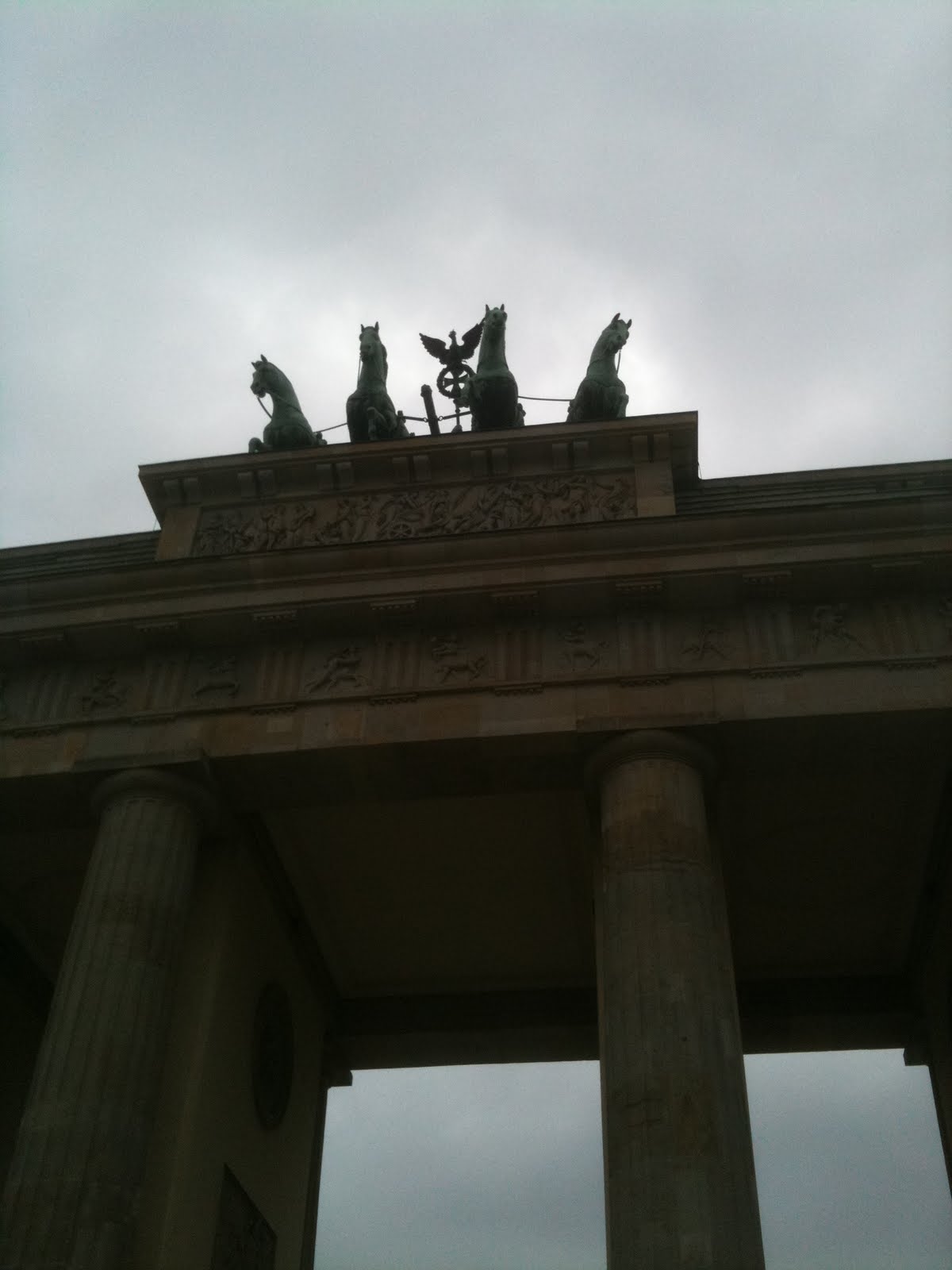
Berlin, like many of the great European cities, has its triumphal arch, the Brandenburg Gate, topped with a chariot and four horses, driven by the Roman goddess of victory. It represents a certain vision of human progress where victory is achieved by force and triumphs are celebrated in proud buildings. In this vision, we gather our strength, make our plans, apply ourselves and move forward. At moments like this, growth feels exhilarating, like a triumph, with all the elements moving together in harmony. We look up, we ascend and consciously move forward.

However, at other times. a different type of hard work is required for inner growth. A lot of people I encounter are struggling because of difficulties in relationships, family loss, health issues, and economic pressures. And through the course of a lifespan nobody can be completely immune from such burdens. We have all had periods where we have seen our dreams shattered and our life goals made more distant. It can feel like we are going backwards or nothing is happening. Or we have been with someone going through moments of pain, feeling their world come crashing down, and we have not known how to respond. There is risk involved at every moment of human life, simply because we are human. Our family relationships can cause us to worry. Our bodies may not function as well as they once did. Even in good relationships and friendships, in order to trust each other, we are required to live with a relatively high degree of risk. And sometimes that can be betrayed.

Elizabeth Lesser writes in her book Broken Open : How Difficult Times Can Help Us Grow that moments of difficulty can be deep moments of growth: We too can reproduce ourselves from the shattered pieces of a difficult time. Our lives ask us to die and be reborn every time we confront change – change within ourselves and change in our world. When we descend all the way down to the bottom of a loss, and dwell patiently, with an open heart, in the darkness and pain, we can bring back up with us the sweetness of life and the exhilaration of inner growth. When there is nothing left to lose, we find the true self — the self that is whole, the self that is enough, the self that no longer looks to others for definition, or completion, or anything but companionship on the journey. This is the way to live a meaningful and hopeful life — a life of real happiness and inner peace.

The Brandenburg Gate model of progress and power, so esteeemed in today’s society, is not a reliable one on which to base our life’s work. Sometimes we are required to be an observer, as life’s direction moves in a way that we did not anticipate. We may not feel in control of the power that is being manifested. We need, at times, to descend, rather than ascend, in order to grow. However, as Heminway reminds us, we are often stronger at the places where we have been broken. The surprising nature of life’s path is part of its wonder, when we have eyes to see it. Life, as the animals in Narnia said of Altan, is “Oh no….not tame, but is good” As Lesser puts it, being broken is just one aspect of being open:

Over and over we are broken on the shore of life. Our stubborn egos are knocked around, and our frightened hearts are broken open – not once, and not in predictable patterns, but in surprising ways and for as long as we live. The promise of being broken and the possibility of being opened are written into the contract of human life.

GPS

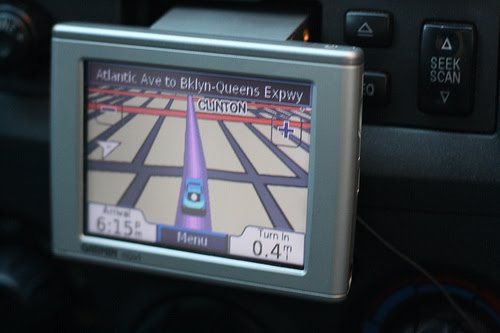
I used the GPS once or twice in the past weeks to get to a destination on the other side of Geneva that I was unfamiliar with. However, I did not use it wisely, preferring to follow my own way for the first part of the journey, intending to pay attention to the GPS only for the last complicated bit. This succeeded in confusing the system as I ignored instruction after instruction. So for most of the journey all I could hear was “Turn Left …. Recalculating…turn right ….recalculating…. recalculating ……. recalculating…”. If a device could be said to be frustrated this one certainly was.

I could have done with some sort of system in Berlin. I did not know the city at all and the traffic was quite intense. I could pass the same landmark a few times from different directions without knowing where I was. Then I would see it and say, “Ah yes, there’s the Potzdamer Platz, I know where I am”.

For a lot of the time it can feel as if our lives are like a busy street full of traffic, with cars, buses and trams going in every direction. It can be confusing, even disorientating. Maybe sometimes we can move in a straight line, like on the highway taking us home, but although we get there faster we still feel as if we have been running. Things are moving and changing almost continually so it is hard to step back and get our bearings. I certainly like to think I know where I am going, on a straight line with a clear direction and a firm sense of inner coherence. However, life often slips through my fingers, as much as I want to hold onto it, and assume that it is in my control. I can go round in circles for a period. Worse, I can ignore a deep inner voice thinking that I now know the way better.

However, gradually, if I stop and step back, I see gaps in the traffic. No matter how fast things seem to move, I am aware of myself as the one who is travelling, underneath all the movement. I can step back and slow down. In reality, on a day-to-day level, I think I am like the confused GPS. I spend most of the time recalculating. And I am at ease with that. Starting over and over again seems to be to be the heart of practice. I have given up on the belief of a fixed consistency, pushing on towards a definite goal. I now can see that, even when confused, I am learning something from a different but still a sure kind of knowing. A kind of knowing that guides us when we are travelling blind, because many things in our lives do not become clear until much later. And, in the end, the way we travel is more important than the destination.