Vulnerable Warrior


To be a spiritual warrior,
one must have a broken heart;
without a broken heart
and the sense of tenderness and vulnerability
that is in one’s self and all others,
your warriorship is untrustworthy.

Chögyam Trungpa Rinpoche
Shambhala: The Sacred Path of the Warrior.

Ants

The other day I threw out into the garden the end of a pear I had eaten. I had hoped that it would be food for the songthrush and blackbird who visit. However, a few minutes later I noticed that it had been discovered by ants, who were working incredibly fast to extract its goodness and bring it back to the nest. In a straight line they worked quickly, back and forth, organized, one following the trail left by the last, with one purpose, focused on a clear goal.

This dull Sunday morning I can reflect on direction and purpose. My Sunday roots are in Catholicism. When I was young we dressed in our best clothes which were all laid out in preparation on the night before. Saturday night was the time to polish shoes, so that there was a heightened sense of ritual and specialness about going to Church on the Sunday morning. It was a place set apart. It anchored the week and was clearly the moment which gave meaning to it. In my young eyes it was a place of certainty and continuity, an outer form that was bigger than me and gave the impression of being a container where all of life’s questions could be answered and complexities resolved.

However, despite such clarity when little and despite having invested all the years since to developing the inner life in different ways, I cannot say that life has become more certain. Ants can move consistently in a straight line. As a young adult I felt that my life plan moved in the same way. However, I see now that such a need for straight lines and a definite script came from anxiety and has been replaced by trust. Life is complex and I have moved, and continue to move, in more meandering ways. What I have come to realize, is that in spite of those seeming changes in direction and complexity of experiences, whatever meaning there is to be found comes to me slowly, sometimes unexpectedly, and I am content with that.

I am dressed more casually this Sunday morning, but it is no less special because of that. Meaning can be found inside and in the ordinary. It is not necessary to always be as busy as the ant to find direction. One does not have to know the end point on the map to be going in the right way.

Knowing

Don’t ask how
what you hope for will be,
don’t let anyone
name it for you

H.A. Murena,  El demonio de la armonia

Magic

A tone of some world
far from us
Where music and moonlight
and feeling are one

Shelley

On Thursday evening I was at a concert of Altan, one of the greatest live acts to play traditional Irish music and currently Ireland’s biggest name in such music. They were incredible in their individual performances and the music they produce together as a group. The energy of the dance music contrasted with the beauty of Mairead Ni Mhaonaigh’s voice as she sang songs of loss and love songs from the North West of Ireland. In the small theatre where they played it made for an unforgettable, magical experience.

I find that when I am listening to great music or standing before a work of art, a quiet inner space opens up, in which a full range of human experiences are felt. On Thursday this was linked to the music which evoked a sense of place, a feeling of home, the ideas of love and loss and belonging. The chatter of the mind ceased, a texture of silence was created, and the awareness of deep creativity deepened, much like what happens during meditation. Time slowed down and an instinctive awareness of what is really important emerged. In times like this, things are reduced to the fundamentals. Your own sense of the world and of yourself are touched, and sometimes changed.

The Second Arrow

The Buddha once asked a student, “If a person is struck by an arrow is it painful?” The student replied, “It is.” The Buddha then asked, “If the person is struck by a second arrow, is that even more painful?” The student replied again, “It is.” The Buddha then explained, “In life, we cannot always control the first arrow. However, the second arrow is our reaction to the first. This second arrow is optional.

We do not have to wait long for life to bring us moments of difficulty or challenges. These can give rise to difficult emotions of greater or lesser intensity, such as sadness, anger or hurt. For as long as we live we will encounter such moments. Therefore, one of the most useful skills we can develop is how to work with such events and the subsequent emotions.

The Buddha’s teaching, quoted above, is a useful strategy to remember. He distinguishes between the pain we naturally feel in life, and the pain that we shape ourselves. For example, we may naturally fall ill by picking up a virus or some illness that is doing the rounds. However, we may then add to our problems by the way we respond to the illness or the way the illness gives rise to a host of negative thoughts about ourselves or how our life is going. In other words, the pain is natural, but we create suffering by how we perceive the event and the physical sensations, how we judge them, and how we respond to them.

When something difficult happens to us, we have a tendency to commence a whole bunch of mental processes that can lead to more difficulties and create suffering — often thus adding more pain than there was originally. We dont like what is happening, and then start finding fault in ourselves or others, blaming, judging, and generally feeling sorry for ourselves.

This teaching is grounded in our mindfulness practice. We are trying to develop the skill to be able to open up to these strong emotions without either letting them discharge themselves in blame or self-pity, or running away from them or distracting ourselves from them as is easy in today’s society. In doing this we just try and let the moment be, without adding. Because life is complex we will encounter many situations in which elements are not ours to control, or in which things happen without malicious intention. Paradoxically, sometimes it is right and appropriate just to be sad.
Making our world

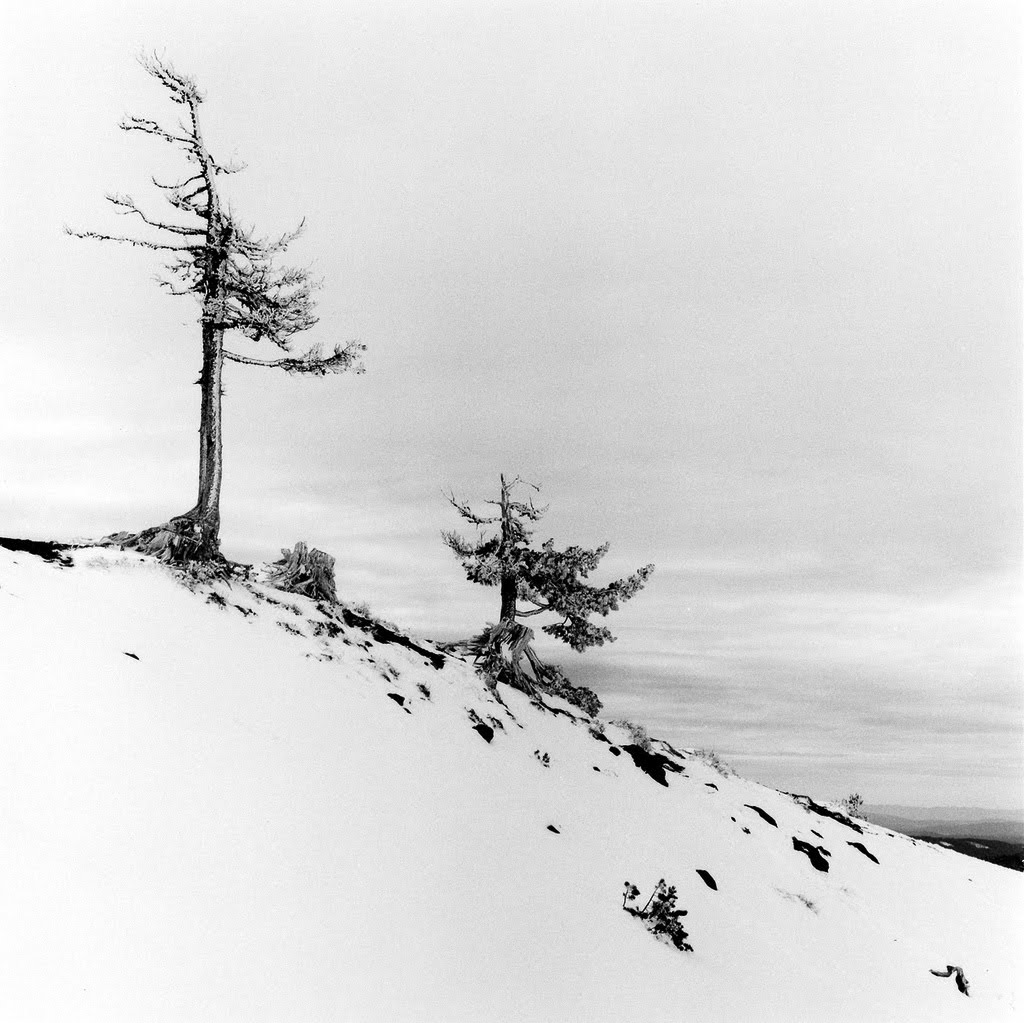
We tend to consider imagination too lightly, forgetting that the life we make, for ourselves individually and for the world as a whole, is shaped and limited only by the perimeters of our imagination. Things are as we imagine them to be, as we imagine them into existence. Imagination is creativity, and the way we make our world depends on the vitality of our imagination.

Thomas Moore The Re-enchantment of Everyday Life