On not blaming.

We erect a barrier called blame that keeps us from communicating with others, and we fortify it with our concepts of who’s right and who’s wrong. We do that with the people who are closest to us. It is a very common, well-perfected device for making us feel better. Blame others. Blaming is a way to protect your heart, trying to protect what is soft and open and tender in yourself.

Pema Chodron, In the Gap Between Right and Wrong.

When things go wrong we have a natural tendency to protect ourselves, even when it is our own fault. One way to do this is to look to blame. Sometimes we blame ourselves; more often we blame others. However, whenever I blame others I notice that it tends to harden my heart and makes me focus on myself. Remaining in that frame of mind tends to lock me in a state of victimhood, making me almost dependent on the perpetrator. It too easily simplifies the complexity which marks relationships in this world. In other words, it does not allow that things in this world can simply go wrong and that it does not always have to be someone’s fault.

Real relationships challenge us to stay open to the soft centre of the heart. How often do we form an opinion of another only to meet them and realise that our opinion was based on defending ourselves rather than what the person was really feeling. Fear makes us close down. At the end of the day it costs us precious energy. I find increasingly I ask myself: “Am I willing to waste my energy further on this matter?” and that helps me to move on.

All blame is a waste of time. No matter how much fault you find with another, and regardless of how much you blame him or her, it will not change you. The only thing blame does is to keep the focus off you when you are looking for external reasons to explain your unhappiness or frustration. You may succeed in making another feel guilty about something by blaming them, but you won’t succeed in changing whatever it is about you that is making you unhappy.

Wayne Dyer.

How our work has meaning

I came across this nice story set in the Middle Ages: A man sees a worker passing by with a wheel barrow and asks what he is doing. “Can’t you see, I’m pushing a wheelbarrow,” the man replies. Another wheelbarrow man comes by doing the same thing and he too is asked: “What are you doing.” He replies, “Can’t you see, I’m building the Cathedral at Chartres.”

The same activity, but with different levels of insight.

The second man has connected his work to something inside himself or beyond himself – has understood the difference between purpose and meaning – and thereby made his life meaningful.

Worrying

The roots of the word “worry” comes from an old Anglo-Saxon word, Wyrgan. It originally meant to strangle, choke, or tear at the throat with teeth. It was used of animals who would attack other animals, such as dogs biting the throat of sheep. We can still see this use when we speak of a cat worrying a mouse. Cats play with their prey before they kill it, sometimes throwing it up in the air or slapping it back when it seems about to escape.

Yesterday morning, bright and early, our cat Barney proudly brought a big mouse into the house and let it free in the hall. Having safely confined Barney in another part of the house I was surprised to see the mouse sitting on a shoe, licking itself, apparantly unbothered. Without too much difficulty I managed to catch him in a plastic container and release him outside, much to Barney’s disappointment.

Our modern use of the word worry started out life in a similar way to this animal meaning, as “to cause mental anguish”. It later developed into its more common modern days sense of “to feel mental anguish”. Reflecting on the early morning cat and mouse tale, I felt that the original sense has much to tell us. We frequently worry ourselves, cause ourselves mental anguish. We have a lot of input into the process, and can sometimes return to an issue, just like a cat playing with a mouse. We can generate negative thoughts, imagine catastrophies, increasing our anxiety by developing scenarios which may never actually occur. In this way we “play” with a situation which may be simply registering in the body as a physical feeling and refuse to let it just be that.

As one meditation teacher reminded us, we should always notice the “add-ons” – the stories we bring to an experience. We may be feeling nervous about starting out on a new process, but then we add on stories about our worth or how our past has developed. We may be shy making friends, but then we add on a commentary as to how we will never be happy. We may have made a mistake and then exaggerate it into something that reflects our whole life and conduct.

One way to do this is to try and stay in the present, with the raw experience of the situation, and not add to it by remembering past qualities or mistakes, or move to the future by picturing certain outcomes. We can try and stop “playing” with our problem, like the cat does with the mouse, stop returning to it again and again, stop worrying it. We can try and let the situation just be, rather than returning to it, mistakingly thinking that this is a better way to “fix it”. We can let it go free.

We need to examine that notion of “fixing” ……. We need to question our concepts about how we want things to be and what we want people to become. If we can let go of some of that, we can see more clearly what we can and cannot do. We can learn not to obsess about all the problems we cannot solve, but to sort through them to find the one or two things we can actually do that might be helpful. It is better to do one small helpful thing than punish yourself for the many things beyond your power and ability to change or affect. Some problems can be solved, some cannot, and some are best left unsolved.

Judy Lief, The problem with problems

Internet generation

There is no doubt that the internet brings the capacity for connection with others; however, there is an equally important downside of this phenomenon:

If boredom is the great emotion of the TV generation, loneliness is the great emotion of the Web generation. We lost the ability to be still, our capacity for idleness. When we live exclusively in relation to others, what disappears from our lives is solitude.

William Deresiewicz, “The End of Solitude”, The Chronicle of Higher Education.

Happiness in our own hands

Whether we are on the busy streets of New York or in the solitude of a mountain cave in Nepal, our happiness and contentment are completely in our own hands. Sitting meditation enables us to rest our mind in a present and cheerful way. When we sit, we make a direct relationship to the source of happiness. At the base of that experience is a quality of happiness, which is not a sense of giddiness, but of relaxation. Wherever we are, life is going to be coming at us. But if we use our lives as an opportunity to develop and enhance our mind, we will always be able to acknowledge that we are in a precious situation.

Sakyong Mipham Rinpoche

Ring the Bells

Watched the Hope for Haiti Concert last night. It was, on the whole, a dignified restrained affair. I found that the songs most suited to the tragedy were the older ones – John Legend’s rendition of the Gospel song Motherless Child and Mary J Blige’s gospel version of the incredible Hard Times Come Again no More. Justin Timberlake sang a nice version of Leonard Cohen’s Hallelujah. These simple, sparse, songs spoke powerfully to the human condition when faced with difficulty. Let us hope that the Concert prompted people to give.

While listening I was reminded of Cohen’s other song Anthem which anticipates his period spent as a Buddhist monk, and which, he says, contains the fundamental belief behind a lot of his songs. I feel it expresses a fundamental truth about all our lives. It reminds us that when we should not wait till we think we are perfect before we start to give. Each one of us are broken in many ways, and make mistakes. We all search for the cure that will bring us wholeness. But this brokenness is what ultimately allows real compassion for others in their weakness and pain. The greatest gift we can offer another is an acceptance of their real selves, not some ideal version of them.

The birds they sang
at the break of day
Start again
I heard them say
Don’t dwell on what
has passed away
or what is yet to be.

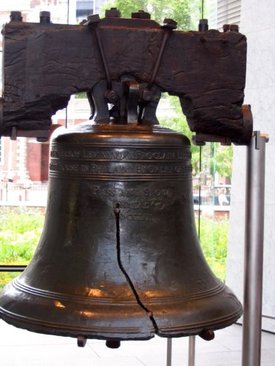
Ring the bells that still can ring
Forget your perfect offering
There is a crack in everything
That’s how the light gets in.

Leonard Cohen, Anthem

We are all substantially flawed, wounded, angry, hurt, here on Earth. But this human condition, so painful to us, and in some ways shameful- because we feel we are weak when the reality of ourselves is exposed – is made much more bearable when it is shared, face to face, in words that have expressive human eyes behind them.

Alice Walker, Letter to President Clinton