 In the different wisdom traditions we find attempts to reduce down to their simplest all of the instructions about living a full life: What is the essence of practice? What leads to true contentment? We can see that is this tale from the Jewish tradition, which resembles the simple direct presentation of wisdom found in the Christian Desert Fathers and in the Zen tradition. We are told that a man approached Rabbi Hillel and promised to convert to Judaism if the Rabbi managed to recite the whole of the Jewish teaching, while standing on one leg. Rabbi Hillel stood on one leg and said simply: That which is hateful to you, do not do that to your neighbour. That is the essence of the Law. Everything else is just a Commentary. Go and Study it.
Category: Look for Happiness
Book Review: Beyond Happiness
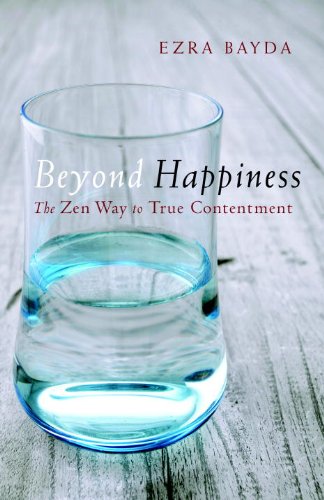 Will do some book reviews over the next few weeks. I always like Ezra Bayda’s writing, especially At Home in the Muddy Water. He is from the Zen tradition, having trained with Charlotte Joko Beck, at the Ordinary Mind Zen School. He is a student of meditation since 1970 and currently teaches at the Zen Center in San Diego. His latest book is entitled Beyond Happiness: The Zen Way to True Contentment. It was nominated as “one of the best books of the year” by the magazine Spirituality and Health.
This book bases itself on the most recent research on happiness, such as that found in The How of Happiness by Sonja Lyubomirsky, where we learn that external circumstances, such as our career, relationships and prosperity are not as important in our overall happiness as we may think. Rather, we are born with a certain predisposition to happiness and then can work on our happiness by the way we deal with our everyday circumstances. In other words, our “intentional activities”are largely responsible for how happy we are – mindful actions that we do every day to achieve a happier life. Eric Bayda develops this concept by asking three key questions: Am I truly happy right now? If not, what blocks it? And, can I surrender to what is? At the end of the day he comes up with two key ways that we can work at developing our sense of contentment and removing the things that block and poison our heart, namely, cultivating gratitude and actively forgiving.
This is a nice book in the current trend of applying Buddhist principles to the psychological areas of growth in our lives and practical ways of developing contentment.
Perhaps one of the commonest places we get stuck and consequently one of the places that most prevents happiness is holding onto resentments. If there is even one person we cannot forgive, it closes our hearts in bitterness and will prevent us from experiencing the equanimity of genuine happiness….It may be easy for us to be kind, and also forgiving, when life is going well. But it is only when life gets difficult that the depth of our spiritual practice is revealed. For our kindness to be real it cannot depend on how others treat us, or how we feel at any given moment.
Awakening Joy Course
 Awakening Joy is a hugely successful Course that has been developed by James Baraz, a meditation teacher with over 30 years experience and one of the founding teachers of Spirit Rock Meditation Center in Woodacre, California. The goal of the Course is to awaken joy through principles and practices that incline the mind toward well-being, happiness and contentment.
I am delighted to announce that James and his wife Jane are coming to Switzerland in August to run this Course as a 4-Day Workshop, from Thursday 4th to Sunday 7th. This is a great opportunity for us here to deepen our practice and grow in some of the areas we learned in the MBSR Programme or since we started meditation. This Course goes beyond Stress Reduction and looks at how we can actually increase contentment in our lives. As I have written elsewhere, the brain has evolved with a bias towards negativity, and consequently we have to work at developing the attitudes and skills that lead towards positivity, gratitude and joy. This Workshop teaches those skills in a very practical way, with structured exercises and periods of reflection. It will be held in the beautiful setting of the Kientalerhof Center in the Canton of Berne, allowing us to relax in the quiet countryside while deepening our understanding of what leads to happiness in our lives.
There are a limited number of places on the Course so early booking is advised. Full details as to how to reserve a place will be posted very shortly. For the moment, just mark the dates and check out more details about this exciting Course by clicking on the link at the side. If you have any questions just send a mail to awakeningjoy.info@gmail.com
A rule of life
 Shall we make a new rule of life from tonight:
always try to be a little kinder than is necessary.
J.M. Barrie
The goodness in life
 It is a beautiful morning here, and as I said, being Irish, the Spring season has already started for me. This Mary Oliver poem captures the day perfectly. It shows how attention to what is present in any moment, especially in the beauty of nature, and having the space to taste and hear it, leads to a deep joy in life. It is not always possible with the troubles and hassles of work, so we should take her advice: Go outside and just look, listen. Life is good.
It was spring
and finally I heard him
among the first leaves—
then I saw him clutching the limb
in an island of shade with his red-brown feathers
all trim and neat for the new year.
First, I stood still
and thought of nothing.
Then I began to listen.
Then I was filled with gladness—
and that’s when it happened,
when I seemed to float, to be, myself, a wing or a tree—
and I began to understand
what the bird was saying,
and the sands in the glass stopped
for a pure white moment
while gravity sprinkled upward
like rain, rising,
and in fact
it became difficult to tell just what it was that was singing—
it was the thrush for sure, but it seemed
not a single thrush, but himself, and all his brothers,
and also the trees around them,
as well as the gliding, long-tailed clouds
in the perfectly blue sky— all, all of them
were singing.
And, of course, yes, so it seemed, so was I.
Such soft and solemn and perfect music doesn’t last
for more than a few moments.
It’s one of those magical places wise people like to talk about.
One of the things they say about it, that is true,
is that, once you’ve been there, you’re there forever.
Listen, everyone has a chance.
Is it spring, is it morning?
Are there trees near you,
and does your own soul need comforting?
Quick, then— open the door and fly on your heavy feet; the song
may already be drifting away.
Reasons to be cheerful
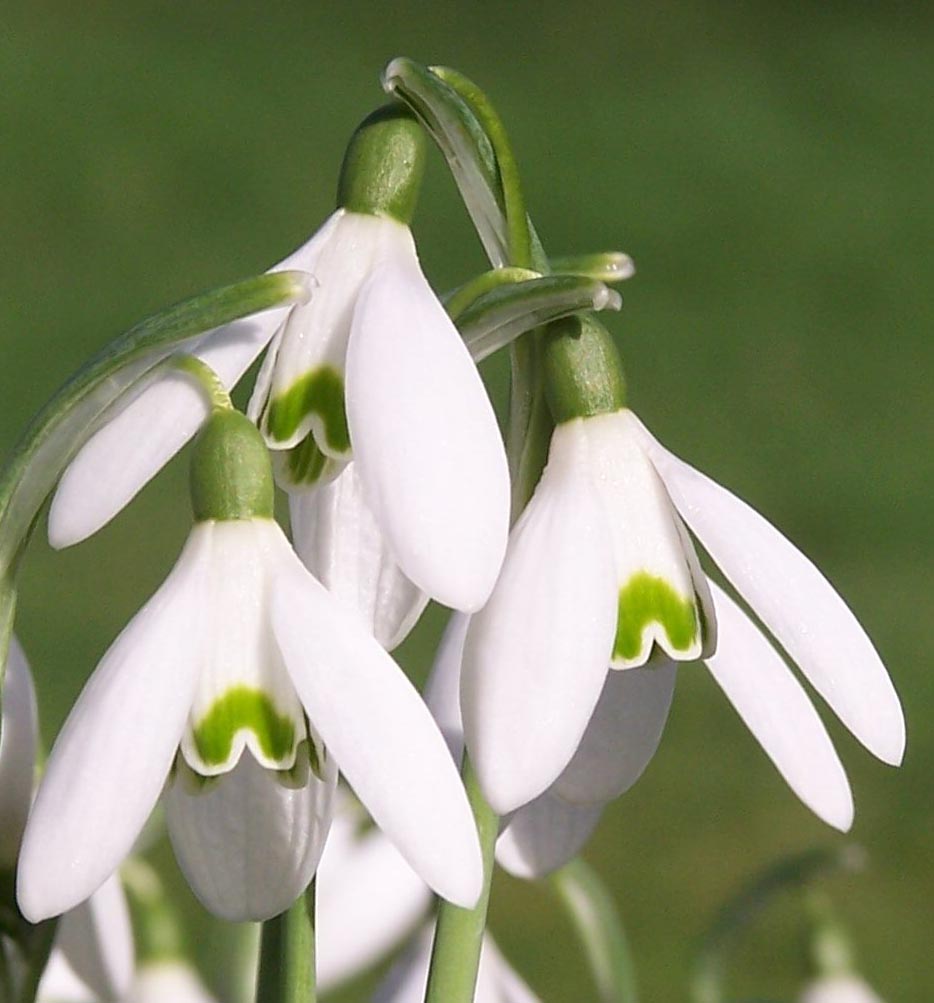 In this mild weather the first snowdrops are beginning to appear in the garden. I love the old legend about this flower. Adam and Eve were banished from the warmth and security of the Garden of Eden. They longed for the original sense of belonging and attunement which they once had. And then, to make matters worse, it became cold and started to snow. Eve began to cry, believing that she would never see warmth and love again. Seeing this, an angel felt sorry for her, caught a snowflake in his hand, breathed on it, and when it hit the ground it turned into these delicate flowers. This beauty gave her comfort and hope in the winter of her difficulties. Like Eve, we all search for that original safety which we know deep down. We all need little signs to keep us going. We can look for them today.
Cheerfulness comes naturally with meditation. It is a quality of space created within the mind. When there’s space in the mind, the mind relaxes, and we feel a simple sense of delight. We experience the possibility of living a life in which we are not continuously aggravated by emotions, discursiveness, and concepts about the nature of things…. Despite all the ups and downs of our life, we are fundamentally awake individuals who have a natural ability to become compassionate and wise. Our nature is to be cheerful. This cheerfulness is deeper than temporary conditions. The day does not have to be sunny for us to be cheerful.
When we practice meditation, we are encouraging this natural state of cheerfulness. We don’t have to regard meditating as a somber activity; we can think of it as sitting there and being cheerful. We are using a technique to build clarity, strength, and flexibility of mind. In training our mind in pliability and power, we’re learning to relax, to loosen up, so that we can change our attitude on a dime. Strength of mind and pliancy are the causes and result of cheerfulness.
Sakyong Mipham Rinpoche
 Mindfulbalance