I’m serious…

There is always the risk that people take the inner life with a little bit too much solemnity. Two quotes on this from quite different sources:

Pride is the downward drag of all things into an easy solemnity. One “settles down” into a sort of selfish seriousness.  Seriousness is not a virtue. It would be a heresy, but a much more sensible heresy, to say that seriousness is a vice. It is really a natural trend or lapse into taking one’s self gravely, because it is the easiest thing to do. For solemnity flows out of men naturally; but laughter is a leap. It is easy to be heavy: hard to be light. Satan fell by the force of gravity.

G. K Chesterson

One of the big problems in meditation is that we can take ourselves too seriously. We can see ourselves as religious people dedicated towards serious things, such as realising truth. We feel important; we are not just frivolous or ordinary people, going about our lives, just going shopping in the supermarket and watching television. Of course this seriousness has advantages; it might encourage us to give up foolish activities for more serious ones. But the process can lead to arrogance and conceit: a sense of being someone who has special mission or some goal of helping people, or of being exceptional in some way… This conceit, this arrogance of our human state is a problem that has been going on since Adam and Eve, or since Lucifer was thrown out of heaven. It’s a kind of pride that can make human beings lose all perspective; so we need humour to point to the absurdity of our self-obsession.

Ajahn Sumedho

Our substitute life

The essence of the basic human problem is that we live a substitute life. From our basic human need for protection, security, and comfort, we’ve fabricated a whole maze of constructs and strategies to avoid being with our life as it is. And as a consequence of believing in this substitute life we are disconnected from awareness of our true nature, our naturally open heart.

Our substitute life is made of many different constructs: our identities, our self-images, our concepts of what life is, our opinions and judgments, our expectations, our requirements. All these we take as reality. As a consequence of these tightly held beliefs, we develop certain habitual behavioral strategies to deal with life as we interpret it.

All these strategies are based on core decisions that we made early on, about who we are and what our life is about. They are decisions we made to help us cope with the many inevitable pains of growing up.

Ezra Bayda

Trying to become something

Practice is based on a complete acceptance of ourselves, as we are, balanced with a gentle, non-judging movement to change aspects of our behaviour which lead to unhappiness. Any desire for change comes within the framework of that non-judgmental acceptance, and an ease with the status quo.

We know when we are far from that. We can feel an urgency in our desire to change, a leaning forward that is tinged with fear. There can be all sorts of reasons for this, such as an fundamental lack of acceptance of ourselves. Or we have an “indirect acceptance“,  when we can only see good in ourselves if someone outside approves us. Or we get mixed up between been needed and being loved. Whatever the reason,  we can look to mediation to fix us, and it becomes attached to an outcome, ultimately adding to our unhappiness with ourselves. The reality of our lives is that we are three-steps-forward-two-steps-back-kinda-people, and need to accept ourselves as that.

Ajahn Sumedho encourages an awareness of what we call “the becoming tendency”, meaning the use of meditation to become something. You do this to get that. It’s a kind of busy-ness and doing-ness and leaning — taking hold of a method, or others’ ideas, or quick  solutions in order to get somewhere. This habit is the cause of many of our troubles, and can so easily take over our meditation. It can permeate the whole effort of spiritual practice. Indeed, he states that the becoming tendency can take over and gets legitimized by being called “meditation.”

Meanwhile, we miss the fact that we are losing the main point and that what we are doing has turned into a self-based program. We get caught in the illusion, trying to make the self become something other. We can relax without switching off, and consequently we can enjoy the fruits of our work. This is what we mean by letting go of becoming and learning to be. If we’re too tense and eager to get to the other end, we’re bound to fall off the tight rope.

Ajahn Amaro

It’s quite simple really

I spoke to my mother on the phone this afternoon. I had missed her call earlier in the week when she had hoped to persuade me to come home for a visit. And when she expressed that wish today I had to decline,  due to a busy schedule in the next weeks. She was disappointed and so I listened,  as best I could, providing a presence across the phone.  She spoke of the things of her day and the up’s and down’s of her week. Mainly simple things, a way of masking greater concerns. My job was to be silent. No greater work for those moments.

Ironically this week I had thought of helping in a bigger way. Sometimes I can think that life and support means grand gestures, a greater endeavour. And I spend my time planning for that in the future, to reach out more. However, what I realize this weekend is that the bigger picture can easily distract and become a way of avoiding. Even something as simple as kindness can take on  proportions that are not human. It misses the real family member who needs us. And then it is no longer love but rather our own day dreams pulling us away.

Real love encourages us to embrace the ordinariness of life. Whatever so distracts us from seeing and loving the familiar of the daily has the potential to be unhealthy. These distractions can appear in all shapes and sizes, many of them wholesome aspirations. However, they put our hopes for life elsewhere – on some shelf we may never reach – and pull us away from what is under our noses.

What is love? It is such a deep need of the human heart. Can it be as simple as being present to one another as fully as we can? I remember speaking to an old monk in Ireland once, who told me that life was quite straightforward really. It consisted of loving, he said, to the best of our ability, those whom we encountered each day. The people who were in our life at that moment.  Most of our days offer these simple encounters, little things –  dropping people off at the airport, making lunch and telling each other that things will work out. Maybe that is the essence of this life that I love – we are here,  we have each other, and do the best we can with what little time we are given. No dramatic gestures, no spectacular love, just ordinary stuff like partners, friends, mothers, sisters, phone calls and listening in silence.

Trusting in goodness

Everything has to do with loving and not loving. Rumi

Sometimes we know things better when we get some moments of calm. We can sense things easier. We see that there is something profound in people, something that yearns. It is sometimes covered up by fear and defences. It can get hassled and rushed. But it is there. We do not necessarily know what to call it.  But that “something” is good.

You sense it on a quiet morning, sitting with a coffee, when thoughts about the meaning of this life come easy. And after thoughts the memories  come…… warm memories, about the goodness of people, their smile and the love that has been given to you in your life.

And you can trust. You sense that, somewhere,  beneath the daily routine, beyond the constant planning you engage in, goodness is slowly coming into being. Your sitting may be nothing more than getting out of the way and allowing that happen. You see that kindness and love is what you seek, and it is never far away.  You see this clearer as you get older.  It has been constant all your life. It is the same in those you love. And it comes closer and closer.

Life is a blessing

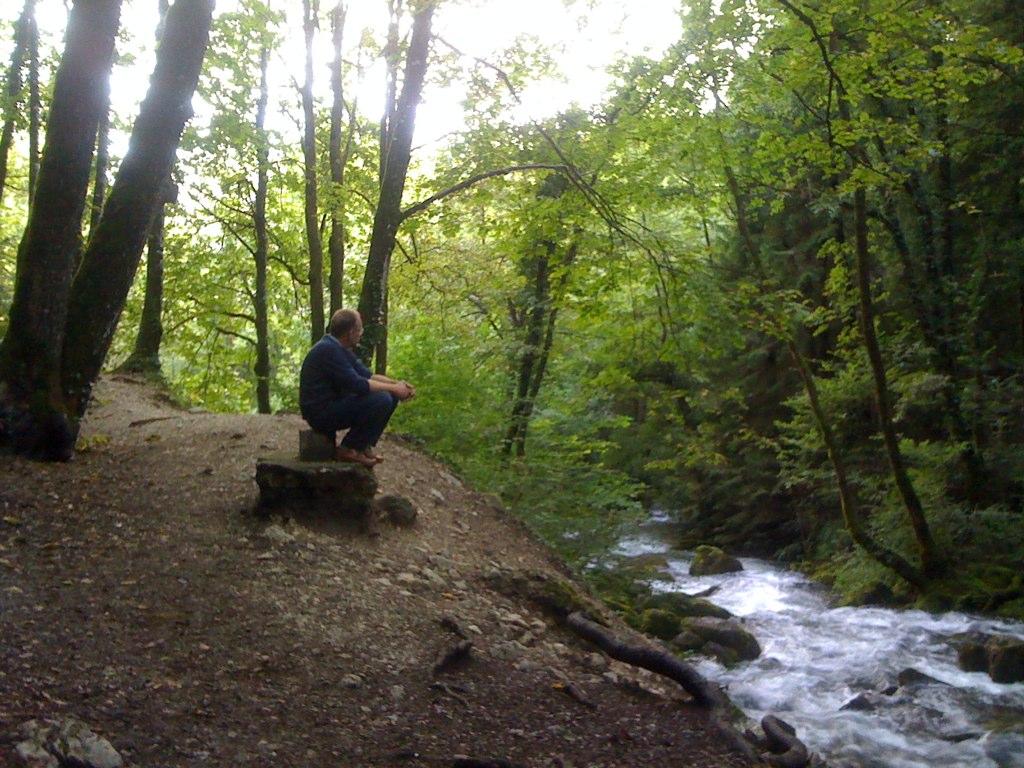
When we notice and celebrate the little things each day, then life becomes a place of wonder, celebration and of gratitude. A walk along the river in the forest, the taste of a dessert, support when someone is ill, encouragement and advice along the road. This poem from Mary Oliver sees blessing in the smallest of creatures, in the shortest of moments. Such an appreciation of life helps us when we are tempted to take the little slights of each day too seriously.

What is this dark hum among the roses?
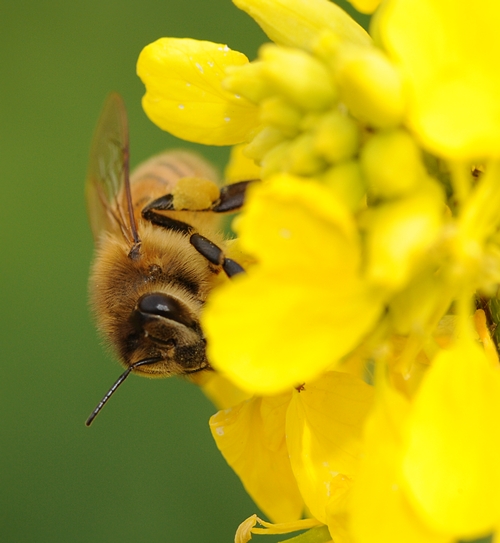
The bees have gone simple, sipping,
that’s all. What did you expect? Sophistication?
They’re small creatures and they are
filling their bodies with sweetness, how could they not
moan in happiness? The little
worker bee lives, I have read, about three weeks.
Is that long? Long enough, I suppose, to understand
that life is a blessing.

Mary Oliver, Hum