Waiting

I went on a short work-related trip to Berlin recently. It was my first time visiting that city and my stay, albeit very short, was a lovely one, filled with the kindness of people. The flight took just one hour and twenty minutes, but to get on the plane required turning up much earlier and waiting. As always, the flight was delayed by the predictable “delay to the incoming flight”, so a short eighty-minute journey took five hours out of the day.

Airports are not the worst place to wait. It is easy to sit there, and pay attention, to what is going on inside us and to what is going on around. The truth of human life is that we must spend quite a bit of time waiting. Not just on the physical level. At a deeper level we are all waiting for something or someone. For a possibility of healing, of a real contact, of meeting without pretence or the need to hide behind masks. These possibilities, large and small, await us — at the end of a journey, in a new relationship, in a change in how we are dealing with our life in this world. Sure, we all are anxious to get to our arrivals. But often we are in an in-between place, still in our waiting, and we have to have the courage not to go anywhere except the places where our lives are now, places we occupy until real contentment comes.

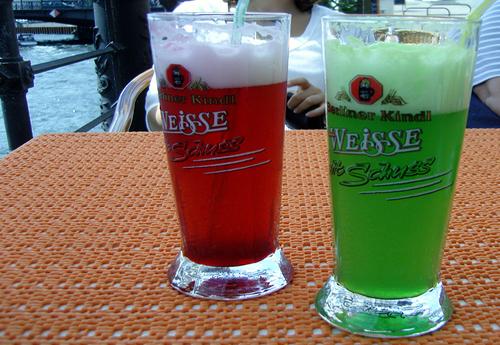
While waiting it can be a temptation to fill our lives with whatever we can to rob time of its tediousness. We can be afraid of being just with ourselves, in-between. We rush to fill the gap by doing too much, by not staying still. But when stillness comes our way – we can find it in an airport, in the slow reading of a good novel, in a quiet walk or in our sitting practice – it allows us to stay and taste the richness of the present moment as it opens our hearts to the inner beauty of life. A beauty as simple as having a glass of strange-coloured local beer in a square under the trees, which gave a sense of connection; it eased and gave meaning to the larger waits of life.

Alone

Sometimes it is healthier to be alone. There are times in life when it is right to choose it – to move from the fear of being alone, to the ability to savour it. Mastering this ability is all about living a life in which we can feel whole and happy inside ourselves, and can take care of ourselves emotionally.

This capacity to be alone is one of the most important signs of maturity in emotional development. In Winnicott’s theory of the development of the self, our ability to be alone is formed through the awareness of a stable loving presence. When we are secure in the knowledge of being cared for, we develop the capacity to be by ourselves. If that knowledge was not formed fully when we were little, we can sometimes throw ourselves into relationships and activities in later life because we do not like being with ourselves. Being able to be alone is the best preparation for healthy relationships because it is founded on a security deep inside and we are not using the relationship to run away from our insecurities.

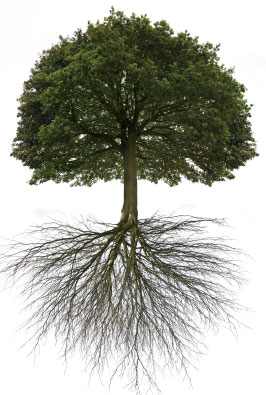
Therefore, the best model for later life is the child playing contently by itself. Maybe this is why sitting practice is so effective; through it we learn to sit with ourselves, allowing our fears and anxiety arise and pass away without giving them undue space. We can develop strong roots, content in ourselves, at home in the silence, not running, planted firmly.

Therapy is completed when a child can play alone
Winnicott

Being happy today 3: Let go of conditions

Each of us has a notion of how we can be happy. We could make a list of what we think we need to be happy: “I can only be happy if…” Write down the things you want and the things you do not want. Where did these ideas come from? Are they only your notions? If you are committed to a particular notion of happiness, you do not have much chance to be happy.

Happiness arrives from many directions. If you have a notion that it comes only from one direction, you will miss all of these other opportunities because you want happiness to come only from the direction you want. You say, “I would rather die than marry anyone but her. I would rather die than lose my job, my reputation. I cannot be happy if I don’t get that degree or that promotion or that house.” You have put many conditions on your happiness. And then, even if you do have all your conditions met, you still won’t be happy. You will just keep creating new conditions for your happiness. You will still want the new relationship, the higher degree, the better job and the more beautiful house.

Please remember that your notions of happiness may be very dangerous. Happiness can only be possible in the here and now. Go back and examine deeply your notions and ideas of happiness. So let go of what you believed yesterday. Let go of what you thought last week you needed to be happy. The conditions of happiness that are in your life now are enough.

Thich Nhat Hahn

Work

Connectedness is another hallmark of the soul. Its important in our work not only to be excited about being successful and making money, but also deeply concerned about the value of what we’re doing and having a stake in the outcome of the product. If you can take romanticism and sentimentality out of the word, you can say that it is necessary to love what we’re doing and what we’re making. People who are frustrated with their work often say they simply don’t love what they’re doing and therefore feel unmotivated to get to work. Love is the impetus that propels us toward our life work.

Thomas Moore, A Life at Work

Living in the future

When we look ahead, when we look to the future, somehow we get dazzled by all the possibilities that are there waiting for us…..
As if the next event in our lives, the next situation, the next project, the next reationship, the next meal, even in meditation the next breath…..
we live our lives in anticipation of the next hit of experience as if the one that’s coming will finally do it for us.

What’s so strange is that nothing up until now has brought that sense of real completion or fulfillment. So why are we so seduced into thinking that the next one will?

Joseph Golodstein

A Joyful day

Joy in the context of spirituality
is not the same as happiness.
Happiness is a feeling that,
like all feelings, comes and goes,
while joy is a more fundamental attitude toward life.

This joy doesn’t change your circumstance;
it embraces it.
Joy doesn’t make your situation other than it is;
but reveals the greater reality in which it is.
Being aware of the greater reality
always manifests as joy.

The more narrow the attention,
the more focused we are on fleeting moments
of happiness and sadness.
The wider our attention becomes
the more aware we are
of an unending flow of joy.

Rabbi Rami Shapiro